

German President favors politician for successor
Translated from German, summarized and contextualized by DistantNews.
At a glance
News
Named sources
Context piece
- German President Frank-Walter Steinmeier believes his successor should come from within the political establishment.
- Steinmeier cited the increasing difficulty of forming coalition governments as a reason for this preference.
- He suggested that a successor with strong connections to political parties could better navigate future government formation crises.
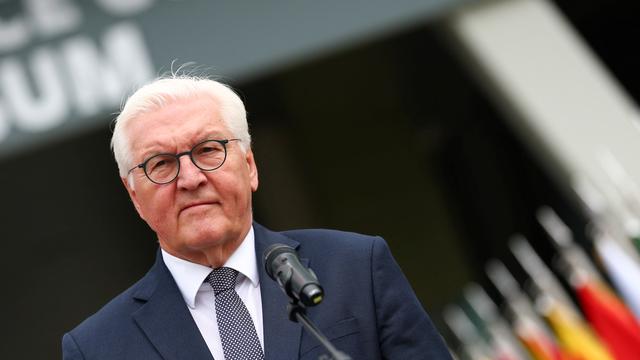
German President Frank-Walter Steinmeier has expressed his view that his successor should emerge from within the political sphere, rather than from outside the established political system. Steinmeier, who is nearing the end of his second term, believes that a candidate with deep connections and communication channels within political parties is essential for navigating the complex landscape of German coalition-building.
Steinmeier pointed to the challenges faced in forming coalition governments, referencing the difficult process after the 2017 federal election. He fears that similar, or even more complex, situations may arise in the future. Therefore, he advocates for a president who can leverage their political ties to help overcome such crises during government formation.
I fear that similarly difficult government formations will also face us in the future.
The next German head of state is scheduled to be elected by the Federal Assembly on January 30, 2027. Steinmeier's tenure as president concludes in March 2027, after ten years in office. The discussion about the ideal background for the next president is ongoing, with some considering a candidate with no strong political affiliations, similar to former President Joachim Gauck.
Therefore, I advocate for an election where someone – probably a woman next time – is considered who has contacts and opportunities for dialogue within the parties to overcome such crises in government formation.
DistantNews Editorial
Originally published by Die Zeit in German. Translated, summarized, and contextualized by our editorial team with added local perspective. Read our editorial standards.
More Stories
From Our Blog

What Gets Lost (and Found) When News Is Translated

How the Same Story Looks Different in Different Countries

The Critical Role of Diaspora Media in Global News

What Travellers Should Know About Countries with Restricted Press

A Digital Nomad's Guide to Following Local News
