


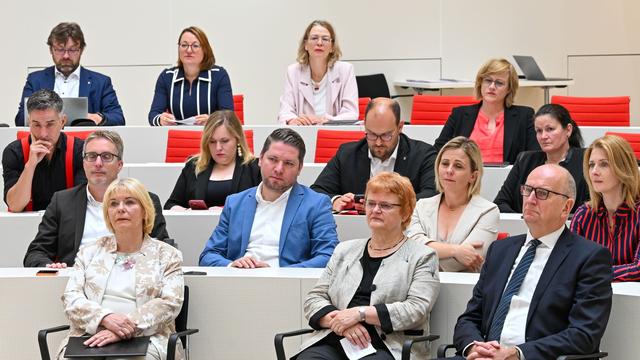
German state parliament remembers 73rd anniversary of East German uprising
Translated from German, summarized and contextualized by DistantNews.
At a glance
News
From a news agency
Context piece
- Brandenburg's state parliament commemorated the 73rd anniversary of the East German uprising on June 17, 1953.
- Officials emphasized the uprising's significance as a key event for freedom and democracy, serving as a modern-day warning.
- The event highlighted the importance of defending democratic values and celebrated Germany's current constitutional freedoms.
The state parliament and government of Brandenburg held a commemoration marking the 73rd anniversary of the East German uprising on June 17, 1953. The event honored the victims of the uprising, which saw around one million people across approximately 700 locations in the GDR take to the streets against the prevailing political and economic tensions.
Landtag President Ulrike Liedtke (SPD) stressed that the uprising was a "key event" and a vital demonstration of the desire for freedom and democracy. Brandenburg's Minister President Dietmar Woidke stated that the "rebellion of brave citizens" on June 17, 1953, is not a distant historical act but a warning to the present day. He emphasized that freedom and democracy require constant defense and are not to be taken for granted.
The rebellion of brave citizens on June 17, 1953, is not a distant historical act. It is a warning to us today: freedom and democracy must be defended and are anything but a matter of course.
The protests, which evolved from spontaneous strikes, included calls for freedom and German reunification. The uprising was violently suppressed by the GDR leadership and Soviet occupation forces, resulting in at least 55 deaths, 15,000 arrests, and approximately 1,500 subsequent convictions.
During the commemoration, Liedtke reflected on contemporary engagement with democracy, asking how bravely citizens today advocate for it and utilize their freedom. She highlighted Germany's constitution, free elections, independent judiciary, and freedoms of speech, press, religion, and travel as sources of pride within Eastern Europe and a testament to historical coexistence.
How bravely do we stand up for democracy today, do we use our freedom to shape a good, happy life? (...) We have a good constitution, free elections, independent judiciary, freedom of speech, freedom of the press, freedom of religion, freedom of travel, freedom of speech. We can be proud of that in Eastern Europe, in a historically grown coexistence.
DistantNews Editorial
Originally published by Die Zeit in German. Translated, summarized, and contextualized by our editorial team with added local perspective. Read our editorial standards.
More Stories

From Our Blog

What Gets Lost (and Found) When News Is Translated

How the Same Story Looks Different in Different Countries

The Critical Role of Diaspora Media in Global News

What Travellers Should Know About Countries with Restricted Press

A Digital Nomad's Guide to Following Local News
