


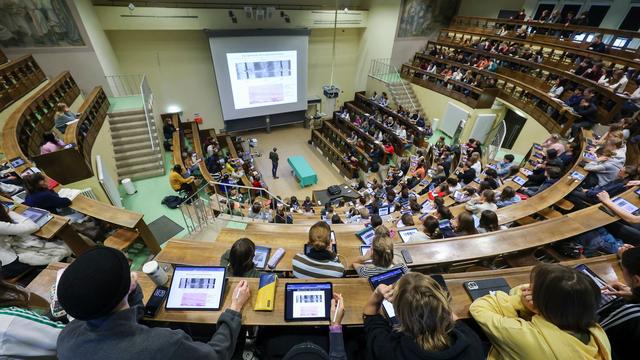
German student aid BAföG increase delayed by six months
Translated from German, summarized and contextualized by DistantNews.
At a glance
News
From a news agency
New plan
- An increase in BAföG student aid, specifically the housing cost allowance, has been delayed by six months, now set for the summer semester of 2027.
- The delay affects students not living with parents, who were expecting the increase from 380 to 440 euros starting this winter semester.
- While the housing allowance is postponed, the basic BAföG amount will still be raised in two stages to align with basic security benefits.
Students relying on BAföG, Germany's federal student financial aid, will have to wait an additional six months for an increase in their housing cost allowance. The planned rise from 380 to 440 euros for students living independently was initially slated for the upcoming winter semester but is now postponed until the summer semester of 2027.
All measures in the coalition agreement are subject to financing.
This delay impacts students who do not reside with their parents. The postponement stems from ongoing negotiations within the governing coalition regarding the broader BAföG reform outlined in their coalition agreement. While the agreement stipulated an increase in the housing cost allowance for this winter semester and a gradual rise of the basic BAföG amount to match basic security benefits, it also included a financial contingency clause.
After intensive negotiations, the coalition has jointly succeeded in securing all agreed-upon benefit improvements in full.
Despite the delay in the housing allowance, the core BAföG amount is still set to increase as planned. According to the SPD parliamentary group, the current basic BAföG of 475 euros will be raised in two steps: to 503 euros for the winter semester of 2027/28 and to 563 euros by the summer semester of 2029. A reliable system for reviewing and adjusting funding rates, linked to basic security levels, will also be implemented.
For students, the reform means more money, more reliability, less bureaucracy. This strengthens trust in BAföG as reliable study financing.
Coalition partners have offered differing perspectives on the delay. The Union (CDU/CSU) faction pointed to the strained financial situation, with faction leader Jens Spahn previously stating that increases to benefits like BAföG were unlikely. Conversely, SPD politicians like Wiebke Esdar and Oliver Kaczmarek emphasized that all agreed-upon benefit improvements have been secured, promising more money, reliability, and less bureaucracy for students. Inge Gräßle of the CDU acknowledged the need to link benefit expansions to the overall economic situation and stressed the government's task of fostering economic growth.
Everyone now realizes that the further expansion of state benefits cannot be detached from the overall economic situation. It is a common task of this governing coalition to ensure economic growth again.
DistantNews Editorial
Originally published by Die Zeit in German. Translated, summarized, and contextualized by our editorial team with added local perspective. Read our editorial standards.
More Stories


From Our Blog

What Gets Lost (and Found) When News Is Translated

How the Same Story Looks Different in Different Countries

The Critical Role of Diaspora Media in Global News

What Travellers Should Know About Countries with Restricted Press

A Digital Nomad's Guide to Following Local News
