


Germany Begins Summer Holidays Amidst Traffic Jam Warnings
Translated from German, summarized and contextualized by DistantNews.
At a glance
News
From a news agency
New plan
- Germany's summer vacation period begins, with the first federal states starting their school holidays this weekend.
- The ADAC warns of significant traffic jams, particularly in western Germany, due to holiday travel and ongoing construction sites.
- Seven different holiday start dates across Germany complicate travel planning, contrasting with a unified summer break in France.
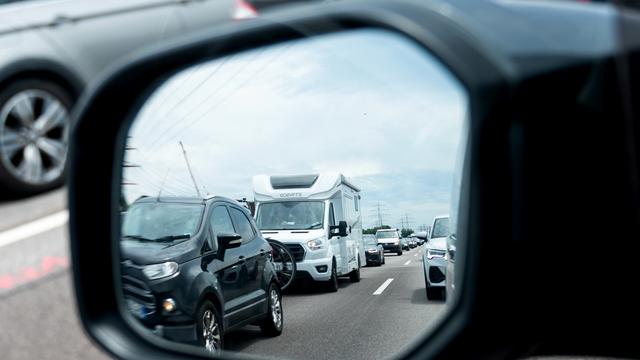
Germany is entering its peak summer travel season as the first federal states, Hesse, Rhineland-Palatinate, and Saarland, kick off their school holidays this weekend. The German Automobile Club (ADAC) is bracing for extensive traffic jams, especially on the autobahns in the western part of the country.
Holidaymakers and last-minute travelers, driven by the ongoing heatwave, are expected to contribute to the congestion. Adding to the potential delays are approximately 1,000 permanent construction sites along the autobahns. The ACE, another automobile club, suggests that exiting the autobahn is only worthwhile for blockages exceeding ten kilometers, noting that many navigation systems use similar data, leading drivers to the same detours.
This year, Germany's school holidays are spread across seven different start dates. Bremen and Lower Saxony begin on July 2, followed by Saxony, Saxony-Anhalt, Schleswig-Holstein, and Thuringia on July 4. Berlin, Brandenburg, and Hamburg start on July 9, with Mecklenburg-Vorpommern beginning on July 13. North Rhine-Westphalia's students get their break on July 17. The longest waits are for students in Baden-Württemberg and Bavaria, who start their holidays on July 30 and July 31, respectively. The school year for the earliest states will commence on August 10.
In contrast, neighboring France observes a unified summer holiday period, with all students enjoying a break from July 5 to August 30.
For numerous traffic jams, day-trippers and spontaneous travelers are also likely to be responsible due to the ongoing heatwave.
DistantNews Editorial
Originally published by Die Zeit in German. Translated, summarized, and contextualized by our editorial team with added local perspective. Read our editorial standards.
More Stories



From Our Blog

What Gets Lost (and Found) When News Is Translated

How the Same Story Looks Different in Different Countries

The Critical Role of Diaspora Media in Global News

What Travellers Should Know About Countries with Restricted Press

A Digital Nomad's Guide to Following Local News
