


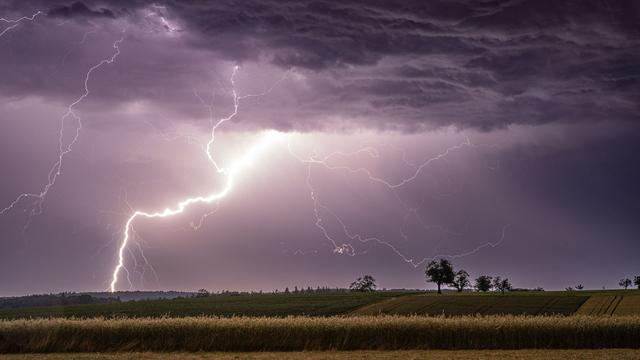
Germany braces for hot weekend as heatwave continues
Translated from German, summarized and contextualized by DistantNews.
At a glance
News
From a news agency
Context piece
- Germany faces a hot weekend with temperatures expected to reach 30 to 38 degrees Celsius, with the highest values in the southwest.
- Thunderstorms are possible, and some events like the Southside music festival have already faced interruptions due to severe weather.
- While not yet breaking records, the current heatwave is part of a trend of more frequent and intense heatwaves linked to climate change.
Germany is bracing for a sweltering weekend as a heatwave shows no signs of relenting. The German Weather Service (DWD) forecasts temperatures between 30 and 38 degrees Celsius on Saturday, with the southwest expected to be the hottest region. Some areas may also face severe weather warnings.
Friday saw already high temperatures, with Kitzingen in Bavaria recording a preliminary high of 38.5 degrees Celsius. Bad Kreuznach in Rhineland-Palatinate followed closely at 38.0 degrees. Forecasters warn that even higher temperatures could be reached, potentially accompanied by strong thunderstorms. These storms have already caused disruptions, with the Southside music festival in Baden-Württemberg temporarily halted due to severe weather. Fire departments in Rhineland-Palatinate and Baden-Württemberg responded to numerous incidents overnight caused by storms.
There can still be higher values.
Despite the intense heat, record temperatures have not yet been broken this week. The all-time highest temperature recorded in Germany was 41.2 degrees Celsius in July 2019. The highest June temperature, 39.6 degrees Celsius, was also recorded in 2019. Experts note that heatwaves are becoming more frequent and intense due to climate change, posing particular risks to vulnerable populations such as the elderly, children, pregnant individuals, and those with pre-existing health conditions.
Heatwaves have become more frequent and intense in the course of climate change.
DistantNews Editorial
Originally published by Die Zeit in German. Translated, summarized, and contextualized by our editorial team with added local perspective. Read our editorial standards.
More Stories



From Our Blog

What Gets Lost (and Found) When News Is Translated

How the Same Story Looks Different in Different Countries

The Critical Role of Diaspora Media in Global News

What Travellers Should Know About Countries with Restricted Press

A Digital Nomad's Guide to Following Local News
