


Germany Debates National Portrait Gallery Proposal
Translated from German, summarized and contextualized by DistantNews.
At a glance
Analysis
Sources not specified
Context piece
- Germany's Minister of State for Culture, Wolfram Weimer, proposed establishing a national portrait gallery in Berlin, similar to London's National Portrait Gallery.
- The proposal has sparked debate, with art historian Julia Voss discussing the fascination of portraiture and its potential for a German institution.
- The German Historical Museum is preparing an exhibition on "Portraits of German History," showcasing its collection and exploring the potential of a dedicated gallery.
Germany's Minister of State for Culture, Wolfram Weimer, has ignited a discussion by proposing a national portrait gallery for Berlin, drawing inspiration from London's popular National Portrait Gallery. The idea has been met with varied reactions across media outlets.
Why does Berlin not have what London has had for a long time and is immensely popular? A museum where only portraits are shown?
Art historian Julia Voss, who is preparing a portrait exhibition, delves into the enduring appeal of portraiture. She notes the unusual volume of portrait submissions the German Historical Museum has received since announcing its "Portraits of German History" exhibition, curated by historian Christopher Clark. These submissions, often of ancestors from the 19th and 20th centuries, highlight a public interest in personal histories.
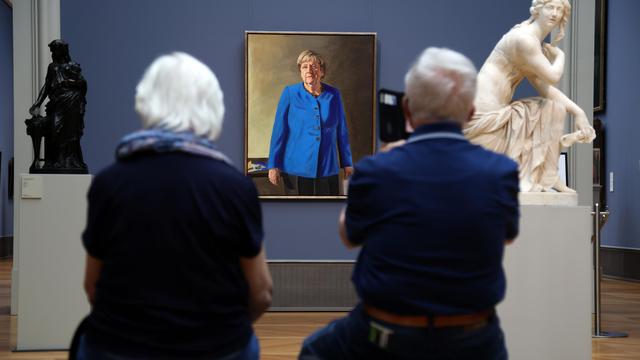
The 'promise of the portrait' is shown by the public's enthusiasm for the Merkel state portrait, which can currently be seen in the Bode Museum.
Voss explains that the "promise of the portrait" is evident in the public's enthusiastic response to Angela Merkel's official state portrait. She references sociologist Georg Simmel's idea that portraits offer a "bounded realm" against the chaos of everyday perception. People constantly try to decipher faces and expressions, and a portrait, created with an artist's help, offers a focused way to understand an individual's essence.
To the 'confused reality,' the random ups and downs of everyday perception, Simmel wrote in 1918, the portrait contrasts the 'bounded realm' of art.
DistantNews Editorial
Originally published by Die Zeit in German. Translated, summarized, and contextualized by our editorial team with added local perspective. Read our editorial standards.
More Stories


From Our Blog

What Gets Lost (and Found) When News Is Translated

How the Same Story Looks Different in Different Countries

The Critical Role of Diaspora Media in Global News

What Travellers Should Know About Countries with Restricted Press

A Digital Nomad's Guide to Following Local News
