


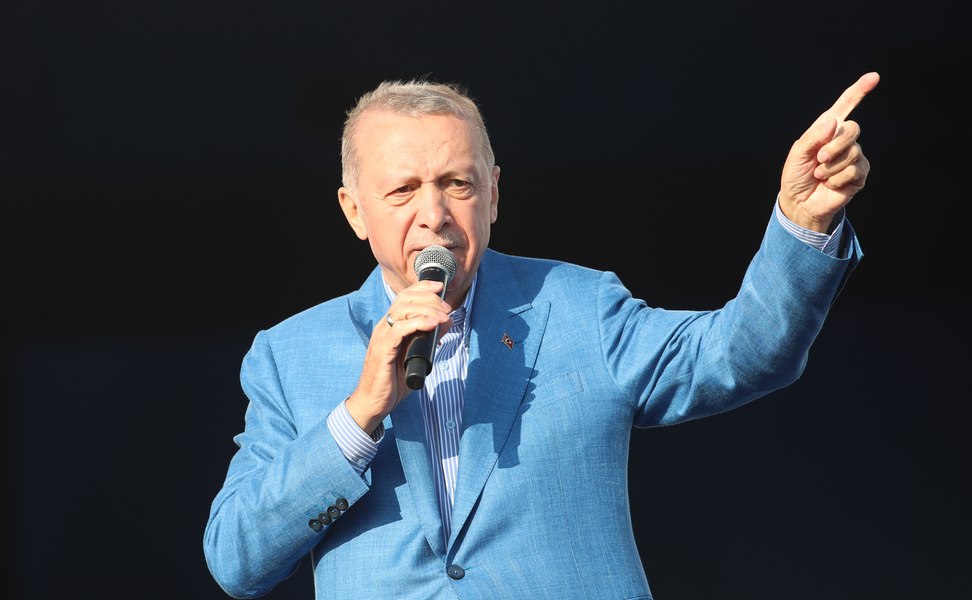

Germany is splitting in two: AfD prepares a shock that alarms Berlin
Translated from Romanian and summarized by DistantNews. Read the original for the full story.
At a glance
Analysis
Named sources
Ongoing story
- The AfD is polling at 41% ahead of a Saxony-Anhalt vote, well ahead of the CDU at 23%, and could win its biggest regional victory.
- A first-place finish would not automatically put the AfD in government because other parties continue to reject a coalition with it.
- The contest highlights persistent differences between eastern and western Germany, including questions of identity and belonging that reunification did not resolve.
Saxony-Anhalt could deliver a postwar political shock on Sunday: the Alternative for Germany, or AfD, is polling above 40% and could become the state’s clearly strongest party. Yet even a decisive election victory would not automatically give it power. The other parties still maintain a “firewall” against the far right.
The latest Forschungsgruppe Wahlen poll puts the AfD at 41%, compared with 23% for the CDU. Saxony-Anhalt has just over two million residents, but the vote could say more about Germany’s political condition than many federal elections. Thirty-six years after reunification, a state in the former German Democratic Republic may give the AfD its most important regional victory to date.
The central question is no longer simply whether the AfD will become a major political force. It is how far it can go, and whether the other parties can still build a majority against it. To govern alone, the AfD would need a majority of seats, and current polling does not indicate that it has one. The immediate test is whether the Brandmauer, the “firewall” traditional German parties have built around the far right, can hold when the isolated party wins more than 40% of the vote on its own.
firewall
The article presents the issue as larger than coalition arithmetic in Magdeburg. Saxony-Anhalt forces Germany to revisit a question many believed reunification had settled: how united is the country really? Roads, cities and infrastructure in the east have changed dramatically. Investment rebuilt degraded towns, modernised transport links and sharply reduced the industrial pollution inherited from the GDR. The visible divide of 1990 has largely disappeared from the landscape, fulfilling much of Helmut Kohl’s promise of “flourishing landscapes.”
But investment repaired roads more easily than it repaired the feeling of belonging. As Anne McElvoy observed in POLITICO, the AfD’s rise in eastern Germany cannot be separated from the region’s struggle for identity and for a distinct place in a federal system whose political and economic centre was long perceived as western. The political consequences of that unresolved divide are now concentrated in a state election that could test both Germany’s party system and its post-reunification self-image.
flourishing landscapes
About this summary
Originally published by Adevărul in Romanian. Translated, summarized, and contextualized automatically by DistantNews, with a note on how the source frames the story. Not individually reviewed before publishing. How this works.
More Stories
From Our Blog

News in Translation: What Gets Lost, and How We Keep the Framing

Diaspora Media: How Communities Follow News From Home

Traveling Where the Press Is Not Free: How to Read the News There

The Digital Nomad's Guide to Local News

The Same Story, Different Countries: How Coverage Changes at the Border
