


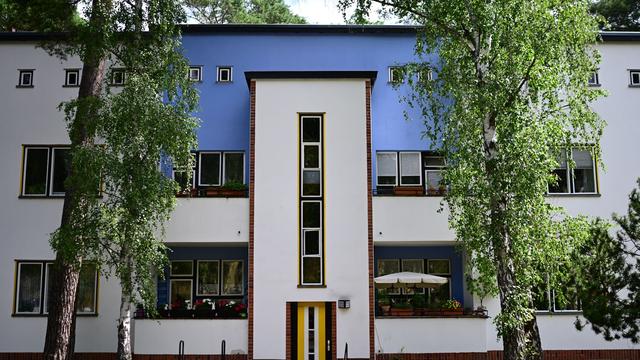
Germany pushes for UNESCO World Heritage status for Berlin forest settlement
Translated from German, summarized and contextualized by DistantNews.
At a glance
News
From a news agency
New plan
- Germany is seeking to expand its UNESCO World Heritage status with the Zehlendorf forest settlement in Berlin.
- The settlement, part of the "Berlin Modernism Housing Estates," is recognized for its pioneering social housing and Bauhaus architecture.
- The UNESCO World Heritage Committee is also considering France's bid to list the Normandy D-Day landing beaches, highlighting the ongoing challenges of preserving heritage sites amidst conflict and climate change.
Germany is advocating for the Zehlendorf forest settlement in Berlin to be added to the UNESCO World Heritage list, as an extension of the "Berlin Modernism Housing Estates." Berlin's Senator for Urban Development, Christian Gaebler, praised the settlement, built around a century ago, as a globally influential example of social housing. Known colloquially as the "Papageiensiedlung" (Parrot Settlement), it is considered a strong candidate for recognition.
This settlement, the largest among the Berlin Modernism estates already inscribed on the World Heritage list since 2008, includes unique features like the "Onkel Toms Hütte" U-Bahn station's integrated shopping street. This innovative concept of directly linking a commercial center to a transit hub was groundbreaking at the time.
Meanwhile, the UNESCO World Heritage Committee, meeting in Busan, South Korea, is also reviewing France's proposal to designate the Normandy D-Day landing beaches as a World Heritage site. These beaches, where Allied forces landed on June 6, 1944, marked a pivotal moment in the liberation of Europe. The nomination encompasses five key beaches, Utah, Omaha, Gold, Juno, and Sword, along with associated memorial sites.
The committee is also addressing the critical issue of preserving existing World Heritage sites, with 53 currently listed as endangered. Threats include armed conflicts, the impacts of climate change, construction projects, and natural disasters. Germany currently has 52 cultural and 3 natural heritage sites, none of which are considered endangered.
The Berlin Modernism Housing Estates are outstanding examples of urban development and an urban and cultural treasure with international appeal.
DistantNews Editorial
Originally published by Die Zeit in German. Translated, summarized, and contextualized by our editorial team with added local perspective. Read our editorial standards.
More Stories



From Our Blog

What Gets Lost (and Found) When News Is Translated

How the Same Story Looks Different in Different Countries

The Critical Role of Diaspora Media in Global News

What Travellers Should Know About Countries with Restricted Press

A Digital Nomad's Guide to Following Local News
