


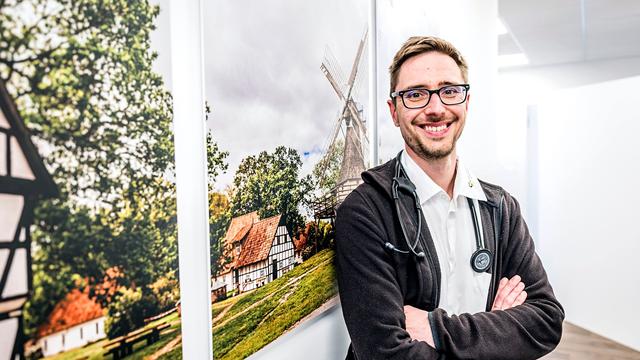
Germany's NRW expands medical study places for future rural doctors
Translated from German, summarized and contextualized by DistantNews.
At a glance
News
Official statement
New plan
- North Rhine-Westphalia (NRW) in Germany will increase reserved medical study places for future rural general practitioners.
- The proportion of places under the rural doctor quota will rise from 7.8% to 8.8% starting in the 2026/27 winter semester.
- This expansion will add 25 more places, bringing the total to 227, and aims to address physician shortages in underserved areas.
Germany's state of North Rhine-Westphalia (NRW) is expanding its initiative to train more general practitioners for rural areas. Starting with the 2026/27 winter semester, the state will increase the number of reserved medical study places specifically for future family doctors serving in underserved regions.
The proportion of study places allocated through the "Landarztquote" (rural doctor quota) at state universities will rise from 7.8% to 8.8%. This adjustment means an additional 25 places will be available for applicants, bringing the total to 227 for the upcoming academic year. NRW, which offers the most human medicine study places in Germany with approximately 2,750, first introduced its rural doctor quota in the winter semester of 2019/20, inspiring other German states to follow suit.
Under this program, students who accept these reserved spots commit to working as a general practitioner in a medically underserved or at-risk region for ten years after completing their studies. Health Minister Karl-Josef Laumann (CDU) stated that over 1,100 future rural doctors are currently contractually obligated through this quota, with some already having finished their studies and undergoing specialist training.
The application and selection process for these quota-based study places is managed by the State Office for Nature, Environment and Consumer Protection NRW. Unlike traditional admissions, applicants do not need top-tier high school grades, as the standard Numerus Clausus (NC) is not the sole requirement. The selection considers high school grades, performance on the Test for Medical Study Aptitude (TMS), prior healthcare work experience, and results from an interview.
DistantNews Editorial
Originally published by Die Zeit in German. Translated, summarized, and contextualized by our editorial team with added local perspective. Read our editorial standards.
More Stories


From Our Blog

What Gets Lost (and Found) When News Is Translated

How the Same Story Looks Different in Different Countries

The Critical Role of Diaspora Media in Global News

What Travellers Should Know About Countries with Restricted Press

A Digital Nomad's Guide to Following Local News
