


Germany's 'Ocean Flyers' Receive Triumphant Welcome Amidst Political Turmoil
Translated from German, summarized and contextualized by DistantNews.
At a glance
In-depth
Sources not specified
Context piece
- The article discusses the political climate in Germany following the 1928 elections, noting increasing polarization.
- It highlights a triumphant reception for German "ocean flyers" who completed the first east-to-west transatlantic flight.
- The flight is presented as a technological achievement and a boost to Germany's international standing after World War I.
Germany in 1928 found itself adrift, with the political landscape fracturing after the elections. The article notes a growing divide, with major industries challenging the government, centrist parties shifting rightward, and communists anticipating the republic's collapse. This period marked a significant divergence within the Weimar Republic.
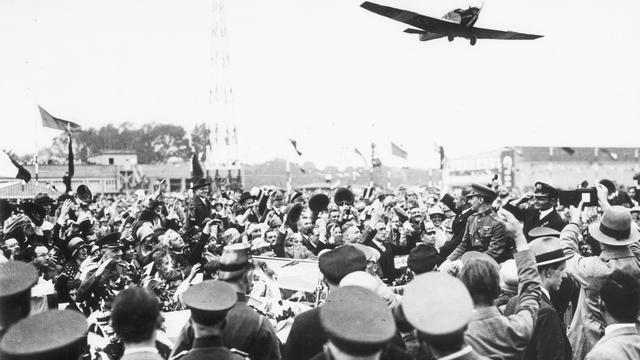
Amidst this political tension, a moment of national pride emerged with the triumphant return of German aviators. On June 20, 1928, thousands in Berlin celebrated the "ocean flyers" who had recently achieved a historic feat: the first east-to-west crossing of the Atlantic Ocean. The Junkers W 33 aircraft carried Captain Hermann Köhl, co-pilot James Fitzmaurice, and financier Ehrenfried von Hünefeld on this challenging journey.
The entire Berlin was in 'flyer fever.' Shops shone with neon signs, houses disappeared in a sea of flags. Already in the morning of June 20, 1928, tens of thousands streamed to Tempelhof Field to celebrate the arrival of the three 'ocean flyers.'
This successful flight was lauded not only as a testament to Germany's advanced aviation technology but also as a crucial step in restoring the nation's prestige on the international stage. In the aftermath of World War I, such accomplishments were vital for re-establishing Germany's position in global competitions for cultural and technological progress.
Captain Hermann Köhl, his Irish co-pilot James Fitzmaurice and financier Ehrenfried von Hünefeld had been the first to cross the Atlantic in a Junkers W 33 in the difficult east-west direction, thereby not only proving the outstanding technical capabilities of German aircraft construction, but also leading Germany back onto the international stage after the lost World War in the contemporary competition for cultural progress.
DistantNews Editorial
Originally published by Die Zeit in German. Translated, summarized, and contextualized by our editorial team with added local perspective. Read our editorial standards.
More Stories


From Our Blog

What Gets Lost (and Found) When News Is Translated

How the Same Story Looks Different in Different Countries

The Critical Role of Diaspora Media in Global News

What Travellers Should Know About Countries with Restricted Press

A Digital Nomad's Guide to Following Local News
