


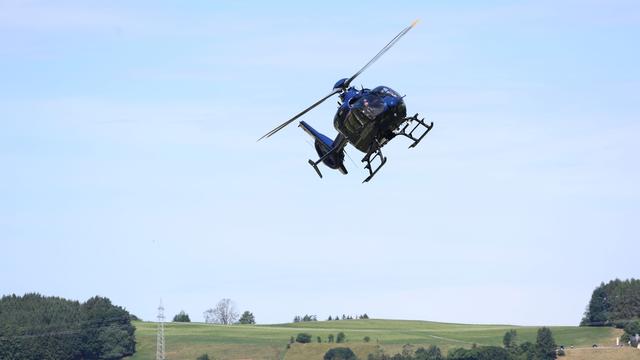
Germany tests nuclear accident response with Bavarian flights
Translated from German, summarized and contextualized by DistantNews.
At a glance
News
From a news agency
Ongoing story
- German authorities are conducting test flights in Bavaria to prepare for potential nuclear accidents, even though Germany has no operating nuclear power plants.
- The exercises simulate radiation measurements from helicopters to assess potential fallout from domestic or foreign nuclear incidents.
- These preparations are crucial because radioactivity does not respect borders, as demonstrated by the Chernobyl disaster.
German authorities are conducting specialized test flights in Bavaria to prepare for the unlikely but serious scenario of a nuclear accident. Despite Germany having phased out its nuclear power plants, the Federal Office for Radiation Protection (BfS) emphasizes the need to be prepared for potential incidents, whether domestic or international.
The current exercises involve helicopters from the Federal Police flying at an altitude of about 90 meters over nearly 600 square kilometers south of Augsburg, near Mindelheim and Schwabmünchen, as well as at Lake Forggensee. These flights, which began on July 7 and will continue until Thursday, aim to measure ground-level radioactivity. The BfS highlighted that radioactivity knows no borders, making preparedness essential even without domestic nuclear reactors.
Radioactivity does not stop at borders.
This initiative follows similar cross-border training flights conducted in April with the French radiation protection authority in the Black Forest and Alsace. France, unlike Germany, still operates numerous commercial nuclear reactors. The BfS has stationed air-transportable measurement systems in Berlin and Munich, ready to be deployed by police or disaster response helicopters in emergencies.
The test flights simulate a critical aspect of emergency response: rapidly assessing the spread of radioactive material. According to the BfS, aerial measurements can survey approximately 100 square kilometers within three hours. The agency cited the 1986 Chernobyl disaster as a stark reminder of how far radioactivity can travel, with contaminated clouds spreading across Europe and leading to long-term contamination issues, such as in forest mushrooms and wild boar in certain German regions. The current test area southwest of Augsburg is known to be one of the most affected regions in Germany from the Chernobyl accident, and experts expect to detect cesium-137, a remnant from that disaster, alongside naturally occurring radioactive substances.
If radioactive substances are released into the environment, for example in an accident, it is crucial for the protection of the population to get a good overview quickly.
DistantNews Editorial
Originally published by Die Zeit in German. Translated, summarized, and contextualized by our editorial team with added local perspective. Read our editorial standards.
More Stories



From Our Blog

What Gets Lost (and Found) When News Is Translated

How the Same Story Looks Different in Different Countries

The Critical Role of Diaspora Media in Global News

What Travellers Should Know About Countries with Restricted Press

A Digital Nomad's Guide to Following Local News
