


Ginseng farmer relocates north to escape climate change impacts
Translated from Korean, summarized and contextualized by DistantNews.
At a glance
News
Sources not specified
Outcome reported
- An ginseng farmer relocated from southern to northern South Korea due to climate change impacting his crops.
- He transitioned to greenhouse cultivation in Cheorwon, achieving significantly higher yields and profitability.
- The company KGC is implementing measures to help its contract farmers adapt to changing climate conditions, including greenhouse farming techniques.
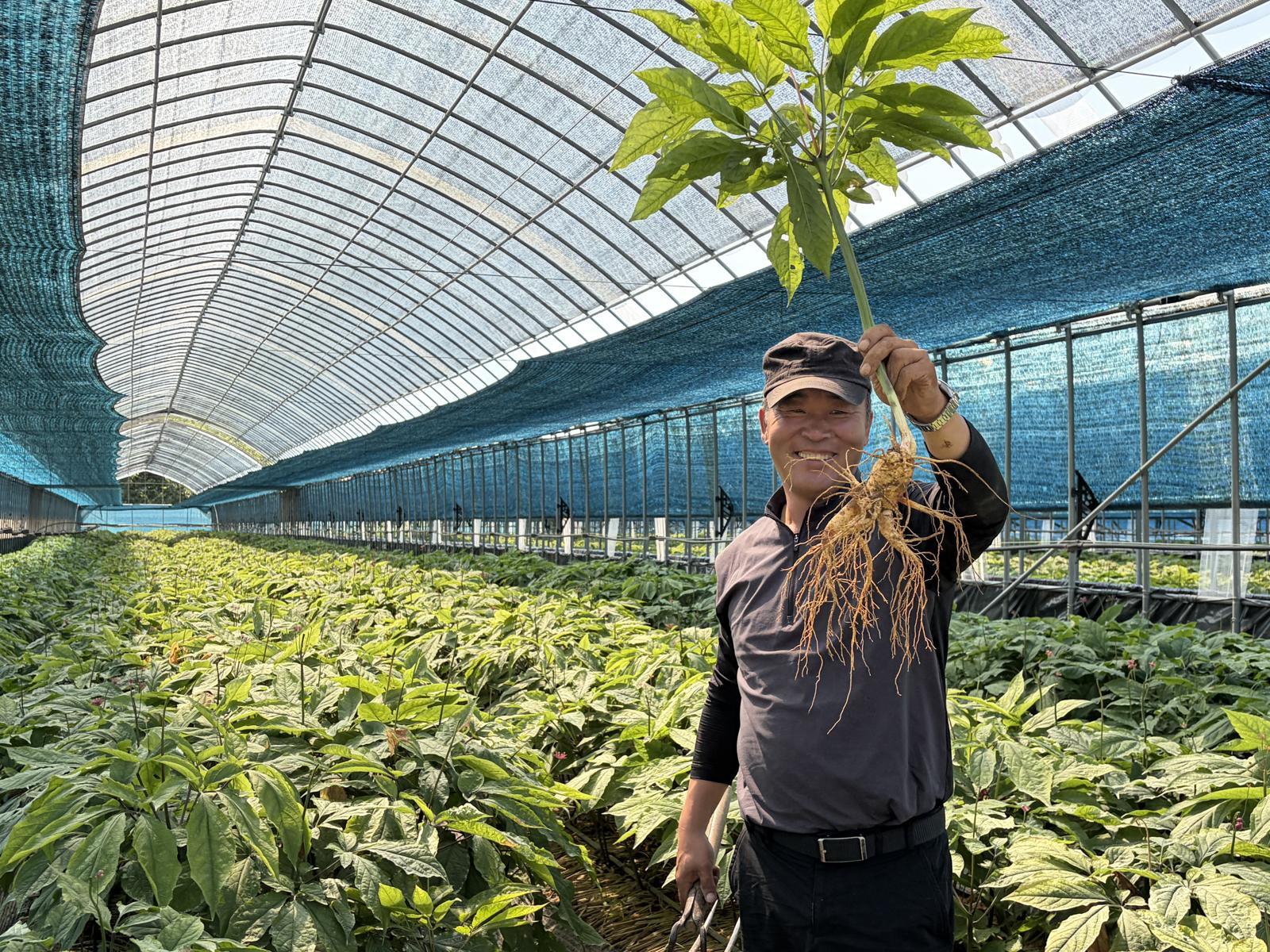
A ginseng farmer has relocated his cultivation from Haenam in the southern part of South Korea to Cheorwon in the north, a move driven by the escalating impacts of climate change on his crops. Choi Jeong-gyu, 56, explained that continuing farming in Haenam felt like an "overnight escape" situation due to unpredictable weather patterns.
Choi, who had been supplying ginseng to KGC since 1999, began shifting his cultivation to Cheorwon in 2012. He noted that ginseng requires a specific cold period, around minus 10 degrees Celsius for 30 days, for pest control and proper germination. However, Haenam's winters became too mild, while summers grew excessively hot, accompanied by frequent typhoons and heavy rainfall.
I felt like I would have to make an escape overnight if I continued farming in Haenam due to the changing climate. I couldn't just abandon the ginseng I had already planted... So, I ended up commuting between Haenam and Cheorwon for five years.
The changing climate directly affected his revenue. Annual sales per 3,300 square meters (1,000 pyeong) dropped from approximately 120 million won in Haenam to 60 million won by 2012. In 2017, his final harvest in Haenam barely recovered half of his investment.
Ginseng needs to 'sleep' for about 30 days at minus 10 degrees Celsius in winter to prevent diseases and pests and ensure good germination. But Haenam's winters stopped freezing, and the summer temperatures rose sharply, with frequent typhoons and heavy rains.
Facing significant debt after crop damage from typhoons Bolaven and Denbi in 2012, Choi sought cooler northern regions and adopted greenhouse cultivation to mitigate external climate influences. "Even though there were initial facility investment costs, I thought it was necessary to prepare for the changing climate," he said. His current greenhouse-grown ginseng in Cheorwon yields more than double the standard cultivation method, proving highly profitable.
Inside Choi's greenhouse, the temperature was maintained at a comfortable 27.6 degrees Celsius, a stark contrast to the 30-degree heat outside. The design incorporates ventilation through mesh side coverings and protective vinyl to block rain, with adjustable openings to manage temperature fluctuations and wind.
Even though there were initial facility investment costs, I thought it was necessary to prepare for the changing climate. Currently, the greenhouse-grown ginseng in Cheorwon yields more than double the standard cultivation method, making it highly profitable.
KGC is actively addressing climate change impacts by providing cultivation training to its contract farmers. While only five of KGC's approximately 1,300 contract farms currently use greenhouse cultivation, Choi is being recognized as a model farmer. KGC plans to conduct 45 training sessions this year on adapting to climate change, sharing know-how like greenhouse farming and drone-based shading to enhance farmer profitability and secure high-quality ginseng.
As complex extreme weather events like heatwaves and heavy rains emerge as new agricultural risks, the on-site response of farmers has become crucial. We will focus on increasing farmer profitability and securing high-quality ginseng by sharing farming know-how among contract farmers, including greenhouse cultivation and drone application of shading agents.
DistantNews Editorial
Originally published by Dong-A Ilbo in Korean. Translated, summarized, and contextualized by our editorial team with added local perspective. Read our editorial standards.
More Stories

From Our Blog

What Gets Lost (and Found) When News Is Translated

The Critical Role of Diaspora Media in Global News

What Travellers Should Know About Countries with Restricted Press

A Digital Nomad's Guide to Following Local News

How the Same Story Looks Different in Different Countries
