


Global sea temperatures hit record high in August, scientists warn of climate impacts
Translated from Korean, summarized and contextualized by DistantNews.
At a glance
News
From a news agency
Context piece
- Global sea surface temperatures reached a record high of 21.1 degrees Celsius on August 22, the hottest since records began in 1979.
- This record, set in August, surpasses previous highs typically seen in March or April, indicating a significant warming trend.
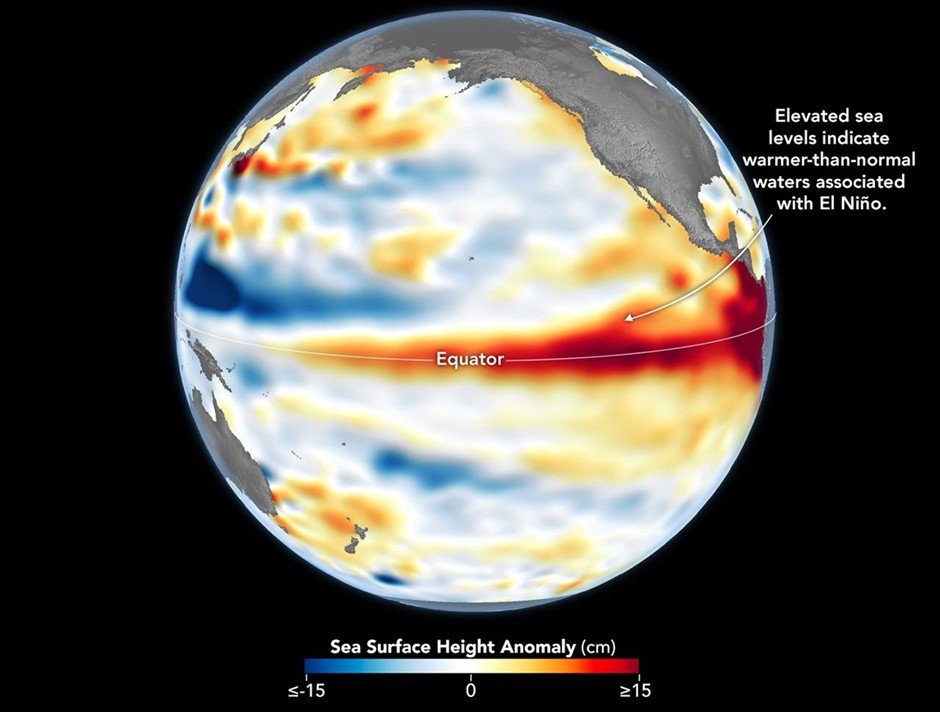
- Scientists attribute the warming to a combination of a strong El Niño and decades of human-caused climate change, warning of impacts on marine ecosystems and weather patterns.
The world's oceans recorded their hottest-ever day on August 22, with the average sea surface temperature reaching 21.1 degrees Celsius. This record, compiled by the European Union's Copernicus Climate Change Service (C3S), surpasses the previous daily high of 21.09 degrees set in March 2024 and shatters the August record of 20.98 degrees from 2023. This marks a significant deviation from historical patterns, where ocean temperatures typically peak in the Southern Hemisphere's late summer months of March and April.
El Niño is adding heat, but this is on top of decades of human-induced warming.
Scientists attribute this unprecedented warming to a confluence of factors. A strong El Niño event is currently amplifying global temperatures, but this is occurring on top of decades of accumulated human-caused global warming. Samantha Burgess, head of climate transition at C3S, emphasized that while El Niño adds heat, it is layering onto a foundation of long-term warming driven by human activities. The World Meteorological Organization predicts El Niño will strengthen in the coming months, with Copernicus suggesting it could reach an intensity not seen in decades.
The consequences of these record ocean temperatures are far-reaching. Warmer seas release more heat and moisture into the atmosphere, potentially intensifying rainfall and fueling storms. The thermal expansion of seawater also contributes to rising sea levels, increasing flood risks for coastal and low-lying island regions. Marine heatwaves, periods of unusually high ocean temperatures, are also becoming more frequent and intense, having already tripled in frequency since the early 1990s. These events can devastate coral reefs, seagrass meadows, and disrupt marine food webs, impacting fisheries and aquaculture.
Warm oceans are not our friend.
Marine ecologists and oceanographers express grave concern over the cascading effects. John Bruno, a marine ecologist at the University of North Carolina, worries about the impact on Caribbean coral and ecosystems in the Southern Hemisphere. Boris Worm, a biologist at Dalhousie University, pointed to Peru's anchovy fishery, historically vulnerable to strong El Niños, as an example of how declining fish stocks can affect larger marine life and human populations. Jane Lubchenco, former administrator of the U.S. National Oceanic and Atmospheric Administration (NOAA), warned that warm oceans destabilize weather patterns, threaten food security, economic prosperity, and marine life, stating, "Warm oceans are not our friend." Rick Spinrad, also a former NOAA administrator, likened the ocean to "Earth's thermostat," underscoring that its health is crucial for global safety, prosperity, and well-being.
The ocean is Earth's thermostat.
DistantNews Editorial
Originally published by Dong-A Ilbo in Korean. Translated, summarized, and contextualized by our editorial team with added local perspective. Read our editorial standards.
More Stories



From Our Blog

What Gets Lost (and Found) When News Is Translated

The Critical Role of Diaspora Media in Global News

What Travellers Should Know About Countries with Restricted Press

A Digital Nomad's Guide to Following Local News

How the Same Story Looks Different in Different Countries
