


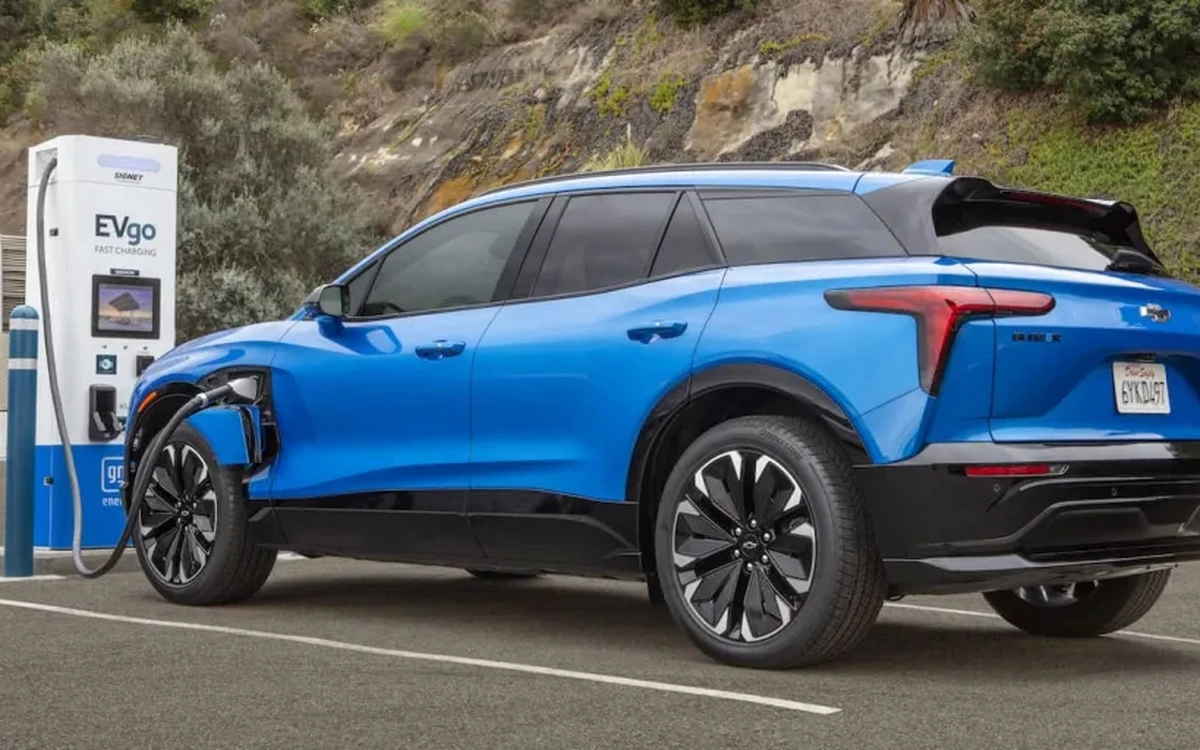
GM Eyes Cheaper EVs with New LMR Battery Tech, Potentially Dropping LFP Plans
Translated from Vietnamese, summarized and contextualized by DistantNews.
At a glance
News
Named sources
New plan
- General Motors is considering abandoning its LFP battery production plans in the U.S. to focus on new Lithium Manganese Rich (LMR) battery technology.
- LMR batteries offer similar range to LFP but at a lower cost and with higher energy density, potentially reducing EV prices by thousands of dollars.
- GM plans to use LMR batteries for mainstream EVs, while continuing with higher-cost NMC batteries for premium models.
General Motors is reportedly shifting its electric vehicle battery strategy, potentially shelving plans for Lithium Iron Phosphate (LFP) battery production in the United States to concentrate on a newer Lithium Manganese Rich (LMR) technology. This move signals a significant pivot as automakers worldwide seek to cut production costs while maintaining competitive driving ranges.
GM has invested years in developing LMR technology. Initially, the company planned to produce both LMR and LFP batteries domestically. However, a joint venture battery plant with LG Energy Solution in Tennessee will now exclusively produce LFP batteries for grid energy storage and data centers, not for electric vehicles. Kurt Kelty, GM's head of battery strategy, described LMR batteries as the "workhorse" of the company's electrification efforts.
Kelty explained that LMR batteries offer comparable production costs to LFP but boast higher energy density with nearly the same weight. This allows electric vehicles to achieve greater range without a substantial price increase. "It is entirely possible that LFP batteries will no longer appear in our product portfolio," Kelty noted, suggesting LMR will power GM's mainstream electric vehicles.
It is entirely possible that LFP batteries will no longer appear in our product portfolio.
Currently, most GM EVs use Nickel-Manganese-Cobalt (NMC) batteries, which provide excellent range but are more expensive and less suited for frequent 100% charging compared to LFP. GM intends to reserve NMC batteries for its premium EV models. For mass-market vehicles, LMR is positioned as the key solution. For instance, the Chevrolet Silverado EV, currently using NMC, could potentially achieve a range of around 644 km with an equivalent-sized and weighted LMR battery pack.
The transition to LMR batteries could slash production costs for vehicles like the Silverado EV by at least $6,000 (approximately 160 million Vietnamese dong). This cost reduction, if passed on to consumers, could significantly boost the competitiveness of electric pickup trucks. Kelty emphasized LMR's critical role in GM's future and its electric vehicle expansion plans. Other major automakers, including Ford, are also pursuing LMR technology, aiming for lower-cost EVs with strong range and performance.
The LMR battery will be GM's most important product line in the coming years and will play a key role in the company's electric vehicle scaling plan.
DistantNews Editorial
Originally published by Tuổi Trẻ in Vietnamese. Translated, summarized, and contextualized by our editorial team with added local perspective. Read our editorial standards.
More Stories


From Our Blog

What Gets Lost (and Found) When News Is Translated

The Critical Role of Diaspora Media in Global News

What Travellers Should Know About Countries with Restricted Press

A Digital Nomad's Guide to Following Local News

How the Same Story Looks Different in Different Countries
