


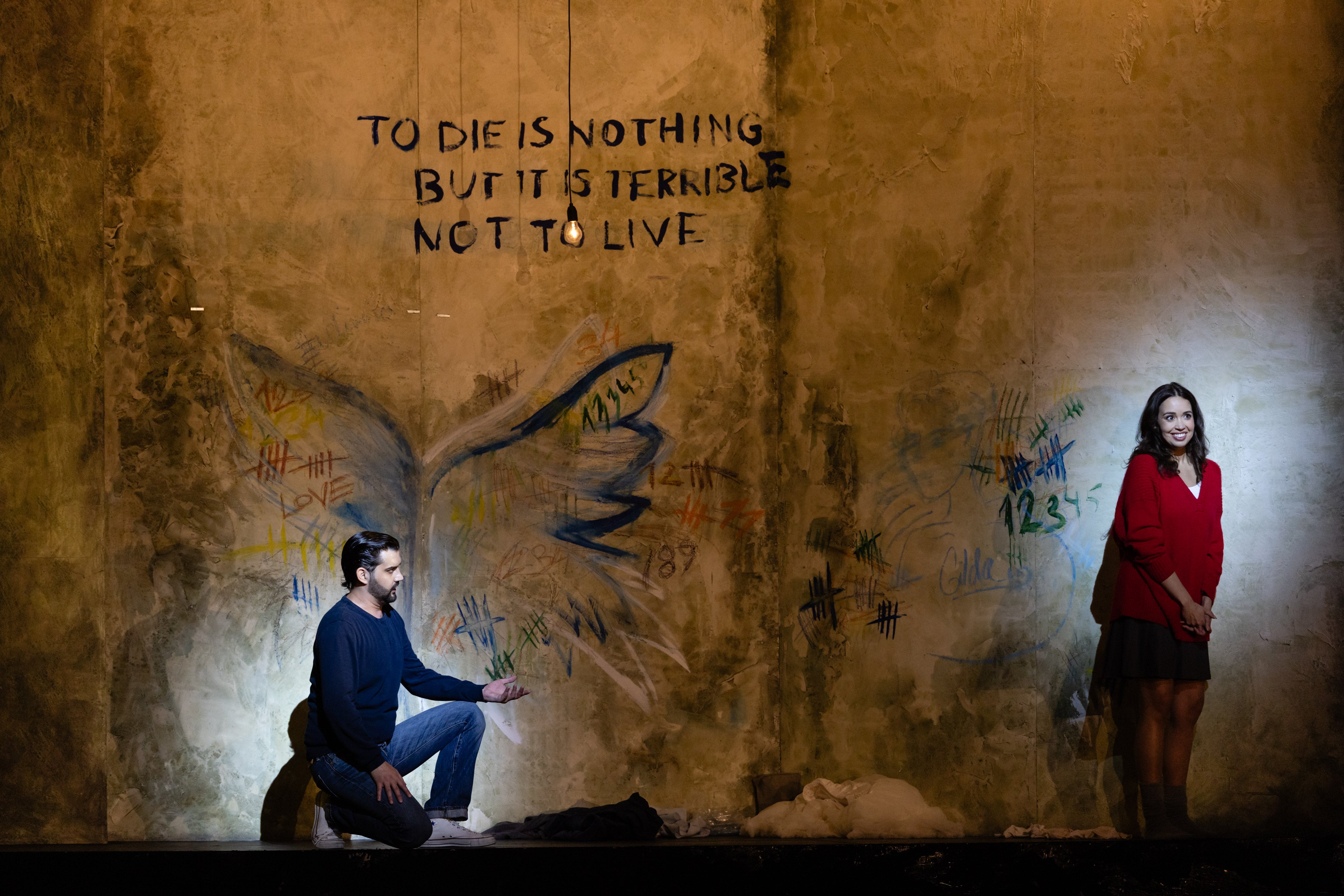
Goethe and Victor Hugo meet in Munich: The challenges of adapting literature to opera
Translated from Spanish, summarized and contextualized by DistantNews.
At a glance
In-depth
Named sources
Context piece
- The adaptation of great literature into opera, while often successful, has historically faced numerous challenges, including censorship and artistic compromises.
- Giuseppe Verdi struggled with censorship for his opera based on Victor Hugo's "Le Roi s'amuse," which was eventually adapted into "Rigoletto."
- Charles Gounod faced fewer censorship issues adapting Goethe's "Faust" but had to make significant concessions for a grand opera format, including adding choruses and ballets.
The journey from great literature to grand opera is often fraught with difficulty, a path navigated by composers like Giuseppe Verdi and Charles Gounod. While the fusion of literary masterpieces with musical drama has yielded timeless works, it has frequently involved arduous battles with librettists, singers, theater directors, and, notably, censors.
The protagonist of Le Roi s’amuse, by Victor Hugo, seemed to the Italian composer 'a creation worthy of Shakespeare,' as he enthusiastically wrote in a letter to his librettist, Francesco Maria Piave.
Verdi's experience with Victor Hugo's play "Le Roi s'amuse" exemplifies these struggles. Initially captivated by the protagonist, whom he deemed "a creation worthy of Shakespeare," Verdi found himself confronting the Austrian censorship prevalent in Venice, where the opera was slated for performance at Teatro La Fenice. Despite his insistence that the work's core elements were essential to his musical composition, censors decried the libretto for "repulsive immorality and obscene triviality." This led to the eventual transformation of characters and setting, resulting in the opera known today as "Rigoletto."
Charles Gounod, a few years later, chose a seemingly safer route by adapting Goethe's "Faust," a cornerstone of German literature. While Gounod avoided the overt censorship battles Verdi faced, though the sensitive theme of infanticide was subtly handled, he still had to contend with the demands of the grand opera format. This meant incorporating the expected profusion of choruses and ballets, domesticating the plot, amplifying the melodic elements, and prioritizing spectacular stage and visual presentation, regardless of its narrative relevance.
I chose this subject precisely for these qualities, and if these original features are suppressed, I can no longer write music for it. If I am told that my notes can also be used with this drama, I answer that I do not understand these reasons, and I frankly say that I never write my notes, whether beautiful or ugly, by chance and that I always try to give them character.
Gounod, a devoted reader of the French translation of "Faust" by Gérard de Nerval, understood the sacrifices required. He carried the work with him constantly during his time in Rome, indicating its profound influence on his creative process. The adaptation process, therefore, involved a careful balancing act between artistic integrity and the commercial and theatrical expectations of the era, a challenge inherent in translating literary depth to the operatic stage.
The work did not leave me, I carried it with me everywhere.
DistantNews Editorial
Originally published by El País in Spanish. Translated, summarized, and contextualized by our editorial team with added local perspective. Read our editorial standards.
More Stories


From Our Blog

What Gets Lost (and Found) When News Is Translated

The Critical Role of Diaspora Media in Global News

What Travellers Should Know About Countries with Restricted Press

A Digital Nomad's Guide to Following Local News

How the Same Story Looks Different in Different Countries
