


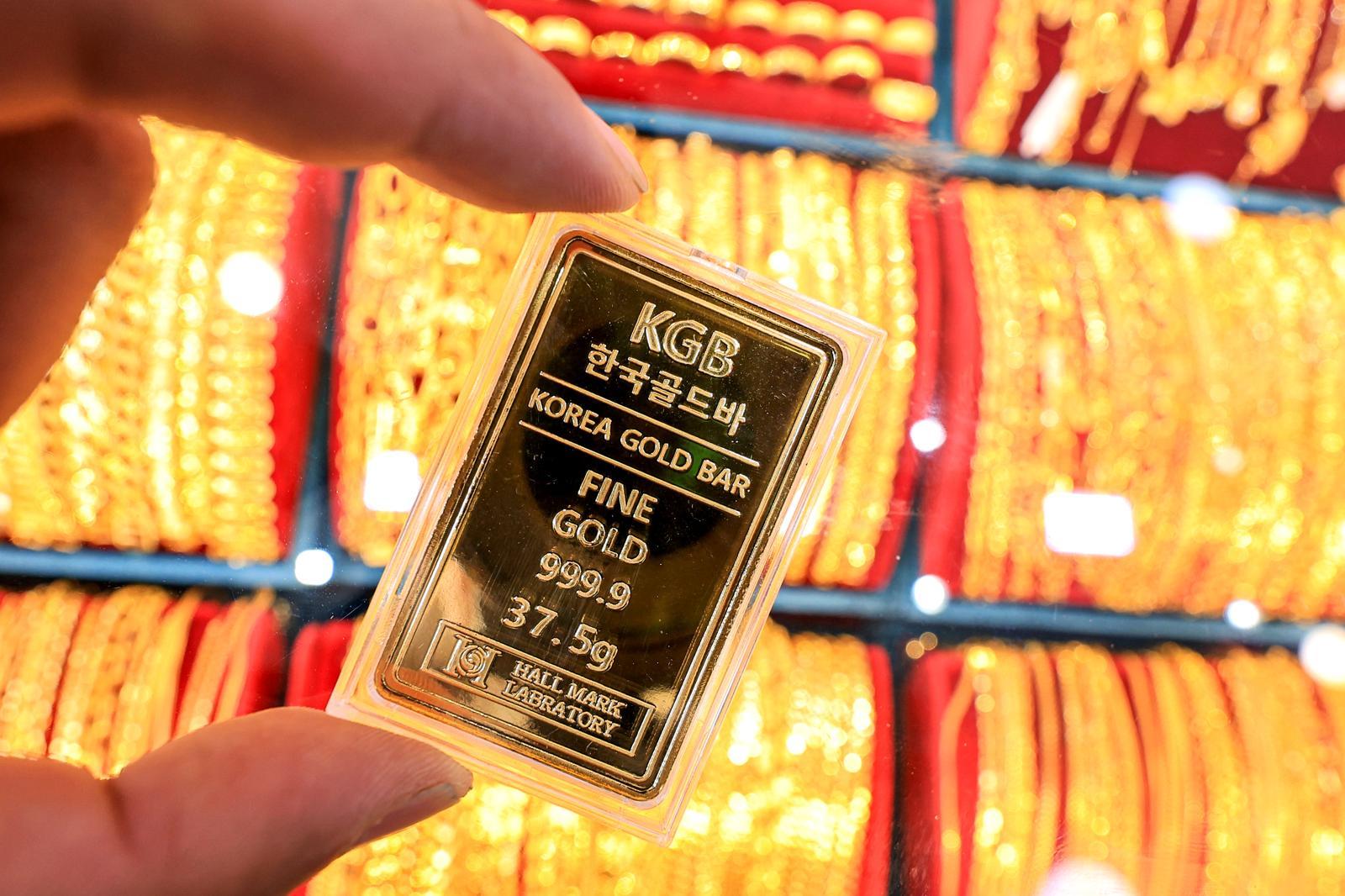
Gold Price Rebounds 11% in a Month on Easing Fed Concerns, Central Bank Buying
Translated from Korean, summarized and contextualized by DistantNews.
At a glance
News
Sources not specified
Context piece
- Gold prices have rebounded, rising 11% in a month after a 25% decline, with futures trading at $4,432 per ounce.
- The price drop was attributed to rising interest rates and a strong dollar, but recent U.S. employment data showing a decrease in non-farm payrolls has lowered expectations of further Fed rate hikes.
- Central banks globally, including China and South Korea's central bank, are increasing gold reserves, fueling optimism for a continued price increase, with some analysts predicting a return to $5,000 per ounce.
Gold prices are showing a strong rebound, surging 11% in just one month after a significant 25% drop. Futures for December delivery closed at $4,432 per ounce on August 14, signaling a potential end to a prolonged correction.
The long-term upward trend that began in the fourth quarter of 2022 is showing support at the Fibonacci retracement level of approximately 38% (around $4,000 per ounce), and the long-term upward trend is expected to continue.
Earlier this year, gold's appeal waned as rising bond yields and a stronger dollar, coupled with anticipated interest rate hikes by the U.S. Federal Reserve, shifted investor demand towards U.S. Treasuries and the dollar. This led to a sharp decline in gold prices, falling to $3,991.1 per ounce by July 16.
The market sentiment shifted dramatically following the release of U.S. employment data. The unexpected decrease of 23,000 non-farm payroll jobs in July significantly reduced the likelihood of further Fed rate increases, prompting a reassessment of gold's value as a safe-haven asset. This shift has been further bolstered by central banks worldwide increasing their gold holdings. In the second quarter, global central banks' net gold purchases rose by 62% year-on-year to 288.9 tons. China's People's Bank notably increased its holdings by 640,000 ounces in July, the largest monthly increase in 2 years and 9 months.
Considering this, we anticipate a rise to around $5,000 by year-end.
This renewed interest is also reflected in investment products. Global gold exchange-traded funds (ETFs) saw net inflows of $3 billion in July. South Korea's central bank, the Bank of Korea, also disclosed holdings of the SPDR GOLD TR ETF worth $250.41 million in the second quarter, marking its first gold investment since 2013. Analysts anticipate gold prices will continue to rise, with some predicting a recovery to $5,000 per ounce by year-end, citing historical patterns of recovery after significant price drops. However, some caution remains due to the lingering possibility of Fed rate hikes and potential geopolitical instability impacting oil prices and inflation.
Technically, breaking through $4,600 will be a crucial turning point towards the previous high.
DistantNews Editorial
Originally published by Dong-A Ilbo in Korean. Translated, summarized, and contextualized by our editorial team with added local perspective. Read our editorial standards.
More Stories


From Our Blog

What Gets Lost (and Found) When News Is Translated

The Critical Role of Diaspora Media in Global News

What Travellers Should Know About Countries with Restricted Press

A Digital Nomad's Guide to Following Local News

How the Same Story Looks Different in Different Countries
