


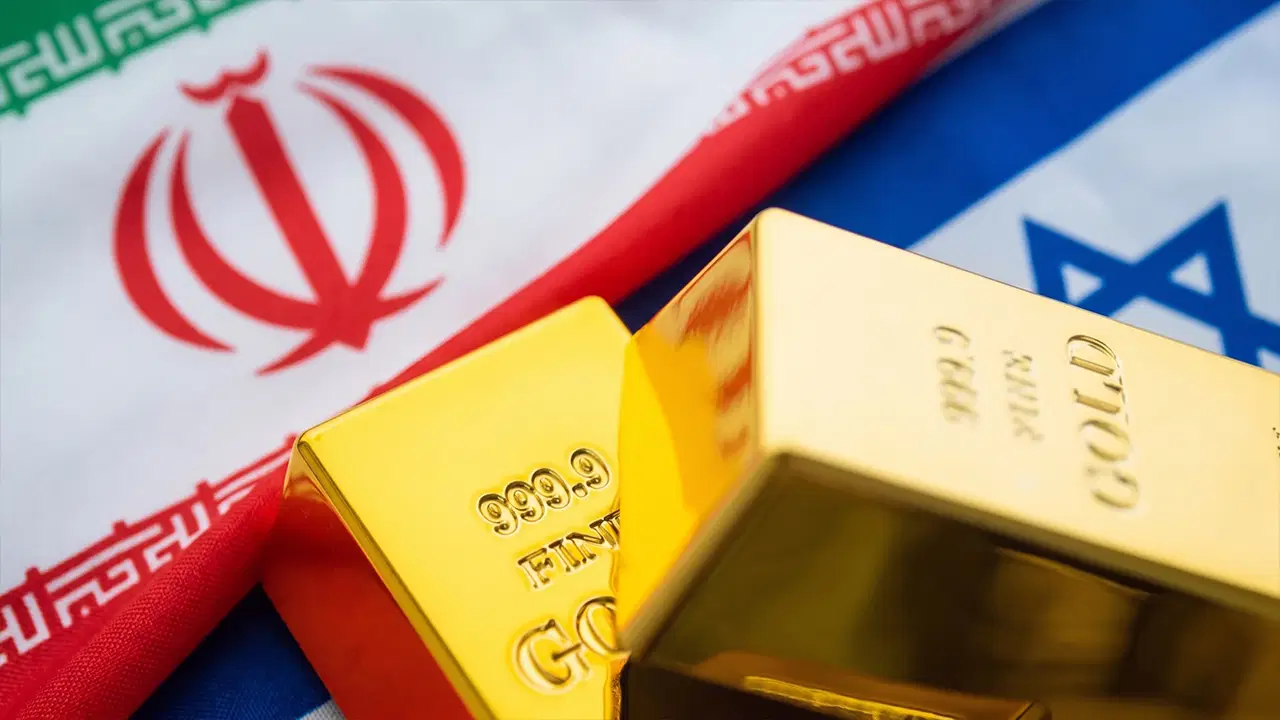
Gold's 'Safe Haven' Status Challenged: Why Prices Aren't Rising in Wartime
Translated from Turkish, summarized and contextualized by DistantNews.
At a glance
Analysis
Sources not specified
Context piece
- Contrary to traditional belief, gold's status as a "safe haven" asset was challenged during the recent Iran conflict, with prices falling 18% in 100 days.
- Analysis suggests a weak and inconsistent relationship between gold prices and geopolitical risk, varying across different periods.
- Experts advise against over-reliance on gold for crisis protection, recommending long-term strategies instead.
Gold's long-held reputation as a "safe haven" asset faced a significant challenge during the recent conflict involving Iran, as prices experienced an unexpected decline. While markets typically anticipate gold prices to rise during geopolitical tensions, the period following the conflict saw gold prices drop by 18% over approximately 100 days, prompting investors to re-evaluate their long-standing expectations.
The established perception of gold as a safe haven asset was disrupted.
Market analysis, including work by economists Dario Caldara and Matteo Iacoviello using the Geopolitical Risk Index (GPR), indicates that the relationship between gold prices and geopolitical risks is not consistently positive. Historical data dating back to 1968 reveals that gold's performance has shown varying correlations with geopolitical risk indicators, sometimes positive and sometimes negative, depending on the specific period.
This volatility challenges the common investor error of expecting gold to automatically surge during every crisis. Historical data suggests that short-term gold price movements cannot be solely attributed to wars or political crises, making short-term price predictions based on geopolitical events often unreliable. Similarly, gold's perceived role as a hedge against inflation is also variable, with its performance fluctuating in the short to medium term.
The relationship between gold prices and geopolitical risks is not consistent and lasting.
Experts, including Wes Crill, Vice President at Dimensional Fund Advisors, caution investors against placing excessive faith in gold as a sole protection against potential crises. While gold can offer protection at certain times, it may not meet short-term expectations during market fluctuations. Research by Campbell Harvey and Claude Erb suggests that gold tends to preserve purchasing power over very long periods, exceeding 100 years, rather than providing consistent short-term stability.
Investors should not overly rely on gold for protection against possible crises.
DistantNews Editorial
Originally published by Cumhuriyet in Turkish. Translated, summarized, and contextualized by our editorial team with added local perspective. Read our editorial standards.
More Stories



From Our Blog

What Gets Lost (and Found) When News Is Translated

The Critical Role of Diaspora Media in Global News

What Travellers Should Know About Countries with Restricted Press

A Digital Nomad's Guide to Following Local News

How the Same Story Looks Different in Different Countries
