


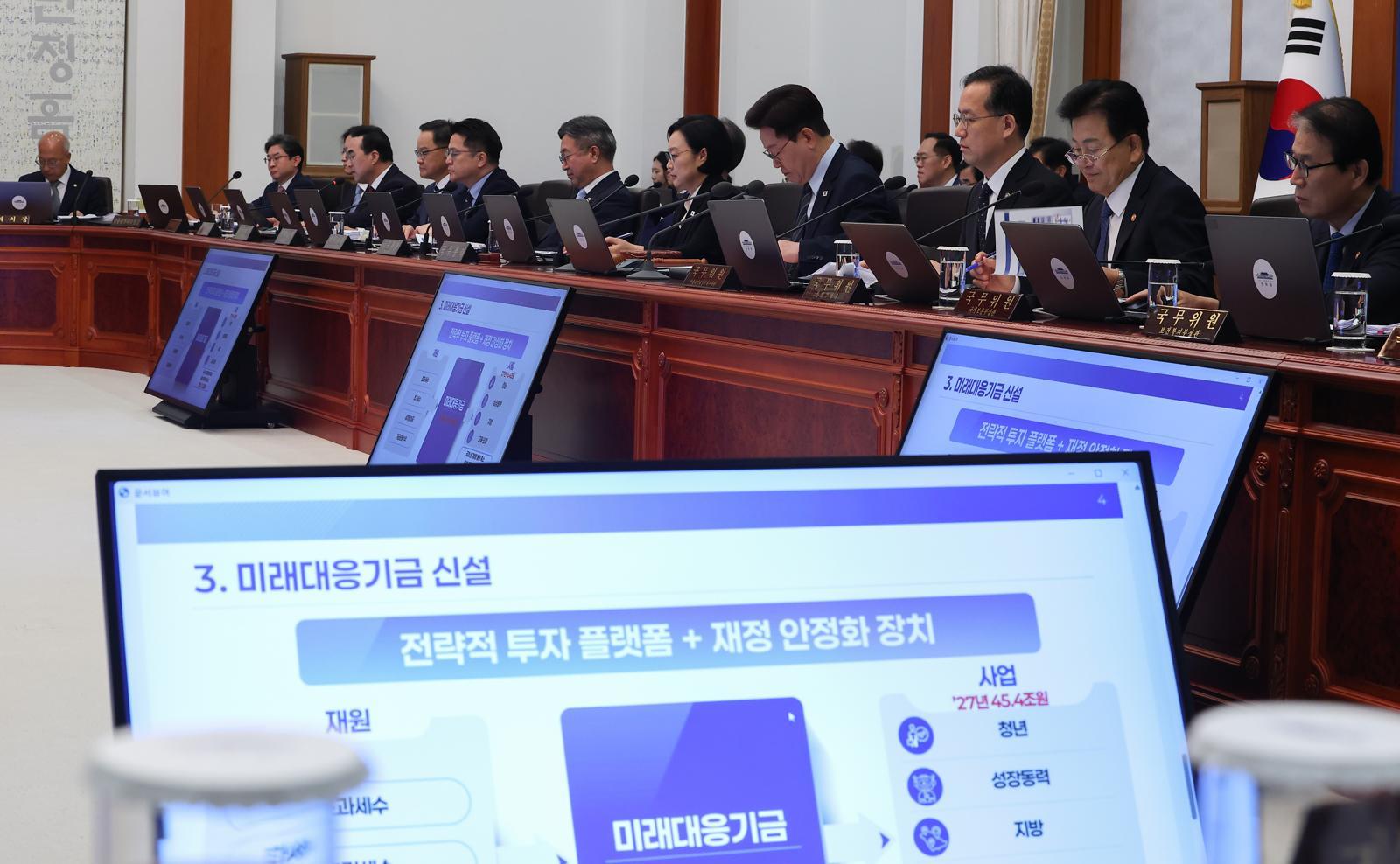
Government cuts 69 trillion won in mandatory spending and redirects funds to core priorities
Translated from Korean and summarized by DistantNews. Read the original for the full story.
At a glance
News
Official statement
New plan
- South Korea’s government says it will cut 69 trillion won in mandatory spending and 38.6 trillion won in discretionary spending in its 2027 budget proposal.
- The measures include reforming education grants, setting aside excess tax revenue for a future-response fund, and changing unemployment-benefit rules.
- More than 2,100 programs will be abolished, while reductions will also affect research and development, overseas aid and administrative costs.
South Korea’s government plans to cut 69 trillion won in mandatory spending in its 2027 budget proposal, exceeding its target of reducing such spending by 10 percent. It also plans to redirect savings toward core government priorities.
The restructuring changes how local education grants are calculated. After 55 years, the system that automatically allocated 20.79 percent of domestic tax revenue will be revised to reflect nominal economic growth and changes in the school-age population.
The government plans to place 32.5 trillion won in additional tax revenue above the trend of the past decade into a future-response fund for reinvestment in talent development. It will also set aside 30.5 trillion won in additional local allocation tax revenue for the same fund.
Changes to unemployment benefits, including excluding unpaid holidays from payment calculations, are expected to save 1.4 trillion won. Discretionary spending will fall by 38.6 trillion won, the largest reduction on record, after more than 2,100 programs, or over 10 percent of all projects, are eliminated.
The cuts include 3.8 trillion won from consolidating agricultural and fisheries policy loans and changing support for renewable-energy loans. Research and development adjustments linked to technology trends will reduce spending by 6.2 trillion won, while restructuring low-performing overseas development aid programs will save 900 billion won. Online promotion and fewer events will cut operating costs by another 100 billion won.
About this summary
Originally published by Dong-A Ilbo in Korean. Translated, summarized, and contextualized automatically by DistantNews, with a note on how the source frames the story. Not individually reviewed before publishing. How this works.
More Stories


From Our Blog

What Gets Lost (and Found) When News Is Translated

The Critical Role of Diaspora Media in Global News

What Travellers Should Know About Countries with Restricted Press

A Digital Nomad's Guide to Following Local News

How the Same Story Looks Different in Different Countries
