

Government Defends 'Super RIGI,' Denies Tailoring for Tech Giants
Translated from Spanish, summarized and contextualized by DistantNews.
At a glance
News
Named sources
New plan
- The Argentine government defended its "Super RIGI" project in Congress, rejecting claims it's tailored for tech giants.
- Officials stated the new regime aims to attract large-scale industrial projects not yet present in Argentina, unlike the previous RIGI which focused on natural resources and infrastructure.
- The government highlighted the success of the original RIGI, citing 39 projects worth $138 billion that could generate significant employment and exports.
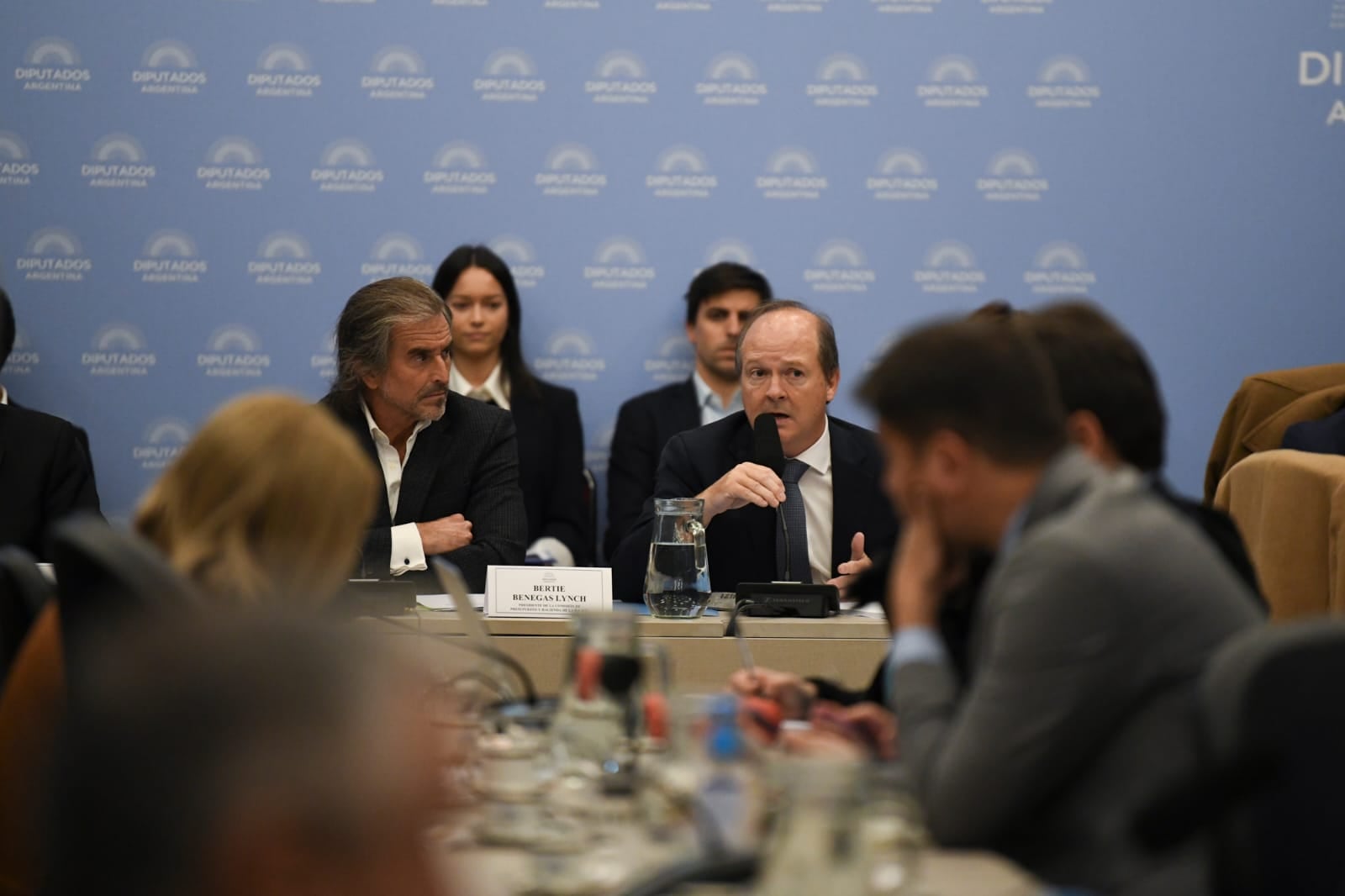
Argentina's government is facing scrutiny over its proposed "Super RIGI" (Integral and Rigorous Investment Regime), with the opposition alleging it's a custom-made incentive package for major technology firms, particularly those linked to artificial intelligence. Daniel González, Secretary of Energy and Mining Coordination, vehemently denied these accusations during a legislative session.
I don't know Mr. Palantir, I don't know anyone. There is absolutely no lobby involved in this.
González dismissed speculation connecting the "Super RIGI" to figures like Peter Thiel, co-founder of Palantir, who has met with President Javier Milei and his economic team. "I don't know Mr. Palantir, I don't know anyone. There is absolutely no lobby involved in this," González stated, asserting the government doesn't even know which companies might initially benefit from the new regime. He suggested the "Super RIGI" is unlikely to have a short-term impact.
I don't imagine this is a regime that will have a short-term impact.
The "Super RIGI" is presented as an evolution of the regime established by the "Ley Bases" (Bases Law). González explained that the current RIGI has been successful in attracting investments in natural resources and infrastructure but is set to expire in July 2027. The new regime, however, targets large-scale industrial projects that do not yet exist in Argentina and will add value to the country's natural resources. It will have a longer application window of five years, extendable by one, and will explicitly exclude extractive and infrastructure projects.
The 'Super RIGI' will apply to projects that do not exist, most of which we don't even know yet.
To justify the shift, González pointed to the original RIGI's achievements: 39 projects have been submitted, totaling $138 billion in potential investment. These projects could create 179,000 jobs and generate $41 billion in annual exports, effectively doubling Argentina's current exports. He specifically highlighted advancements in sectors like lithium, copper, and Vaca Muerta, where the regime has reportedly accelerated long-delayed investments. An example cited is the El Pachón copper project in San Juan, which, despite decades of studies, only saw a final investment decision under the RIGI.
In aggregate, they double the exports of Argentina.
DistantNews Editorial
Originally published by La Nación in Spanish. Translated, summarized, and contextualized by our editorial team with added local perspective. Read our editorial standards.
More Stories



From Our Blog

What Gets Lost (and Found) When News Is Translated

The Critical Role of Diaspora Media in Global News

What Travellers Should Know About Countries with Restricted Press

A Digital Nomad's Guide to Following Local News

How the Same Story Looks Different in Different Countries
