


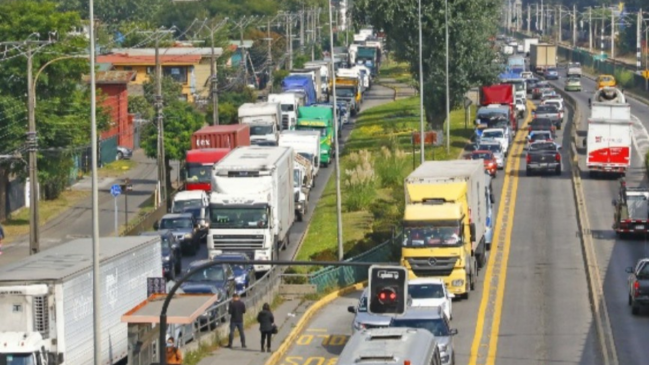
Gran Concepción transport corridors to be state-run, not concessioned
Translated from Spanish, summarized and contextualized by DistantNews.
At a glance
News
Sources not specified
New plan
- Public transport corridor projects in Chile's Gran Concepción will proceed but be managed directly by the Directorate of Highways, not through concessions.
- This change postpones Route 160 works by two months and adds about a year to Route 150 construction.
- The regional governor expressed dissatisfaction, citing past delays and questioning the effectiveness of the new management model.
Public transport corridor projects in Chile's Gran Concepción will move forward, but under a revised administrative and financial structure. The government has decided against using concession systems, opting instead for direct management by the Directorate of Highways.
This restructuring will impact project timelines. Construction on Route 160 will be delayed by two months, while the corridor along Route 150, connecting Concepción and Talcahuano, will see its completion pushed back by approximately one year. These delays mean longer waits for regional users.
I want to clarify something: first, let me tell you that two weeks ago we didn't have a corridor project, today we have one in a format and model that no one in the region agrees with, because it basically leaves us with many doubts.
Despite the assurance that the infrastructure will be built, the regional governor of Biobío, Sergio Giacaman, voiced strong disapproval. He stated that the new model "is not good news for the region" and leaves many doubts. Giacaman pointed to persistent delays in other regional projects, such as the Perales Bridge and the Colón corridor, and the unfinished works abandoned by Tapusa, as reasons for his skepticism.
"We have been waiting six years for the Perales Bridge, several years for the Colón corridor to finish, and I don't know how long we will wait for the works that Tapusa abandoned," Giacaman said, questioning the model's efficacy based on past experiences.
We have been waiting six years for the Perales Bridge, several years for the Colón corridor to finish, and I don't know how long we will wait for the works that Tapusa abandoned. So, our doubts are sustained, because fundamentally the model is not working well.
DistantNews Editorial
Originally published by Cooperativa in Spanish. Translated, summarized, and contextualized by our editorial team with added local perspective. Read our editorial standards.
More Stories


From Our Blog

What Gets Lost (and Found) When News Is Translated

The Critical Role of Diaspora Media in Global News

What Travellers Should Know About Countries with Restricted Press

A Digital Nomad's Guide to Following Local News

How the Same Story Looks Different in Different Countries
