


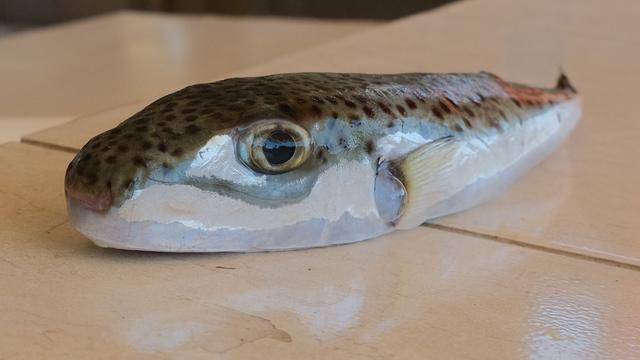
Greece Pays Fishermen to Catch Invasive, Poisonous Pufferfish
Translated from German, summarized and contextualized by DistantNews.
At a glance
News
From a news agency
New plan
- Greece is launching a pilot program to pay fishermen for catching the invasive pufferfish (Lagocephalus sceleratus) in certain regions.
- The program offers a premium of 5.33 euros per kilogram of the poisonous fish, initially targeting areas around Crete and the southern Aegean.
- The pufferfish, originating from the Indo-Pacific, entered the Mediterranean via the Suez Canal and poses a threat to the ecosystem and fishing nets.
Greece is initiating a pilot program to combat the proliferation of the invasive rabbitfish (Lagocephalus sceleratus) by incentivizing fishermen to catch it. In designated regions, particularly around Crete and the southern Aegean, professional fishermen will receive a payment of 5.33 euros per kilogram for every pufferfish they land.
This initiative aims to address the significant disruption caused by the invasive species. The rabbitfish, native to the Indo-Pacific and Indian Oceans, entered the Mediterranean through the Suez Canal, first being recorded in 2003. It is known for its adaptability and lack of natural predators in the Mediterranean, leading to concerns about its negative impact on biodiversity, although targeted studies are limited.
Beyond its ecological impact, the rabbitfish poses a direct threat to fishermen. Its sharp, beak-like teeth can damage fishing nets, leading to financial losses. While the fish is poisonous and contains the neurotoxin tetrodotoxin (TTX), which is not destroyed by heat, Greek authorities reassure swimmers that the risk to bathers is minimal, with only one known incident of a swimmer being bitten in 2022. The primary focus of the program is to mitigate the damage to the fishing industry and the marine ecosystem.
Similar programs in Turkey, where the rabbitfish has been a problem for years, have shown success. Last year, approximately 290,000 rabbitfish were caught, reportedly preventing the proliferation of an estimated 22 million new individuals. Greek officials, however, remain cautiously optimistic about the potential impact of their program, with the Minister for Rural Development and Food stating that while incentives are being created, "spectacular changes" are not expected immediately.
Our goal is to create incentives, but honestly, we will not see spectacular changes.
DistantNews Editorial
Originally published by Die Zeit in German. Translated, summarized, and contextualized by our editorial team with added local perspective. Read our editorial standards.
More Stories



From Our Blog

What Gets Lost (and Found) When News Is Translated

How the Same Story Looks Different in Different Countries

The Critical Role of Diaspora Media in Global News

What Travellers Should Know About Countries with Restricted Press

A Digital Nomad's Guide to Following Local News
