

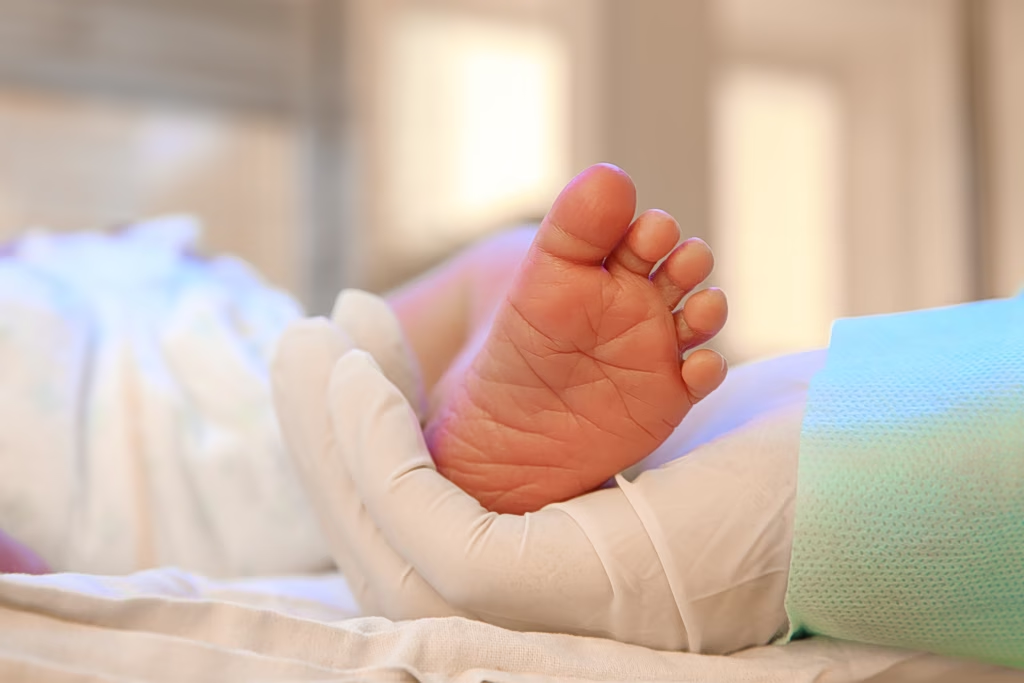

Greece's C-section rate among world's highest, study finds
Translated from Greek, summarized and contextualized by DistantNews.
At a glance
News
Sources not specified
Context piece
- Greece has one of the world's highest rates of Cesarean sections, with 67% of births occurring this way.
- This rate is significantly higher than in most European countries, where it ranges from 15% to 30%.
- The Observatory of Midwifery Violence Greece highlights that non-medically indicated C-sections are a form of mistreatment and can lead to increased recovery times for mothers.
Greece continues to rank among the global leaders in Cesarean section rates, with approximately seven out of ten children, or 67% of births, being delivered via C-section. This figure starkly contrasts with most European nations, where C-section rates typically fall between 15% and 30%. In some provincial hospitals, data from 2023 indicates rates as high as 84%.
Konstantina Nousia, president of the Observatory of Midwifery Violence Greece, presented these findings, noting that children born via C-section may have a higher likelihood of developing allergies and asthma. The Observatory, a member of the International Federation InterOVO, aims to document and expose incidents of mistreatment in maternity care, collect testimonies from women, and advocate for changes in practices during pregnancy, childbirth, and the postpartum period.
Nousia identified unnecessary Cesarean sections as a frequent form of mistreatment, explaining that when a C-section is not medically required, it is associated with longer recovery periods for the mother. She elaborated that mistreatment can be verbal, psychological, or physical, manifesting through procedures performed without informed consent, inadequate information provided to pregnant individuals, or excessive vaginal examinations without indication. Practices like the Christeller maneuver, involving intense abdominal pressure during delivery, have been abandoned in many countries due to risks to both mother and fetus.
Nousia shared her personal experiences with various forms of mistreatment during her own deliveries, emphasizing the phenomenon over her individual story. She cited psychological mistreatment, such as pressuring expectant mothers into C-sections by claiming their baby is at risk, even when no real medical necessity exists. "They told me my baby would die if we didn't do a C-section right now," she recounted, adding, "Of course, I didn't have a C-section, and my baby was fine. Because I was a midwife, I could see that the fetal heart rate was very good."
DistantNews Editorial
Originally published by Kathimerini in Greek. Translated, summarized, and contextualized by our editorial team with added local perspective. Read our editorial standards.
More Stories

From Our Blog

What Gets Lost (and Found) When News Is Translated

The Critical Role of Diaspora Media in Global News

What Travellers Should Know About Countries with Restricted Press

A Digital Nomad's Guide to Following Local News

How the Same Story Looks Different in Different Countries
