


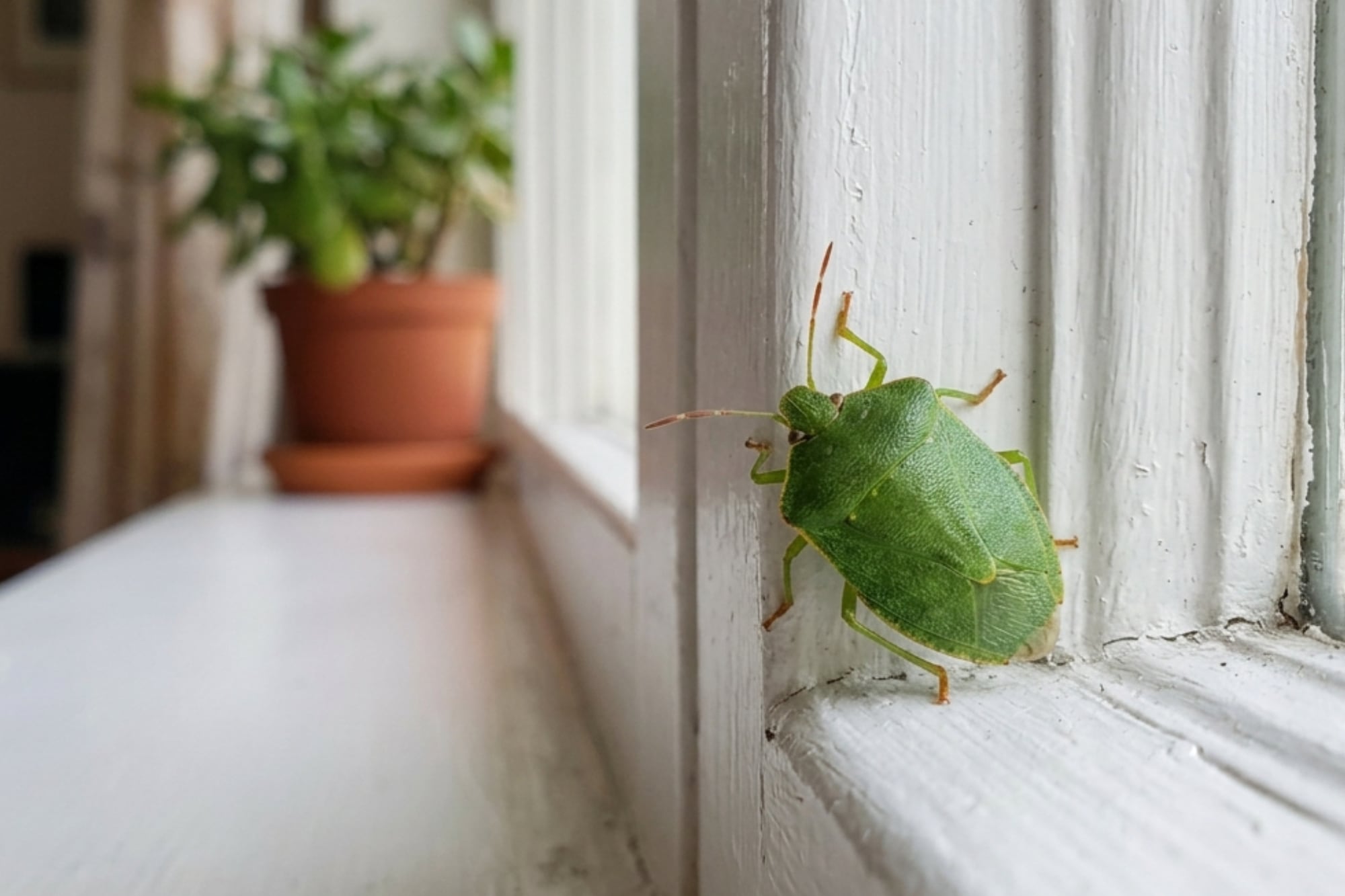
Green Stink Bugs at Home: What Their Presence Means and How to Safely Remove Them
Translated from Spanish, summarized and contextualized by DistantNews.
TLDR
- Green stink bugs entering homes are a sign of environmental conditions, not a health threat.
- These insects seek refuge from declining temperatures and shorter daylight hours.
- They are attracted to areas with nearby vegetation and can enter homes through small openings.
The appearance of green stink bugs in our homes, often met with dismay, is not a cause for alarm regarding health. Instead, these common visitors offer a clear indication of the surrounding environmental conditions and the natural world's response to seasonal changes. Their presence is a biological phenomenon, driven by the insects' instinct to seek shelter as external temperatures drop and daylight shortens.
These bugs are typically found in areas rich with vegetation, such as gardens or balconies adorned with plants, where they find sustenance and protection. When they venture indoors, it signals that the external environment is conducive to their life cycle or that our homes offer accessible refuge. Factors like proximity to potted plants, small cracks in window or door frames, or other entry points can facilitate their seasonal migration indoors.
While the insects themselves are harmless to humans, they possess a defense mechanism that can be unpleasant: a strong, foul odor released when they feel threatened or are handled roughly. Therefore, the recommended approach is not force, but careful removal. Using a glass and paper, or even a vacuum cleaner, allows for their safe capture and release. The most effective preventive measure is to address potential entry points and manage the immediate environment, ensuring that our homes remain less inviting to these seasonal guests. Understanding their behavior allows us to manage their presence calmly and effectively, prioritizing prevention and careful handling over drastic measures.
DistantNews Editorial
Originally published by La Nación in Spanish. Translated, summarized, and contextualized by our editorial team with added local perspective. Read our editorial standards.
More Stories


From Our Blog

What Gets Lost (and Found) When News Is Translated

The Critical Role of Diaspora Media in Global News

What Travellers Should Know About Countries with Restricted Press

A Digital Nomad's Guide to Following Local News

How the Same Story Looks Different in Different Countries
