

Green wall plants on Metro Line 2 begin to wilt; water stress, poor soil cited as possible causes
Translated from Spanish, summarized and contextualized by DistantNews.
At a glance
News
Named sources
Context piece
- Green wall plants installed in Mexico City's Metro Line 2 stations are wilting just weeks after installation.
- Specialists suggest water stress and poor soil nutrients are the likely causes.
- The wilting plants, visible at stations like Xola, Villa de Cortés, and General Anaya, reflect potential issues with irrigation and plant acclimatization.
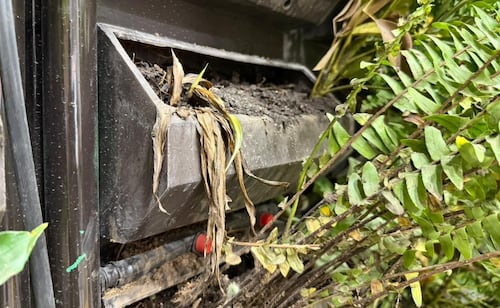
Plants installed in the green walls of Mexico City's Metro Line 2 stations are beginning to wilt, showing signs of decay and browning just weeks after their installation. This premature deterioration, particularly noticeable at stations such as Xola, Villa de Cortés, and General Anaya, points to potential problems with the irrigation system and the overall conditions provided for the vegetation.
Probably they are in water stress. With this I mean that they probably do not have the irrigation conditions they need, probably it is irregular and/or insufficient. The evidence is precisely the brown coloration in the leaves and that they look so sad.
According to biologist Andrea Ruiz from the National Autonomous University of Mexico (UNAM), the wilting is likely due to water stress and a lack of essential nutrients in the soil. Ruiz explained that while the chosen plants generally do not require direct sunlight, relying on indirect light, the artificial lighting in the Metro stations might be insufficient for long-term plant health, potentially weakening them over time. She emphasized that irregular or insufficient watering is a primary suspect for the plants' poor condition.
Ruiz further noted that the confined root space within the planters, combined with the plants' size, could be contributing to their decline. She reiterated that the species selected are typically suited for indirect light but have not adequately acclimatized to the Metro's environment, suggesting they may have come from nurseries unprepared for these specific conditions. The combination of water stress, nutrient-deficient substrate, and compacted roots appears to be the most probable cause for the plants' wilting.
It seems that they are plants that mostly do not need direct sun, I suppose that's why they chose them, because they need indirect light. So the demand for light could be a factor to a certain extent dismissible; although in the Metro artificial light is usually insufficient to maintain plants, or it would keep them weak in the long term.
The visible signs of distress, dryness, rot, and browning leaves, are a stark contrast to the intended aesthetic and environmental benefits of the green walls. The situation raises questions about the planning, installation, and maintenance of these urban greening projects within the challenging conditions of the Metro system.
The deaths – most likely – are due to water stress, unnutritious substrate and very compacted roots.
DistantNews Editorial
Originally published by El Universal in Spanish. Translated, summarized, and contextualized by our editorial team with added local perspective. Read our editorial standards.
More Stories
From Our Blog

What Press Freedom Means for the News You Read

What Gets Lost (and Found) When News Is Translated

The Critical Role of Diaspora Media in Global News

What Travellers Should Know About Countries with Restricted Press

A Digital Nomad's Guide to Following Local News
