


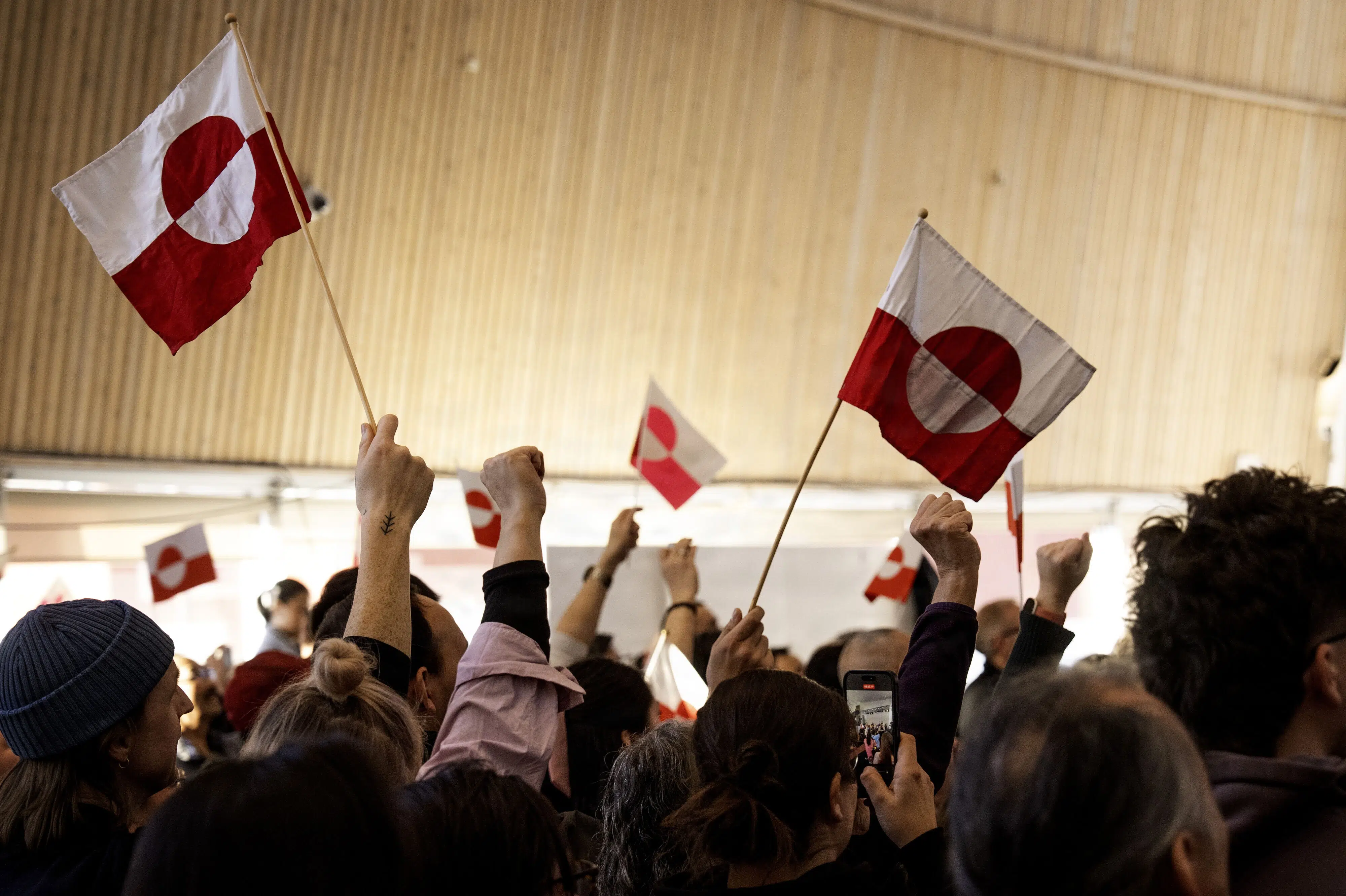
Greenland National Day begins with flag-raising ceremonies
Translated from Danish, summarized and contextualized by DistantNews.
At a glance
News
From a news agency
New plan
- Greenland celebrates its national day on the longest day of the year, marked by flag-raising ceremonies across the country.
- Festivities include traditional 'kaffemik' gatherings and national costume competitions, with messages of support from Danish royalty and the prime minister.
- The national day commemorates Greenland's self-governance established in 2009 and has been a flag day in Denmark since 2016.
Greenland's national day, celebrated on the year's longest day, commenced with flag-raising ceremonies across the nation starting at 8 a.m. local time. The festivities, as reported by the Greenlandic media outlet Sermitsiaq, include traditional 'kaffemik' gatherings in Sisimiut and national costume competitions in Paamiut, Nuuk, and Ittoqqortoormiit.
In Nuuk, participants in the national costume contest will showcase their attire on a catwalk, with judging based on overall impression, craftsmanship, and presentation, according to the Sermersooq Municipality. The celebrations also received greetings from Danish King Frederik and Queen Mary, who expressed hope that the long daylight hours would provide a beautiful and festive setting for the numerous celebrations both within and outside Greenland. The royal family shared a photo on Instagram of themselves with their two youngest children during a visit to Sisimiut in 2024.
Prime Minister Mette Frederiksen also extended wishes for a festive national day, praising Greenlanders for their resilience and solidarity. "When the pressure on you grows, you stand firm. Protect each other, your country, and your values. I am proud of the community between our countries," she stated in a message shared by the Prime Minister's Office on X.
The national day, established by the former home rule government in 1985, also marks the date Greenland gained self-governance in 2009. It was designated a flag day in Denmark in 2016. Celebrations typically include church services, communal meals, and traditional dancing.
DistantNews Editorial
Originally published by Berlingske in Danish. Translated, summarized, and contextualized by our editorial team with added local perspective. Read our editorial standards.
More Stories
From Our Blog

What Gets Lost (and Found) When News Is Translated

The Critical Role of Diaspora Media in Global News

What Travellers Should Know About Countries with Restricted Press

A Digital Nomad's Guide to Following Local News

How the Same Story Looks Different in Different Countries
