

GST hike pushes up hybrid vehicle prices
Summarized and contextualized by DistantNews.
At a glance
News
Sources not specified
Context piece
- Pakistan's auto industry faces uncertainty as the new Auto Policy 2026-31 has not yet been announced.
- Local assemblers have raised prices of hybrid vehicles significantly following a GST hike to 25%.
- This price increase may deter consumers and undermine government goals for promoting fuel-efficient vehicles.
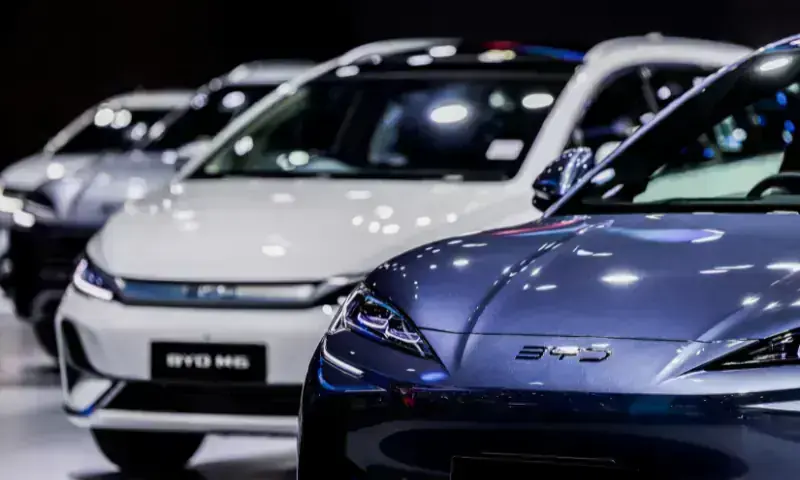
Local assemblers in Pakistan have begun increasing prices for electrified vehicles, with hybrid models seeing substantial hikes following a jump in the general sales tax (GST) to 25% from 8.5% in the budget for fiscal year 2027. This move comes as the government has yet to notify the Auto Policy 2026-31, despite the previous policy expiring on June 30.
Indus Motor Company raised prices for its Toyota Corolla Cross hybrid electric vehicle (HEV) models by over Rs1.3 million each, bringing them to Rs10.299 million and Rs9.849 million. Honda Atlas Cars Limited increased the price of its HR-V model by Rs1.370 million to Rs10.369 million. Other manufacturers reportedly have put invoicing and deliveries of hybrid vehicles on hold, possibly anticipating changes in the new auto policy or a potential reduction in the GST.
According to a dealer, the sharp rise in HEV prices could dampen demand for these vehicles. Prices for plug-in hybrid electric vehicles (PHEVs) are also expected to increase due to the GST hike. This situation may counteract the government's objective of encouraging fuel-efficient transportation, as many consumers might find the additional cost of Rs1.3-1.9 million for electrified vehicles prohibitive.
Assemblers have remained tight-lipped about the status of the new auto policy, despite government claims that its draft has been prepared and shared with stakeholders. They claim to have no information about the policy, which was scheduled to take effect on July 1, 2026. Asad Ali of Topline Securities noted that the revised auto policy, which is expected to introduce a new incentive structure for the sector, has not yet been officially notified.
Finance Minister Muhammad Aurangzeb stated in his budget speech that the Auto Policy 2026-2031 was under review by a prime minister-formed committee and would be presented to parliament after approval. Separately, the incentive for importing completely knocked down (CKD) kits for electric vehicles, including cars and buses, has been extended until June 30, 2027. The government has also notified changes to the National Tariff Policy, reducing regulatory duties across most categories, with the maximum now capped at 20%.
DistantNews Editorial
Originally published by Dawn. Summarized and contextualized by our editorial team with added local perspective. Read our editorial standards.
More Stories
From Our Blog

What Gets Lost (and Found) When News Is Translated

The Critical Role of Diaspora Media in Global News

What Travellers Should Know About Countries with Restricted Press

A Digital Nomad's Guide to Following Local News

How the Same Story Looks Different in Different Countries
