


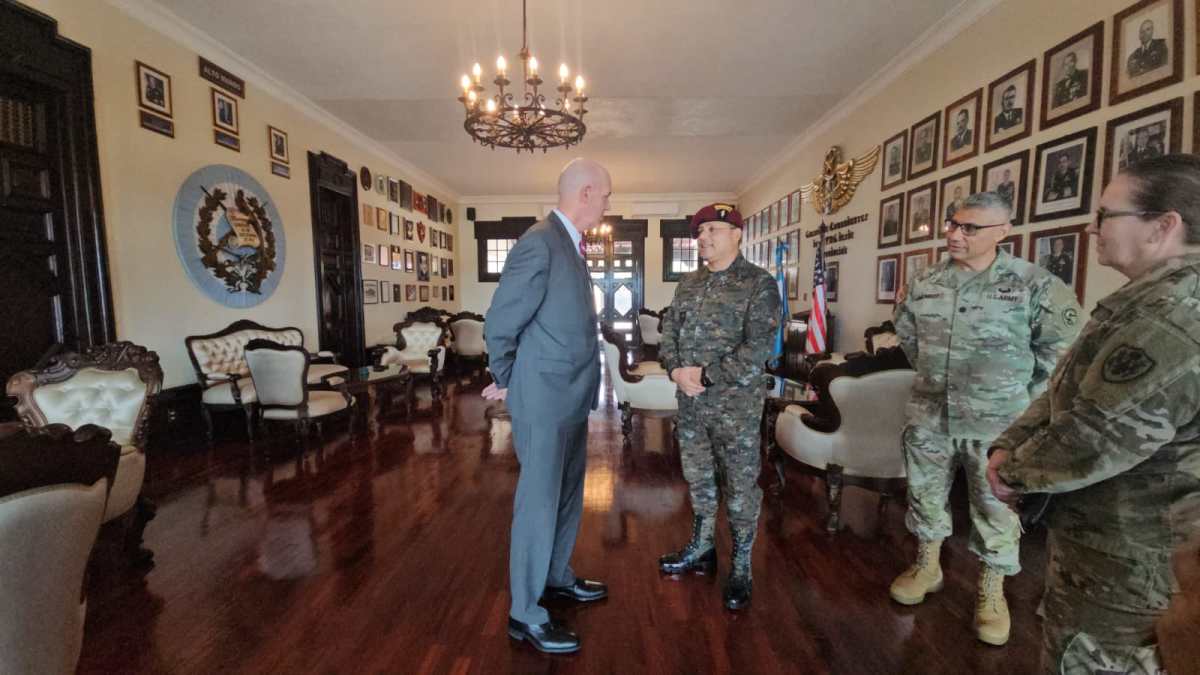
Guatemala enters the radar of the United States' new anti-drug strategy
Translated from Spanish and summarized by DistantNews. Read the original for the full story.
At a glance
News
Named sources
Context piece
- The United States has introduced a new strategic security policy prioritizing the Western Hemisphere and targeting transnational threats like drug trafficking.
- Guatemala is a key focus due to its strategic location and the prevalence of drug trafficking, with the U.S. considering "credible military options."
- While Guatemala denies agreements for coordinated attacks, it seeks U.S. support for its anti-drug efforts, emphasizing regional cooperation and intelligence sharing.
Guatemala has become a focal point in the United States' revised strategic security policy, which emphasizes territorial defense and regional cooperation against transnational threats, particularly drug trafficking. Introduced in January, the policy prioritizes the "Western Hemisphere" and signals a potential use of "credible military options" against criminal organizations that threaten U.S. security. This includes actions against suspected drug traffickers in the Pacific and Caribbean.
Washington is seeking to bolster regional alliances and intelligence sharing, leading to reported negotiations between the U.S. and Guatemala. International press has noted U.S. approaches for coordinated operations potentially involving Guatemalan territory. However, the Guatemalan government has denied any such agreements, stating its focus is solely on receiving support for its own anti-drug campaigns.
The need to increase cooperation levels is because the threat of drug trafficking and other transnational issues are very serious.
Luis Fernando Andrade Falla, an international law specialist and former vice-chancellor, views the coordination between the Guatemalan and U.S. militaries as positive, even without troop deployment. He believes it's part of a broader regional strategy against drug trafficking and organized crime. Andrade Falla highlighted Guatemala's "neuralgic" position for Washington and the need to modernize technological and intelligence capabilities, which have lagged for decades. He stressed that cooperation extends beyond military aspects to include combating money laundering, strengthening the justice system, and controlling remittances, all integrated to fight drug trafficking.
Andrade Falla also noted that Guatemala's situation differs from Mexico's, which has rejected U.S. military presence. He pointed out an asymmetry in military and police capabilities between the two nations, with Mexico's forces being significantly larger. This, he suggests, makes Guatemala's geographical relevance in the U.S. strategy distinct, despite its own limited capacities.
Everything is integrated to combat drug trafficking.
About this summary
Originally published by Prensa Libre in Spanish. Translated, summarized, and contextualized automatically by DistantNews, with a note on how the source frames the story. Not individually reviewed before publishing. How this works.
More Stories
From Our Blog

What Gets Lost (and Found) When News Is Translated

The Critical Role of Diaspora Media in Global News

What Travellers Should Know About Countries with Restricted Press

A Digital Nomad's Guide to Following Local News

How the Same Story Looks Different in Different Countries
