


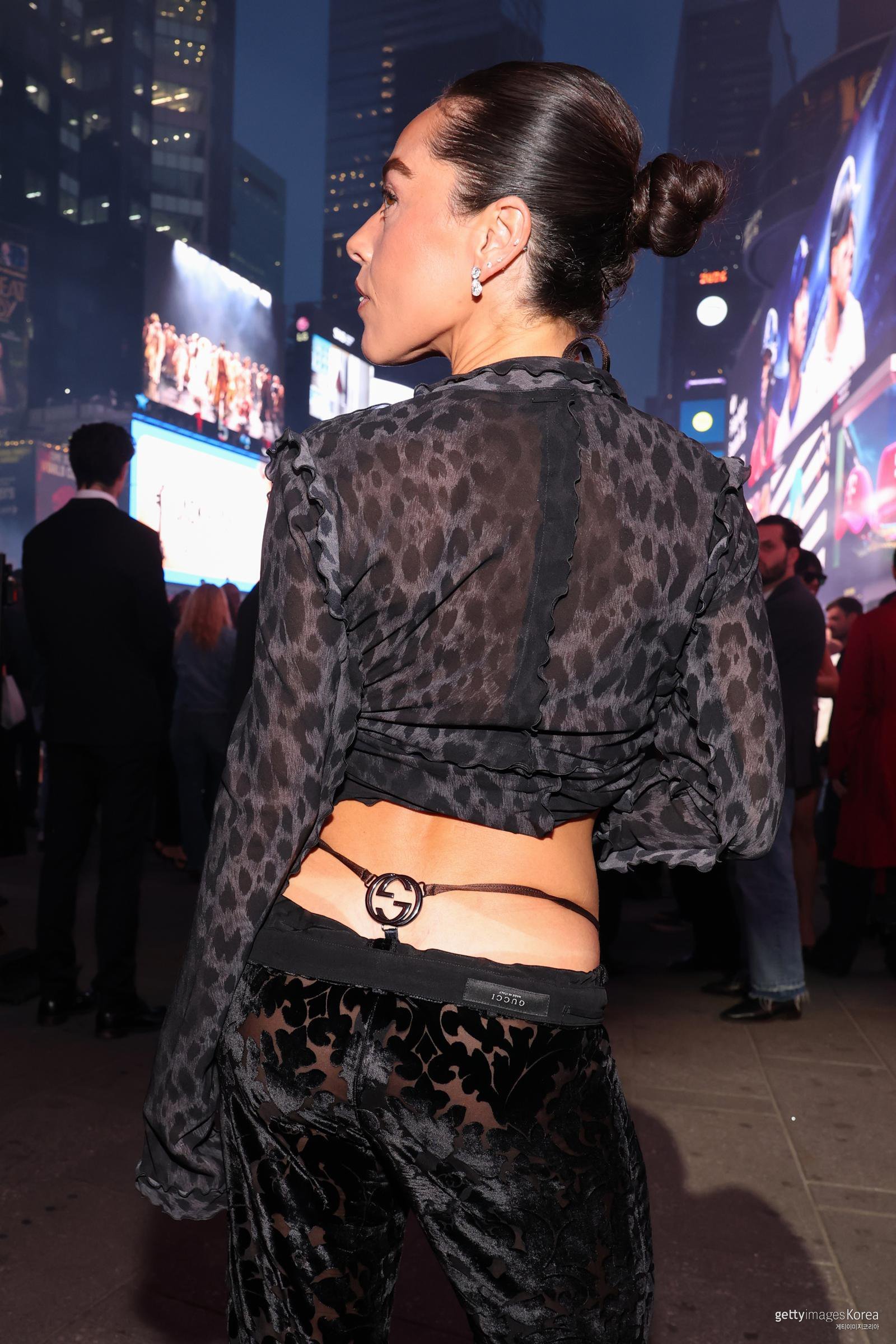
Gucci revives its 30-year-old G-string while Chanel brings back its century-old little black dress
Translated from Korean and summarized by DistantNews. Read the original for the full story.
At a glance
Analysis
Named sources
Context piece
- Gucci has revived the G-string associated with Tom Ford’s 1990s designs, adding a diamond-encrusted Double G logo estimated at 10 carats.
- Chanel has reinterpreted Coco Chanel’s 1926 little black dress for its Resort 2027 collection, turning an original ribbon detail into a clutch bag.
- The archive-focused strategy allows luxury houses to modernize familiar brand codes while reducing the uncertainty of launching entirely new designs.
Luxury fashion’s latest statement pieces are looking backward. Gucci has brought back the provocative G-string associated with Tom Ford’s 1990s era, while Chanel has returned to the little black dress that helped define the house a century ago.
Gucci artistic director Demna featured a series of 1990s-inspired looks in his first full collection for the brand, presented in Milan in February. The collection included close-fitting tube dresses, tiger-striped faux-fur bomber jackets and low-rise leggings that extended below the hips. Kate Moss appeared in a black crystal dress with an exposed back, wearing a Gucci G-string decorated with the brand’s Double G logo in white gold and roughly 10 carats of diamonds.
The design revisits a look Tom Ford introduced in Gucci’s spring 1997 collection. Ford had joined Gucci’s leadership in 1994 and drew on the house’s archives to build an image around sensuality. His collections recast the glamour and decadence associated with the 1970s through velvet suits, satin shirts in jewel-like colors and shearling coats. The 1997 G-string placed Gucci’s metal interlocking logo above the bare waist, making the emblem resemble jewelry.
You don’t need to take it too seriously.
Demna has turned that jewelry-like logo into actual jewelry, while keeping the design playful rather than treating the past as a rigid template. He described Gucci as a brand rooted in Italian culture but also associated with enjoyment, saying, "You don’t need to take it too seriously."
Chanel artistic director Matthieu Blazy opened the Resort 2027 collection in Biarritz with a modern version of Coco Chanel’s 1926 drop-waist black dress. The original became a symbol of women’s fashion, and Vogue compared it to the accessible Ford Model T, calling it "Chanel’s Ford." Blazy found a large ribbon attached to the original dress in the archive and transformed the detail into a ribbon-shaped clutch rather than simply reproducing it.
The two houses are using familiar symbols in new materials and shapes instead of copying old products. The approach has become more prominent as luxury brands change creative leaders, face slower consumer spending and contend with shorter trend cycles. Luxury branding specialist Thomai Serdari told Forbes, "As consumers’ desire to buy declined, brands realized that returning to their original brand DNA was the safest way forward."
As consumers’ desire to buy declined, brands realized that returning to their original brand DNA was the safest way forward.
About this summary
Originally published by Dong-A Ilbo in Korean. Translated, summarized, and contextualized automatically by DistantNews, with a note on how the source frames the story. Not individually reviewed before publishing. How this works.
More Stories


From Our Blog

What Gets Lost (and Found) When News Is Translated

The Critical Role of Diaspora Media in Global News

What Travellers Should Know About Countries with Restricted Press

A Digital Nomad's Guide to Following Local News

How the Same Story Looks Different in Different Countries
