


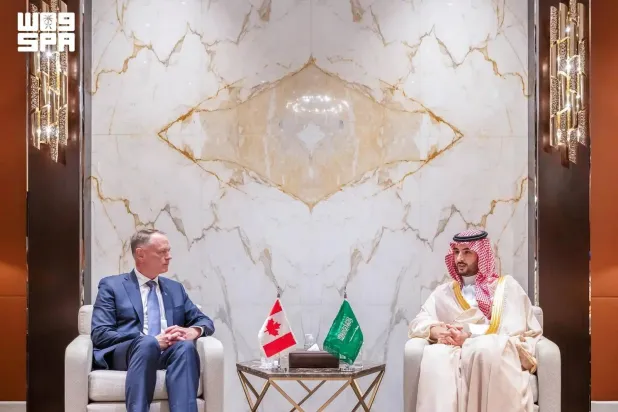
Gulf States Boost Coordination Amid Iranian Attacks
Translated from English, summarized and contextualized by DistantNews.
At a glance
News
Named sources
Context piece
- Gulf states are increasing coordination following Iranian attacks on Bahrain, Qatar, and Jordan.
- Saudi and Qatari foreign ministers discussed regional escalation and the importance of dialogue and diplomacy.
- Other Gulf nations also engaged in discussions to protect navigation and ensure regional stability.
Gulf nations are stepping up diplomatic efforts and coordination in response to recent Iranian attacks that targeted Bahrain, Qatar, and Jordan. The region has seen nearly seven rounds of consultations, including official visits and phone calls, in the past 48 hours.
Such acts would undermine trust, threaten the security of international navigation and damage efforts to cement regional security and stability.
Saudi Foreign Minister Prince Faisal bin Farhan held calls with his counterparts from Qatar and Kuwait to discuss the escalating military tensions between the United States and Iran. During his call with Qatar's Prime Minister and Foreign Minister Sheikh Mohammed bin Abdulrahman bin Jassim Al Thani, both leaders condemned attacks on commercial ships in the Strait of Hormuz. They emphasized that such actions undermine trust, threaten international navigation, and damage efforts to secure regional stability.
The ministers stressed the commitment of all parties to dialogue and diplomacy, urging adherence to agreed memorandums of understanding to preserve regional security and stability. Saudi Arabia also engaged with Oman and Bahrain, with discussions focusing on protecting waterways, ensuring freedom of navigation, and settling disputes peacefully. Bahrain's foreign minister described the attacks as a "rejected assault" on navigation and global energy supplies, violating international law.
The two ministers stressed that all parties must commit to dialogue and diplomacy and implement what had been agreed under the memorandum of understanding, in a way that preserves regional security, protects gains achieved and strengthens regional stability.
Separately, the President of the United Arab Emirates, Sheikh Mohammed bin Zayed, made a visit to Kuwait, underscoring the ongoing diplomatic engagements within the Gulf Cooperation Council. These high-level discussions highlight a concerted effort by regional powers to manage the current tensions and prevent further escalation.
a rejected assault on the security and safety of international navigation and global energy supplies, and a grave violation of international law and UN Security Council Resolution 2817.
DistantNews Editorial
Originally published by Asharq Al-Awsat in English. Translated, summarized, and contextualized by our editorial team with added local perspective. Read our editorial standards.
More Stories


From Our Blog

What Gets Lost (and Found) When News Is Translated

The Critical Role of Diaspora Media in Global News

What Travellers Should Know About Countries with Restricted Press

A Digital Nomad's Guide to Following Local News

How the Same Story Looks Different in Different Countries
