


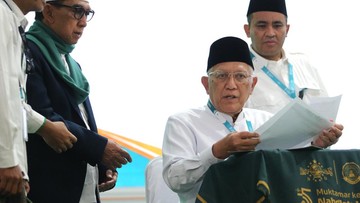
Gus Kikin Vows to Bring All NU Factions Together After Election as Chairman
Translated from Indonesian and summarized by DistantNews. Read the original for the full story.
At a glance
News
Named sources
Outcome reported
- Abdul Hakim Mahfudz, or Gus Kikin, was elected chairman of Nahdlatul Ulama for the 2026-2031 term.
- He said he would include all elements of the organization, including unsuccessful candidates, in developing NU.
- The pledge followed a recommendation from the organization’s senior council to strengthen unity and openness.
After winning election as chairman of Nahdlatul Ulama, Abdul Hakim Mahfudz, widely known as Gus Kikin, immediately pledged to bring together all parts of Indonesia’s largest Islamic organization.
That book shows that NU was founded as a very inclusive and open organization.
Gus Kikin responded to a recommendation from the Ahlul Halli Wal Aqdi, the senior council that also backed KH Miftachul Akhyar as Rais Aam for the 2026-2031 term. He said inclusiveness and openness were part of NU’s founding principles, as set out in its Qanun Asasi.
“That book shows that NU was founded as a very inclusive and open organization,” Gus Kikin said at the 35th NU Congress in Jombang. He described unity and togetherness as the organization’s core and said NU should make use of all the potential within its ranks.
All the potential within NU will be given a place, and we will try to optimize it.
Gus Kikin also left open the possibility of inviting other candidates who were not elected to help develop the organization. The pledge echoed a message delivered by senior council member KH Anwar Iskandar, who said the elected Rais Aam should involve NU’s various strengths in caring for and managing the organization.
The elected Rais Aam is entrusted with inviting all the potential within Nahdlatul Ulama, in any form, to work together to care for and manage Nahdlatul Ulama going forward.
About this summary
Originally published by CNN Indonesia in Indonesian. Translated, summarized, and contextualized automatically by DistantNews, with a note on how the source frames the story. Not individually reviewed before publishing. How this works.
More Stories
From Our Blog

What Gets Lost (and Found) When News Is Translated

The Critical Role of Diaspora Media in Global News

What Travellers Should Know About Countries with Restricted Press

A Digital Nomad's Guide to Following Local News

How the Same Story Looks Different in Different Countries
