


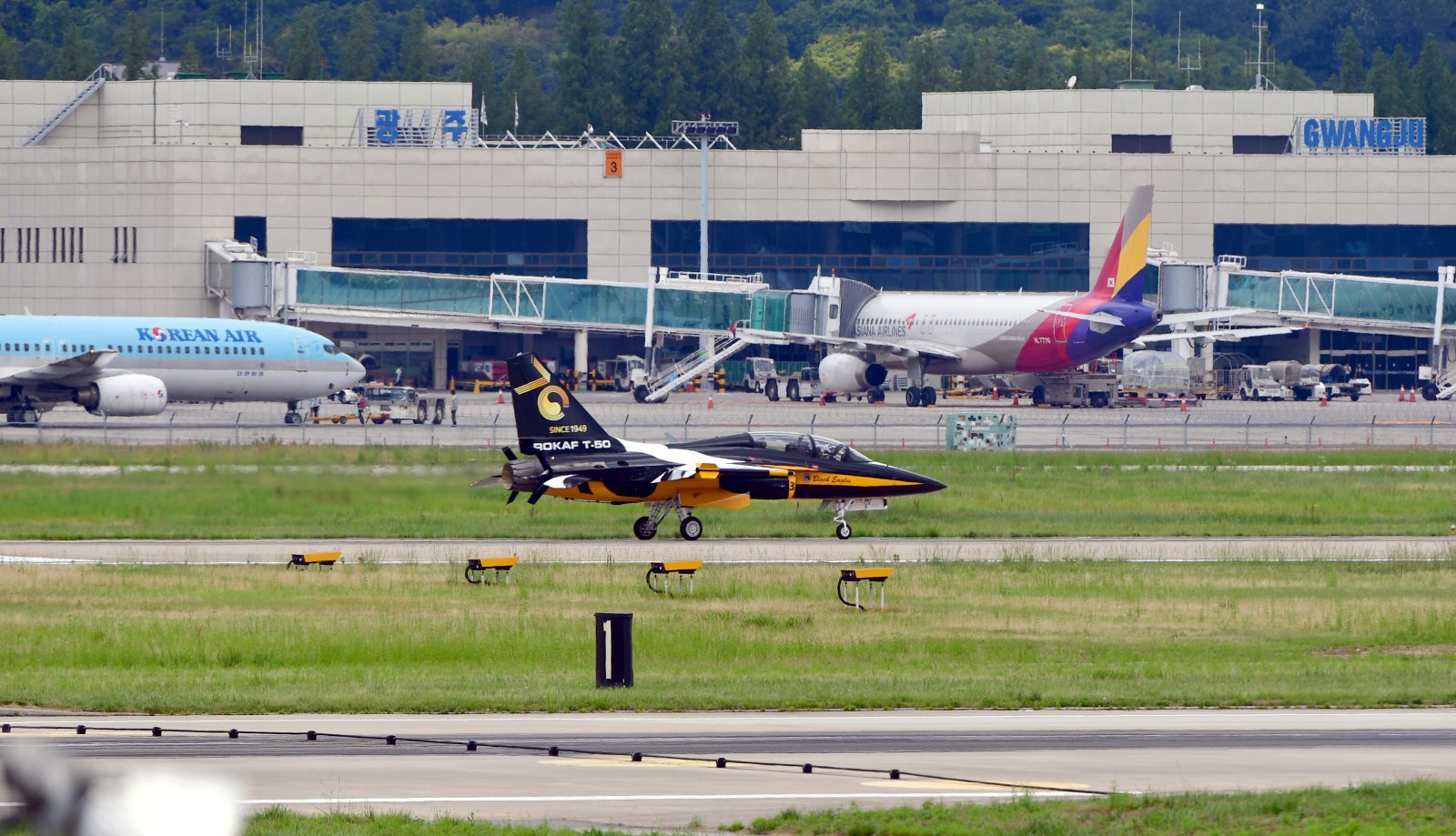
Gwangju Accelerates Military Facility Relocation for $600 Billion Semiconductor Hub
Translated from Korean, summarized and contextualized by DistantNews.
At a glance
News
Sources not specified
Ongoing story
- Gwangju, South Korea, is accelerating plans to relocate four major military facilities to make way for a massive semiconductor cluster.
- The relocation is driven by the urgent need to establish a semiconductor production hub by 2030, involving major companies like Samsung Electronics and SK Hynix.
- The plan includes moving an airbase, ammunition depot, and anti-air missile base, with a former firing range also slated for closure.
Gwangju, South Korea, is rapidly advancing plans to relocate four key military installations, a move that will pave the way for the creation of a massive semiconductor cluster on the site of the current airbase. This initiative is a critical component of the nation's strategy to establish a leading semiconductor production hub by 2030.
The project, a national strategic undertaking, involves a significant investment of approximately 800 trillion won (roughly $600 billion USD) and includes the development of four fabrication plants on the 8.26 million square meter site of the Gwangju Air Base. Major industry players such as Samsung Electronics and SK Hynix are expected to be involved. The tight deadline for semiconductor mass production by 2030 necessitates the swift relocation of the air force's 1st Fighter Wing and other essential military facilities.
To meet the government's roadmap, administrative procedures are being expedited. The military authorities have designated an area in Muan County as a preliminary relocation site and plan to finalize the selection through a committee and a five-party consultation by July. The process includes announcing support measures for Muan, followed by a resident referendum and application submission, aiming for final site confirmation within the year. This accelerated timeline contrasts sharply with previous delays caused by funding and inter-party disagreements.
Beyond the airbase, the relocation plan encompasses the "package transfer" of supporting infrastructure. This includes discussions for the relocation of the joint US-Korea operating base, as well as the nearby Mudeungsan anti-air missile base and the Mangeok-dong ammunition depot. The Mudeungsan anti-air missile base, which had been stalled due to funding issues, gains momentum with the airbase relocation, providing a clear justification for its move as an operational support facility. The Mangeok-dong ammunition depot's relocation also faces complexities, as the designated site within the airbase is now eyed as a prime location for an immediate semiconductor factory.
Furthermore, the Pyeongdong firing range, used infrequently but occupying a large area that impacts urban development, is also set to be closed after over 70 years. The military has largely agreed to its closure, with its functions to be integrated into other training grounds. Potential redevelopment plans for the former firing range include facilities like a senior town, a general hospital, or a defense industry complex. The overall military facility realignment is viewed not just as a base transfer but as a transformative project that could reshape the industrial landscape and bolster national competitiveness, contingent on strong government commitment and synergistic efforts with the city.
DistantNews Editorial
Originally published by Dong-A Ilbo in Korean. Translated, summarized, and contextualized by our editorial team with added local perspective. Read our editorial standards.
More Stories


From Our Blog

What Gets Lost (and Found) When News Is Translated

The Critical Role of Diaspora Media in Global News

What Travellers Should Know About Countries with Restricted Press

A Digital Nomad's Guide to Following Local News

How the Same Story Looks Different in Different Countries
