

Hamburg's Last Car Ferry: Daily Life on the 'Hoopter Möwe 2'
Translated from German, summarized and contextualized by DistantNews.
At a glance
In-depth
Named sources
Context piece
- Hamburg's last remaining car ferry, the 'Hoopter Möwe 2,' connects Hamburg and Lower Saxony across the Elbe River.
- The ferry, operating since 1252, offers passengers a brief natural escape and saves commuters up to 33 kilometers in travel distance.
- Ferry operator Ralph Rehlmeyer values the job for its connection to nature and interactions with regular passengers.
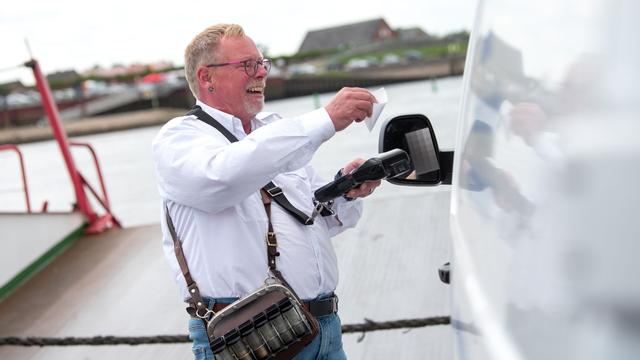
For over eight years, Ralph Rehlmeyer has found his workplace on the Elbe River, operating as a cashier on Hamburg's sole remaining car ferry, the 'Hoopter Möwe 2.' This 130-meter vessel traverses the approximately 300-meter-wide river between Hamburg-Kirchwerder and Hoopte, a district of Winsen (Luhe), making up to 80 crossings daily. This ferry route, believed to be Germany's oldest continuously operating one since its first documented service in 1252, provides passengers with a roughly seven-to-eight-minute journey that many describe as a short natural retreat. Passengers often step out to enjoy the Elbe's scenery and changing natural environment, a sentiment shared by Rehlmeyer, who appreciates the "overall situation here. The flow of the Elbe, the change in nature." Rehlmeyer, who previously worked as a geriatric nurse, transitioned to the ferry after seeing a "Cashier Wanted" sign. He expresses no regrets, stating, "It excites me that I interact with people." His tenure has included witnessing the beginnings of relationships and even a marriage proposal among passengers. He engages in conversations with tourists, cyclists, and a significant number of regular commuters, often picking up conversations days later. For commuters, the ferry, which can accommodate up to 25 standard-sized cars, is a significant time-saver, potentially cutting up to 33 kilometers off their journey compared to using the nearest bridge. Thorben, a construction worker, utilizes the ferry with his company truck to save time and diesel fuel, estimating it saves him "easily two hours of work time" daily, allowing him to accomplish more. The ferry's efficiency is crucial, especially given the challenging traffic conditions on the nearby Autobahn 1.
I like the overall situation here. The flow of the Elbe, the change in nature. It is especially great when the trees change their color.
DistantNews Editorial
Originally published by Die Zeit in German. Translated, summarized, and contextualized by our editorial team with added local perspective. Read our editorial standards.
More Stories



From Our Blog

What Gets Lost (and Found) When News Is Translated

How the Same Story Looks Different in Different Countries

The Critical Role of Diaspora Media in Global News

What Travellers Should Know About Countries with Restricted Press

A Digital Nomad's Guide to Following Local News
