


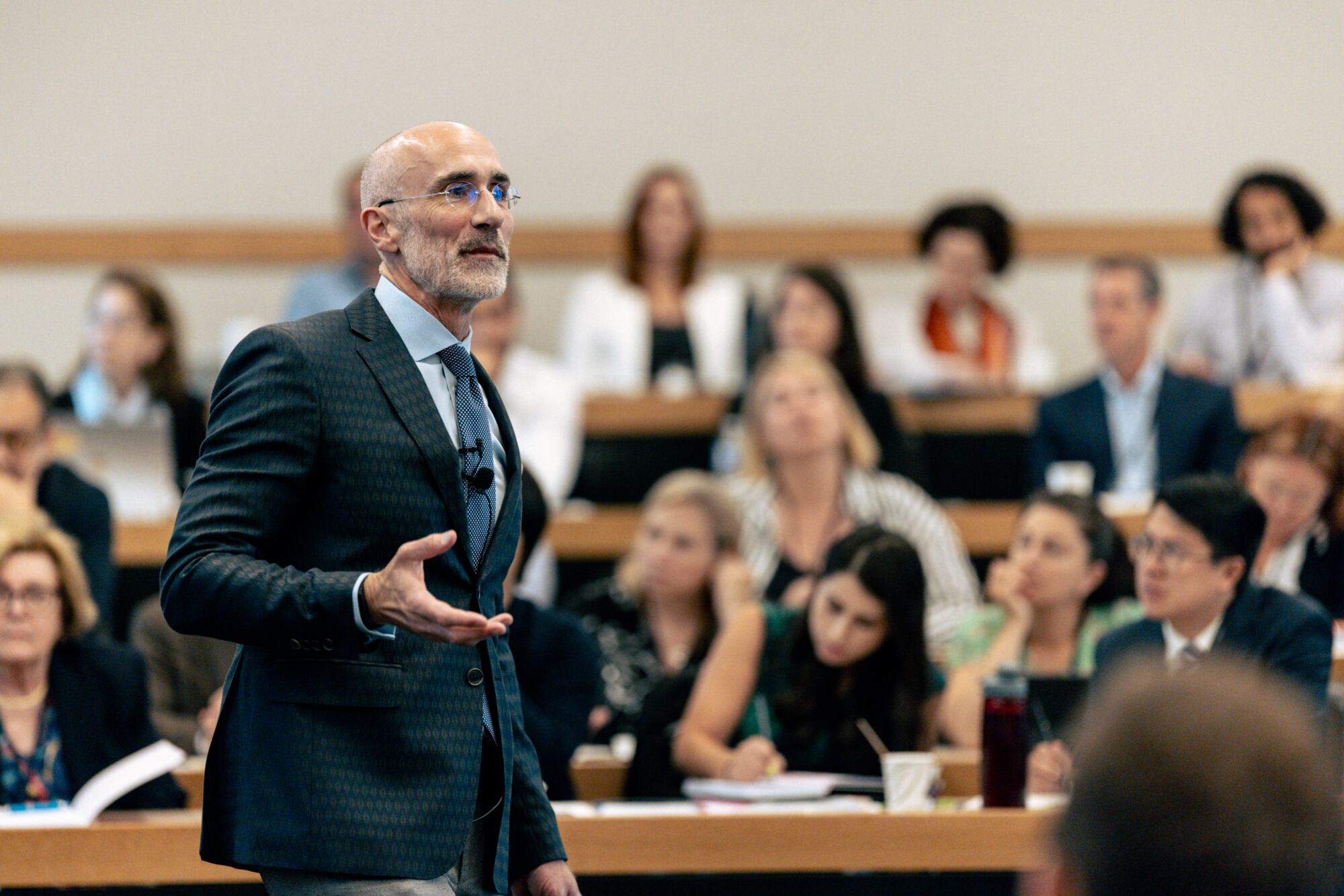
Harvard Professor Arthur Brooks: 'The happiest people are those who never stop learning'
Translated from Spanish, summarized and contextualized by DistantNews.
At a glance
News
Named sources
Context piece
- Arthur Brooks, a Harvard professor, identifies continuous learning as key to happiness.
- He argues that genuine curiosity, not obligation, drives this learning.
- This pursuit of knowledge fosters positive emotions like interest and joy, enhancing overall well-being.
Arthur Brooks, a Harvard professor and renowned happiness expert, suggests that the most significant factor contributing to daily well-being is not professional success, personal relationships, or financial stability, but a simple, consistent habit: never stop learning.
In a video shared on his Instagram account, Brooks explained that the happiest individuals share a common trait, they are driven by genuine curiosity to understand the world around them, rather than learning out of necessity or obligation. He posits that this pursuit of knowledge is intrinsically linked to happiness.
Brooks elaborated that when people feed their curiosity through reading, exploration, or discovering new ideas, they activate a fundamental positive emotion: interest. He considers interest one of the most basic and crucial emotional states for human well-being, far from being a minor feeling.
The happiest people are those who never stop learning. They do so not out of obligation, but out of curiosity.
According to Brooks, curiosity acts as a gateway to more satisfying emotional experiences. The desire to learn something new, grasp an unfamiliar subject, or explore different perspectives generates enthusiasm, effectively combating routine and apathy. This sustained interest, he explains, leads to higher levels of joy, greater satisfaction, and ultimately, a deeper sense of happiness.
The Harvard professor emphasized that this doesn't require formal studies or academic achievements. The core principle is maintaining an open intellectual attitude and a continuous desire for discovery at any age. Engaging with books, podcasts, acquiring new skills, visiting new places, or delving into personally interesting topics are all ways to stimulate this curiosity, which Brooks believes directly contributes to emotional well-being.
Interest constitutes one of the most basic and relevant positive emotional states for human well-being.
DistantNews Editorial
Originally published by La Nación in Spanish. Translated, summarized, and contextualized by our editorial team with added local perspective. Read our editorial standards.
More Stories



From Our Blog

What Gets Lost (and Found) When News Is Translated

The Critical Role of Diaspora Media in Global News

What Travellers Should Know About Countries with Restricted Press

A Digital Nomad's Guide to Following Local News

How the Same Story Looks Different in Different Countries
