


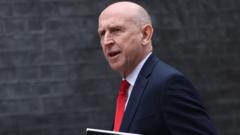
Healey quits as defence secretary in row over military spending
Summarized and contextualized by DistantNews.
At a glance
News
Named sources
Ongoing story
- John Healey resigned as defense secretary, citing insufficient funding for a delayed military spending plan.
- He argued the proposed settlement falls short of national defense needs during a time of rising threats.
- The resignation follows internal government disputes over defense budget allocations.
John Healey has resigned as defense secretary, citing a significant disagreement over funding for a long-delayed military spending plan. In a strongly worded resignation letter, Healey stated that the proposed settlement for the Defence Investment Plan (DIP) "falls well short of what is required for defence and the country at this dangerous time." He criticized the prime minister for being "unwilling" and the Treasury for being "unwilling" to commit the necessary resources for national defense amid escalating global threats.
falls well short of what is required for defence and the country at this dangerous time
The resignation has sent shockwaves through the government, particularly as it comes shortly before a crucial by-election and with the prime minister's leadership already under scrutiny. The dispute over defense spending has been ongoing for months, with multiple delays to the DIP, which was initially expected last autumn. The issue has intensified in the lead-up to a NATO summit next month, where the prime minister had intended to announce the blueprint.
the prime minister had been "unwilling" and the Treasury "unwilling" to "commit the resources that the nation needs to defend the country at this time of rising threats"
Healey highlighted that defense demands have increased due to conflicts in the Middle East and new commitments in the Arctic and Ukraine. Reports suggest the government was considering a £13.5 billion increase over four years, significantly less than the £28 billion requested by the Ministry of Defence. Healey expressed concern that the financial settlement, received on Monday, was "backloaded," with insufficient funds allocated to the critical first two years of operations and readiness.
an unprecedented increase in defence spending
In response, Sir Keir Starmer defended the DIP, asserting it would deliver "an unprecedented increase in defence spending" in a "sustainable and fair" manner, without resorting to "irresponsible borrowing." He insisted the plan provides "the resources our military needs to keep us safe and the clarity the British defence industry needs to plan." The government has committed to spending 3.5% of GDP on defense by 2035, but details on how this will be funded remain unclear. Reports indicate that departments may be asked to trim capital budgets by 1% to raise £6 billion for defense.
the resources our military needs to keep us safe and the clarity the British defence industry needs to plan
DistantNews Editorial
Originally published by BBC News. Summarized and contextualized by our editorial team with added local perspective. Read our editorial standards.
More Stories


From Our Blog

What Gets Lost (and Found) When News Is Translated

The Critical Role of Diaspora Media in Global News

What Travellers Should Know About Countries with Restricted Press

A Digital Nomad's Guide to Following Local News

How the Same Story Looks Different in Different Countries
