


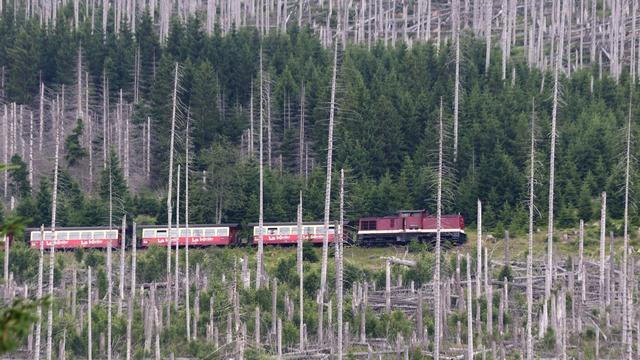
Heatwave: Brocken Railway switches to diesel instead of steam due to fire risk
Translated from German, summarized and contextualized by DistantNews.
At a glance
News
From a news agency
Ongoing story
- The Harz Narrow Gauge Railways (HSB) will temporarily switch from steam to diesel locomotives for the Brocken line due to high wildfire risk.
- The change aims to prevent sparks and hot ash from igniting dry vegetation along the tracks.
- Steam locomotives will continue to operate on the Harzquerbahn and Selketalbahn lines.
Due to heightened wildfire risks, the Harz Narrow Gauge Railways (HSB) is temporarily replacing steam locomotives with diesel engines for services to the Brocken mountain. This precautionary measure, effective Monday, aims to mitigate the danger of sparks and hot ash igniting dry vegetation along the popular tourist route.
The decision comes as regional authorities have classified the current wildfire risk across much of the state as high, with many areas reaching the second-highest danger level, Four. The HSB stated that trains operating between Drei Annen Hohne and the Brocken will exclusively use diesel traction until further notice. Steam locomotives are known to be a significant fire hazard during dry summer periods, capable of emitting embers and hot particles.
Despite the change in motive power, visitors can still reach the Brocken by train, with at least six round trips scheduled daily. However, steam enthusiasts will need to seek out other routes, as the HSB plans to keep steam locomotives in service on the Harzquerbahn and Selketalbahn lines. This is not the first time the HSB has made such a switch; the Brocken line has been converted to diesel operation multiple times in recent years due to elevated wildfire concerns.
The duration of this operational change depends on weather developments. The HSB is providing updates on the substitute timetable via its website and ticket offices. The company has not set a definitive date for the return of steam locomotives to the Brocken line, indicating the measure remains in effect until further notice.
DistantNews Editorial
Originally published by Die Zeit in German. Translated, summarized, and contextualized by our editorial team with added local perspective. Read our editorial standards.
More Stories



From Our Blog

What Gets Lost (and Found) When News Is Translated

How the Same Story Looks Different in Different Countries

The Critical Role of Diaspora Media in Global News

What Travellers Should Know About Countries with Restricted Press

A Digital Nomad's Guide to Following Local News
