


Heatwave to persist as winds shift, potentially raising temperatures in western South Korea
Translated from Korean, summarized and contextualized by DistantNews.
At a glance
News
Sources not specified
Context piece
- South Korea faces prolonged heatwaves and tropical nights due to dominant high-pressure systems.
- Southern regions, particularly Gyeongsang, have experienced extreme temperatures exceeding 40 degrees Celsius.
- The forecast predicts a shift in wind patterns next week, potentially bringing higher temperatures to western regions, including Seoul.
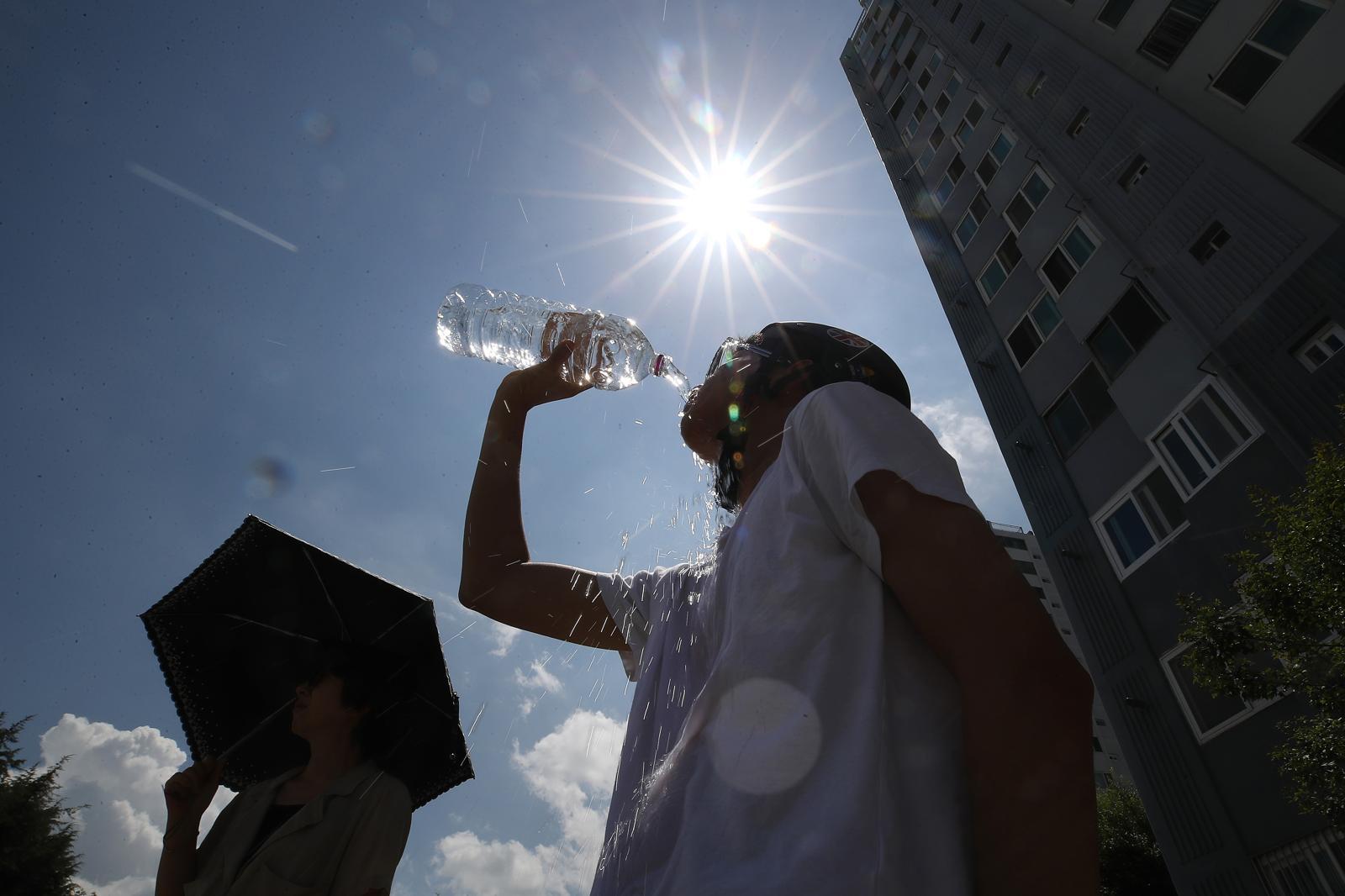
South Korea remains under the grip of a relentless heatwave, with forecasts indicating no immediate relief as high-pressure systems continue to dominate the weather. The nation is expected to endure sweltering conditions and tropical nights well into August, according to the Korea Meteorological Administration (KMA).
Currently, the upper atmosphere (12 km) is controlled by the Tibetan Plateau anticyclone, while the subtropical high-pressure system (5.5 km) originating from the North Pacific blankets the country. This combination results in intense sunshine and high humidity, exacerbating the heat. The heat accumulated during the day is not dissipating overnight, leading to continuous tropical nights and intensifying the heatwave effect.
For the time being, temperatures are expected to be maintained or rise in stages.
Southern regions, particularly the Gyeongsang province, have been hit hardest. On July 29, Yangsan recorded its first 40-degree Celsius temperature for July. KMA forecaster Kang Hye-mi explained that geographical features and wind patterns contributed to these extreme temperatures. Prevailing westerly winds, influenced by the high-pressure system's position west of the peninsula, created a "Foehn effect" as the air descended over mountain ranges like the Sobaek Mountains, heating up areas like Yangsan, Uiryeong, Gimhae, and Miryang. The basin-like topography of these cities further traps heat.
The Foehn phenomenon occurs when wind heats up after descending over mountains.
Looking ahead to next week, a shift in the high-pressure system's position is expected to bring easterly winds. This change could lead to significantly higher temperatures in western parts of the country. Seoul, for instance, is forecast to experience daytime highs between 35 and 37 degrees Celsius. If temperatures exceed 39 degrees Celsius and the perceived temperature surpasses 38 degrees, a "Severe Heatwave Warning", the highest level, introduced this year, could be issued for the Seoul metropolitan area. Such warnings have already been issued in parts of Gyeongsang, Daegu, Busan, and Jeonnam.
While Typhoon Dolphin, located east of Guam, is moving westward, its impact on the Korean peninsula's weather system remains uncertain. The KMA advised the public to exercise caution, minimize outdoor activities, and stay hydrated to prevent heat-related illnesses, especially given the risk of high overnight temperatures.
We advise you to refrain from outdoor activities as much as possible and drink plenty of water to prevent heat-related illnesses.
DistantNews Editorial
Originally published by Hankyoreh in Korean. Translated, summarized, and contextualized by our editorial team with added local perspective. Read our editorial standards.
More Stories


From Our Blog

What Gets Lost (and Found) When News Is Translated

The Critical Role of Diaspora Media in Global News

What Travellers Should Know About Countries with Restricted Press

A Digital Nomad's Guide to Following Local News

How the Same Story Looks Different in Different Countries
