


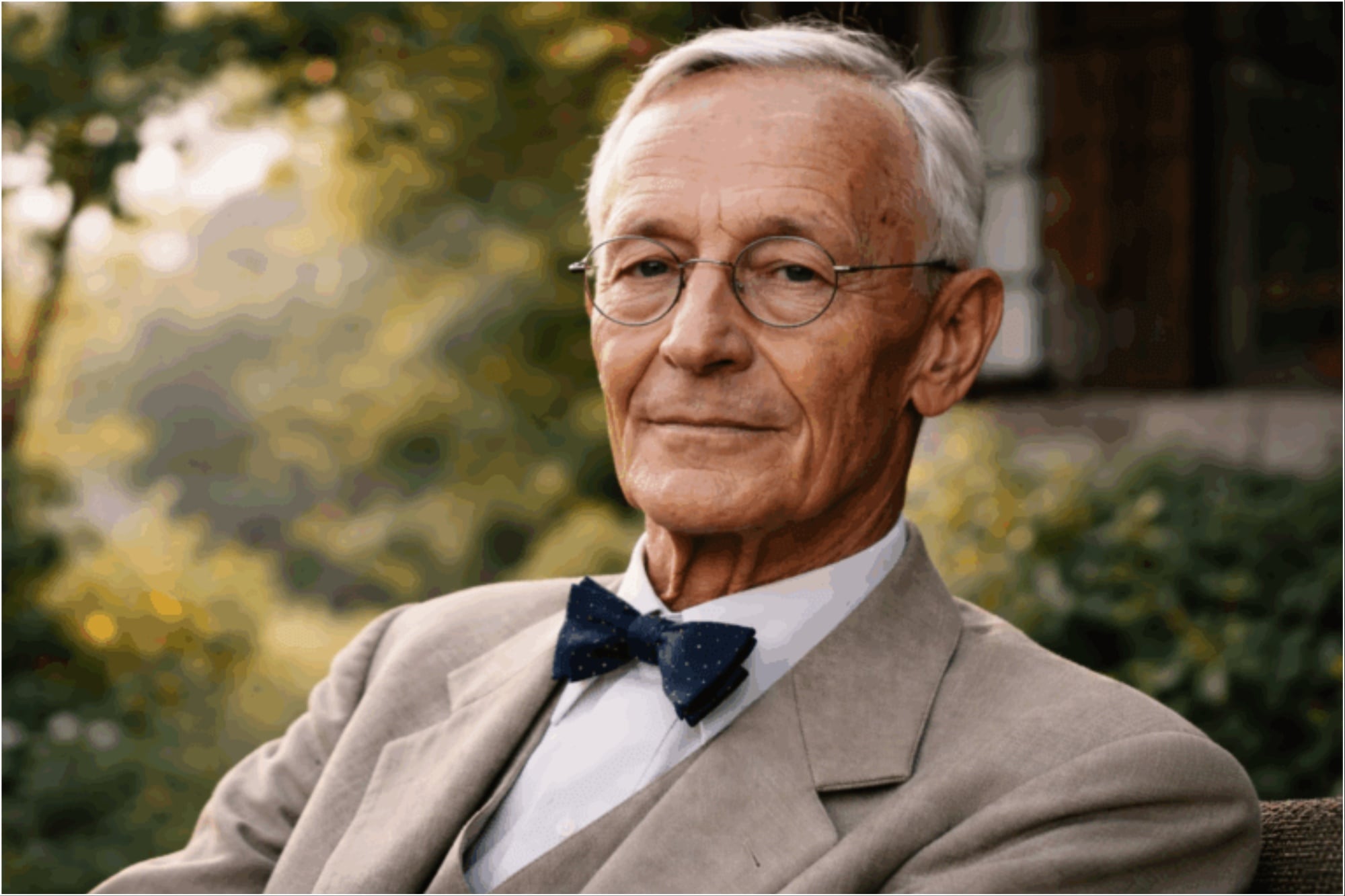
Hermann Hesse, Nobel laureate and influential writer, born July 2, 1877
Translated from Spanish, summarized and contextualized by DistantNews.
At a glance
In-depth
Sources not specified
Context piece
- Hermann Hesse, a Nobel laureate and influential German-language writer, was born on July 2, 1877.
- His works explored identity, spirituality, and inner growth, making him a tool for personal development worldwide.
- Hesse's legacy endures as a major 20th-century author, celebrated for his psychological depth and philosophical insights.
Hermann Hesse, a towering figure in 20th-century German literature and a Nobel laureate, was born on July 2, 1877. His novels, poetry, and essays delved into profound themes of self-discovery, spirituality, and individual freedom, resonating with generations of readers seeking personal growth.
Born in Calw, Germany, Hesse's upbringing was influenced by his missionary father and his mother, who had Indian heritage. Early experiences in religious institutions and bookstores shaped his intellectual path, leading him to a self-taught literary career. He navigated a personal journey of introspection, often at odds with societal expectations, which became a hallmark of his writing.
Hesse's most celebrated works, including "Demian," "Siddhartha," "Steppenwolf," and "The Glass Bead Game," are characterized by deep psychological exploration and the integration of Eastern philosophies and spiritual thought. His characters grapple with the search for meaning and inner transformation, making his narratives powerful tools for self-reflection.
Awarded the Nobel Prize in Literature for his literary achievements, Hesse passed away in Montagnola, Switzerland, on August 9, 1962. His enduring influence solidifies his position as one of the most widely read and impactful authors of the modern era.
When we hate someone, we are hating in his image something that is within us.
DistantNews Editorial
Originally published by La Nación in Spanish. Translated, summarized, and contextualized by our editorial team with added local perspective. Read our editorial standards.
More Stories



From Our Blog

What Gets Lost (and Found) When News Is Translated

The Critical Role of Diaspora Media in Global News

What Travellers Should Know About Countries with Restricted Press

A Digital Nomad's Guide to Following Local News

How the Same Story Looks Different in Different Countries
