


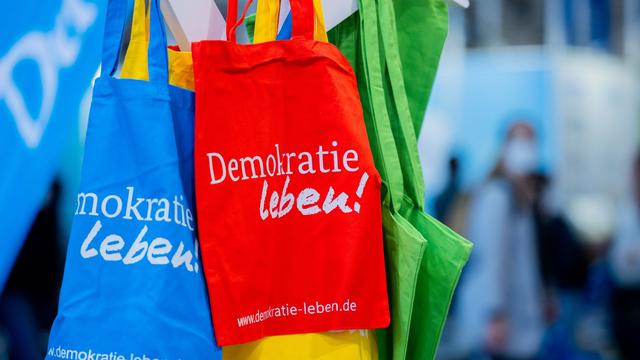
Hessen study: High support for democracy as an idea, but skepticism about its practice
Translated from German, summarized and contextualized by DistantNews.
At a glance
Analysis
Sources not specified
Context piece
- A study in Hessen, Germany, reveals a strong public support for democracy as an idea.
- However, citizens express critical views on the practical implementation of democracy in daily politics.
- The study highlights a significant gap in satisfaction levels between supporters of different political parties.
A recent study conducted in the German state of Hessen has unveiled a striking paradox: while the vast majority of residents express strong support for democracy as a concept, a considerable portion harbors critical opinions about its day-to-day political practice. The findings, presented by a research team in Wiesbaden, indicate a deep-seated approval of democratic ideals alongside dissatisfaction with political realities.
The "Hessen-Monitor" study revealed that over 95 percent of respondents favor democracy as an idea, and more than 92 percent are satisfied with the "democracy of the Basic Law." However, satisfaction with the actual functioning of democracy in everyday life is notably lower, with only about 64 percent expressing contentment. This gap is particularly pronounced across the political spectrum, with satisfaction among AfD supporters at 15.4 percent compared to 85.0 percent among Green Party supporters.
Many people miss that politics listens and can bring about change.
Science Minister Timon Gremmels (SPD) acknowledged that democracy faces pressure from both internal and external forces. He noted that many citizens feel their voices are not heard and that political actions do not always lead to tangible change. Gremmels emphasized the need to make political decisions more transparent and to involve citizens more actively in political processes. He also pointed out that constant disputes among federal parties erode public trust, urging for improvement in this area.
Furthermore, the study highlighted a strong sense of regional attachment among Hessen's residents, with approximately 85 percent feeling connected to their local communities and over 81 percent to the state itself. This local connection is seen as crucial for democratic engagement. The study also observed a divergence in economic perceptions, where over 80 percent view their personal financial situation positively, but only about 26 percent assess Germany's overall economic condition as good, potentially fueling a sense of crisis despite personal stability.
The study shows that democratic experiences are primarily made locally – in municipalities, associations, neighborhoods, and public institutions.
DistantNews Editorial
Originally published by Die Zeit in German. Translated, summarized, and contextualized by our editorial team with added local perspective. Read our editorial standards.
More Stories


From Our Blog

What Gets Lost (and Found) When News Is Translated

How the Same Story Looks Different in Different Countries

The Critical Role of Diaspora Media in Global News

What Travellers Should Know About Countries with Restricted Press

A Digital Nomad's Guide to Following Local News
