


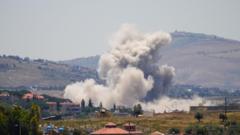
Hezbollah rejects Israel-Lebanon ceasefire, calls it surrender
Translated from English, summarized and contextualized by DistantNews.
At a glance
News
Named sources
Context piece
- Hezbollah has rejected a renewed ceasefire agreement between Israel and Lebanon, calling negotiations futile and humiliating.
- The Iran-backed group's leader, Naim Qassem, stated the deal, which involves security zones banning Hezbollah, amounts to surrender and serves Israeli objectives.
- Lebanese citizens expressed skepticism and a lack of hope regarding the ceasefire, citing ongoing strikes and a history of failed peace efforts.
Hezbollah has vehemently rejected a renewed ceasefire deal agreed upon by Israel and Lebanon, with the group's leader, Naim Qassem, denouncing the negotiations as "futile" and "humiliating."
negotiations had been "futile" and "humiliating" for Lebanon, and rejected categorically by "broad segments of the Lebanese people"
The proposed agreement, mediated by the US, aimed to establish "pilot" security zones within Lebanon where Hezbollah operatives would be banned. However, Hezbollah, which was not directly involved in the talks, has dismissed the ceasefire as a form of surrender that would fulfill Israel's objectives.
You cannot have a ceasefire from one side, it's going to be an all side or no ceasefire.
On the streets of Beirut's southern suburbs, a Hezbollah stronghold, residents voiced their doubts. A storekeeper named Sami, who has run his business for 25 years, questioned the validity of a one-sided ceasefire, noting that strikes were still occurring. "You cannot have a ceasefire from one side, it's going to be an all side or no ceasefire," he said.
This is surrender. This is not a peace agreement. This is a surrender agreement.
Another resident, Hadi, expressed a deep-seated lack of hope, stating, "My generation, my dad's generation, my grandpa's generation, they didn't see anything of hope from these people - not necessarily the Israeli people. You can say the Israeli government." The agreement stipulated the evacuation of Hezbollah operatives from an area near the Israeli border, with Lebanese Armed Forces taking exclusive control. Representatives are scheduled to meet again on June 22 for further discussions toward a comprehensive agreement.
My generation, my dad's generation, my grandpa's generation, they didn't see anything of hope from these people - not necessarily the Israeli people. You can say the Israeli government.
DistantNews Editorial
Originally published by BBC News in English. Translated, summarized, and contextualized by our editorial team with added local perspective. Read our editorial standards.
More Stories



From Our Blog

What Gets Lost (and Found) When News Is Translated

The Critical Role of Diaspora Media in Global News

What Travellers Should Know About Countries with Restricted Press

A Digital Nomad's Guide to Following Local News

How the Same Story Looks Different in Different Countries
