


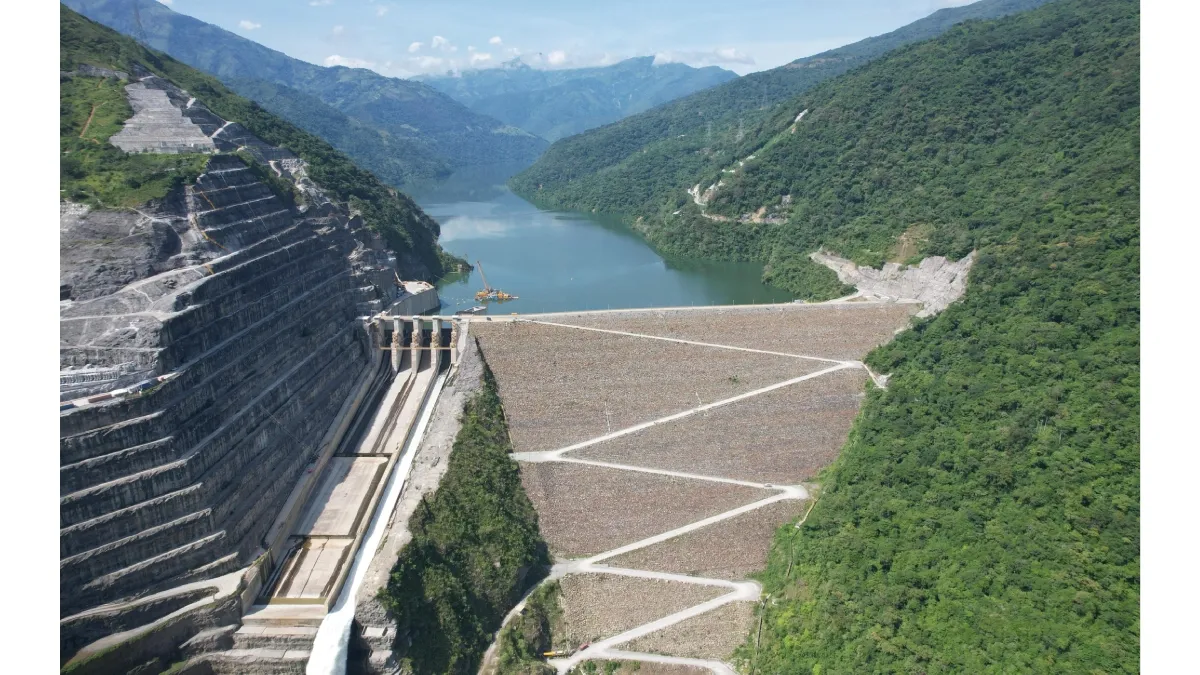
Hidroituango warns of 'perfect storm' in Colombia's electricity sector due to planning gaps
Translated from Spanish, summarized and contextualized by DistantNews.
At a glance
News
Named sources
New plan
- Hidroituango warns that gaps in the Colombian government's energy planning could lead to a "perfect storm" in the electricity sector, especially with the onset of El Niño.
- A study by Hidroituango indicates insufficient expansion of electricity generation, with only 17% of the planned capacity entering the national grid between 2020 and 2026.
- The company criticizes the government's planning for underestimating demand growth and failing to model the coincidence of multiple extreme events.
Hidroituango is sounding the alarm over potential energy sector instability in Colombia, warning of a "perfect storm" due to perceived deficiencies in the national government's energy planning, particularly as the El Niño phenomenon begins.
Mauricio Restrepo Gutiérrez, the acting manager of Hidroituango S.A., presented findings from a technical study attributing national energy security and sustainability risks directly to the government. The study highlights significant gaps in the 2025-2039 Indicative Generation Expansion Plan developed by the Mining and Energy Planning Unit (UPME).
According to Hidroituango, the official planning framework fails to align with the country's energy transition. The company's analysis suggests the primary failure lies not only in underestimating demand growth but also in inadequately modeling the simultaneous occurrence of several extreme events. This oversight, previously flagged by former manager Alejandro Arbeláez, leads Hidroituango to ratify that Colombia is heading towards a "perfect storm."
This scenario, the study posits, would be fueled by the convergence of at least seven critical variables that the system cannot absorb simultaneously. Restrepo elaborated that various government entities did not account for a risk matrix incorporating simultaneous events or simulate severe El Niño scenarios. The study illustrates this with figures showing that only 4,476 megawatts have entered the National Interconnected System between 2020 and 2026, a mere 17% of the projected 28,100 megawatts. Furthermore, only 306 megawatts of the planned 4,475 megawatts had entered by June 30 of the current year, representing just 7% of expectations.
DistantNews Editorial
Originally published by El Tiempo in Spanish. Translated, summarized, and contextualized by our editorial team with added local perspective. Read our editorial standards.
More Stories


From Our Blog

What Gets Lost (and Found) When News Is Translated

The Critical Role of Diaspora Media in Global News

What Travellers Should Know About Countries with Restricted Press

A Digital Nomad's Guide to Following Local News

How the Same Story Looks Different in Different Countries
