

High-rise window cleaning: The special profession of 'Spiderman'
Translated from Vietnamese, summarized and contextualized by DistantNews.
At a glance
In-depth
Sources not specified
Context piece
- High-rise window cleaning is a dangerous job requiring strong nerves and a lack of fear of heights, despite not needing formal qualifications.
- Many cleaners return to manual labor jobs like construction or loading after the busy end-of-year season to make ends meet.
- While daily earnings can exceed one million Vietnamese dong, work is seasonal, leaving cleaners with financial worries and constant risk.
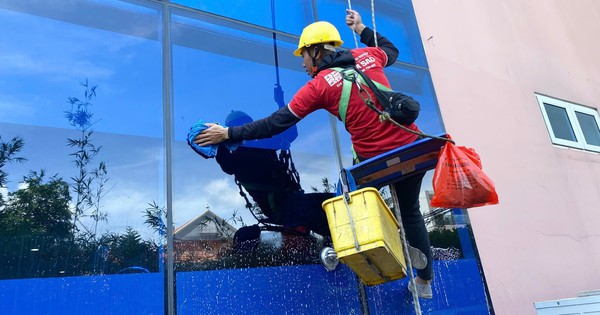
The job of cleaning windows on high-rise buildings demands more than just a lack of formal qualifications; it requires nerves of steel and a complete absence of vertigo.
After a busy period in the final months of the year, many high-rise window cleaners revert to labor-intensive jobs like construction or general manual work to survive. While their earnings can reach over one million Vietnamese dong per day, this lucrative period lasts only a few months annually. The rest of the year is marked by financial anxieties and the ever-present risk of working at extreme heights.
Nguyen Huu Dat, 28, from Gia Lai province, exemplifies this precarious existence. He explains that work is inconsistent, and he often takes on odd jobs like assisting construction workers to cover living expenses and support his mother's diabetes treatment. Dat's entry into window cleaning was accidental, stemming from unemployment after the COVID-19 pandemic. He began by helping a friend carry equipment and set up scaffolding for cleaning crews, gradually learning the trade and becoming a main worker.
Despite being the youngest in his group, Dat has built a network and often takes on contracts, assembling teams for specific projects. He emphasizes the psychological demands of the job: "The most important thing is to have steady nerves and not be afraid of heights. If your legs shake when you're up high, you can't do it." Newcomers typically start on lower buildings or easily accessible areas, with Dat himself limiting his work to structures under 10 stories due to his own susceptibility to dizziness when looking down from extreme heights.
Safety is paramount, with rigorous checks of ropes, harnesses, and equipment before each job. Warning signs are posted to protect those below. Dat notes that the work, which appears simple from the ground, involves constant vigilance against strong winds and the inherent dangers of working suspended hundreds of feet in the air.
The most important thing is to have steady nerves and not be afraid of heights. If your legs shake when you're up high, you can't do it.
DistantNews Editorial
Originally published by Thanh Niên in Vietnamese. Translated, summarized, and contextualized by our editorial team with added local perspective. Read our editorial standards.
More Stories
From Our Blog

What Gets Lost (and Found) When News Is Translated

The Critical Role of Diaspora Media in Global News

What Travellers Should Know About Countries with Restricted Press

A Digital Nomad's Guide to Following Local News

How the Same Story Looks Different in Different Countries
