

Historian: AfD's Rise Echoes Weimar Republic's Political Dynamics
Translated from German, summarized and contextualized by DistantNews.
At a glance
Analysis
Named sources
Context piece
- Historian Eckart Conze draws parallels between the rise of the AfD party in Germany and the dynamics of the late Weimar Republic.
- Conze notes the AfD's rapid growth mirrors the Nazi party's ascent, though the Weimar crisis was more intense.
- He highlights the speed of the AfD's electoral success compared to the Nazi party's initial growth.
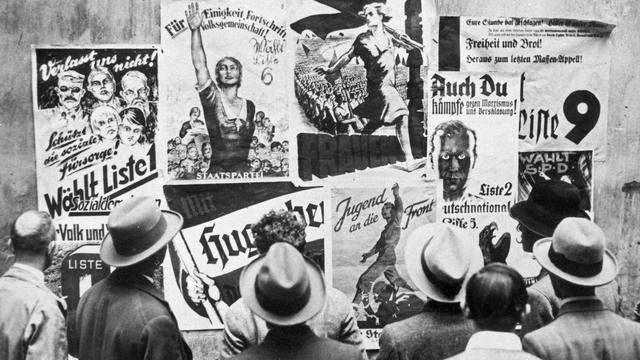
Historian Eckart Conze sees worrying echoes of the past in Germany's current political landscape, particularly concerning the rise of the Alternative for Germany (AfD) party. When presented with recent polling data showing the AfD at 27 percent, ahead of the CDU at 23 percent and the SPD at 13 percent, Conze acknowledges that the parallels to the Weimar Republic are striking.
Conze points out that the AfD's trajectory in recent years reflects the political dynamics observed during the final years of the Weimar Republic. However, he emphasizes that the historical situation unfolded at a much faster pace. The Nazi Party, for instance, grew from a fringe party with 2.6 percent in 1928 to its peak of 37.4 percent in the July 1932 elections, a dramatic surge within just four years.
Yes, because the rise of the AfD certainly reflects the dynamics in the final years of the Weimar Republic – only that it happened much faster back then.
While the AfD's growth has been significant, Conze attributes the extreme speed of the Nazi Party's ascent partly to the unparalleled intensity of the crisis following the 1929 stock market crash. This historical context serves as a stark reminder of how rapidly political landscapes can shift during periods of economic and social instability, prompting reflection on contemporary political trends.
This speed also had to do with the unequally greater intensity of the crisis after the stock market crash of 1929.
DistantNews Editorial
Originally published by Die Zeit in German. Translated, summarized, and contextualized by our editorial team with added local perspective. Read our editorial standards.
More Stories

From Our Blog

What Gets Lost (and Found) When News Is Translated

How the Same Story Looks Different in Different Countries

The Critical Role of Diaspora Media in Global News

What Travellers Should Know About Countries with Restricted Press

A Digital Nomad's Guide to Following Local News
