

Ho Chi Minh City's 100-Year Plan: Comprehensively Improving Residents' Quality of Life
Translated from Vietnamese, summarized and contextualized by DistantNews.
At a glance
News
Named sources
Context piece
- Ho Chi Minh City is planning a 100-year development vision aimed at comprehensively improving residents' quality of life.
- The plan focuses on creating a livable, sustainable, and adaptive urban environment with equitable development opportunities.
- Key strategies include strengthening economic competitiveness, reorganizing spatial development, enhancing connectivity, and improving urban quality centered on citizens.
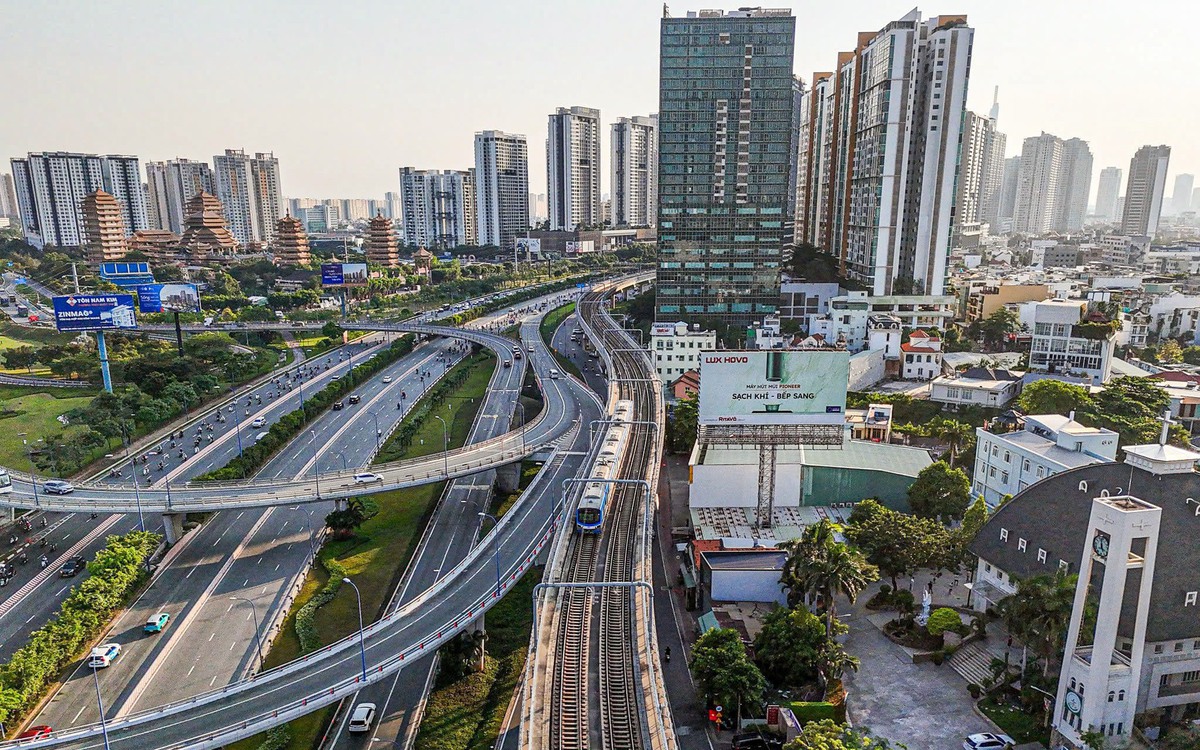
Ho Chi Minh City is embarking on an ambitious 100-year development plan designed to fundamentally enhance the quality of life for its millions of residents. The initiative aims to transform the city into a desirable, sustainable, and adaptive metropolis that offers equitable opportunities for growth and prosperity.
Central to this vision is the creation of a multi-polar megacity. Experts and city officials convened to discuss the master plan for the period 2025-2050, with a century-long outlook. They identified the primary challenge not as a lack of potential, but as the effective organization of resources and space into a unified, functional structure.
The 100-year vision positions Ho Chi Minh City as a global megacity with high competitiveness, strong innovation, and superior quality of life with long-term adaptability.
The plan acknowledges Ho Chi Minh City's strengths, including its role as the nation's economic engine, its diverse transport systems, and abundant labor force. However, it also addresses limitations such as fragmented infrastructure, uneven quality of life across districts, and increasing environmental pressures. The strategy prioritizes four key areas: boosting economic competitiveness, restructuring spatial development, improving regional and inter-regional connectivity, and elevating urban living standards with a citizen-centric approach.
Improving urban quality must place citizens and the service capacity of the urban system at the center. New development poles must simultaneously create jobs, housing, schools, hospitals, cultural and sports facilities, public spaces, and essential urban services to reduce pressure on the central core.
DistantNews Editorial
Originally published by Tuổi Trẻ in Vietnamese. Translated, summarized, and contextualized by our editorial team with added local perspective. Read our editorial standards.
More Stories
From Our Blog

What Gets Lost (and Found) When News Is Translated

The Critical Role of Diaspora Media in Global News

What Travellers Should Know About Countries with Restricted Press

A Digital Nomad's Guide to Following Local News

How the Same Story Looks Different in Different Countries
