

Höcke seeks to extend influence in federal AfD leadership
Translated from German, summarized and contextualized by DistantNews.
At a glance
News
Sources not specified
Context piece
- Thuringian AfD leader Björn Höcke is asserting his influence within the federal party ahead of a leadership vote.
- Höcke has backed his confidant Stefan Möller for a deputy leadership position, stating Möller would act as his proxy.
- The AfD's federal congress in Erfurt is expected to draw large protests, with the Thuringian branch classified as right-wing extremist.
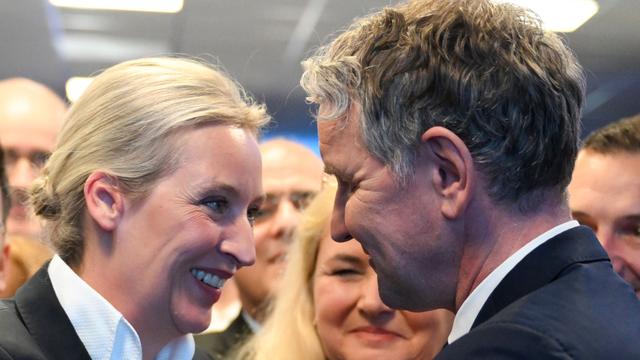
Björn Höcke, the leader of the Alternative for Germany (AfD) party in the state of Thuringia, is actively seeking to extend his influence over the federal party structure ahead of a crucial leadership election.
I know that if Stefan Möller is in the federal executive, then I will have someone with whom I am in the closest exchange, I am connected, without having to do the work myself. And I can continue to concentrate on the Thuringian Way here.
Höcke has publicly endorsed Stefan Möller, a close associate and co-state spokesperson, for the position of deputy federal spokesperson. Höcke stated that Möller's election would ensure he remains "connected" to the federal leadership, allowing him to "concentrate on the Thuringian Way" without being directly involved in federal party operations. "I know that if Stefan Möller is in the federal executive, then I will have someone with whom I am in the closest exchange, I am connected, without having to do the work myself," Höcke told the German Press Agency.
The AfD is scheduled to elect its new federal executive board during its national congress in Erfurt on the first weekend of July. This event is anticipated to attract tens of thousands of demonstrators, highlighting the significant opposition to the party. The choice of Erfurt as the venue has been interpreted by some politicians, like former Thuringian Minister-President Bodo Ramelow, as a deliberate move by the AfD to "roll out the red carpet" for Höcke.
He wants – and this is very important for us – to push through the Thuringian line in the federal executive.
The Thuringian AfD branch is officially classified and monitored by the state's Office for the Protection of the Constitution as "securely right-wing extremist." Höcke himself is considered a prominent figure on the far-right within the party and has a criminal record, including convictions for using banned Nazi-era slogans. He views Möller as a trusted partner with whom he has shared a division of labor since 2014, aiming for Möller to "push through the Thuringian line" within the federal executive.
It is understandable that he is a very close comrade-in-arms of mine.
Höcke's strategic goal remains to become Minister-President of Thuringia. He outlined key aspects of the "Thuringian line" to include loyalty to AfD principles and "corrections" in the "fight against the Office for the Protection of the Constitution." He also stated that if the AfD gains governmental responsibility, it would fundamentally reform the domestic intelligence agency, advocating for a politically neutral body focused on violent extremism and economic espionage.
We want to show a clear edge and not let ourselves be pushed onto the defensive.
DistantNews Editorial
Originally published by Die Zeit in German. Translated, summarized, and contextualized by our editorial team with added local perspective. Read our editorial standards.
More Stories

From Our Blog

What Gets Lost (and Found) When News Is Translated

How the Same Story Looks Different in Different Countries

The Critical Role of Diaspora Media in Global News

What Travellers Should Know About Countries with Restricted Press

A Digital Nomad's Guide to Following Local News
