


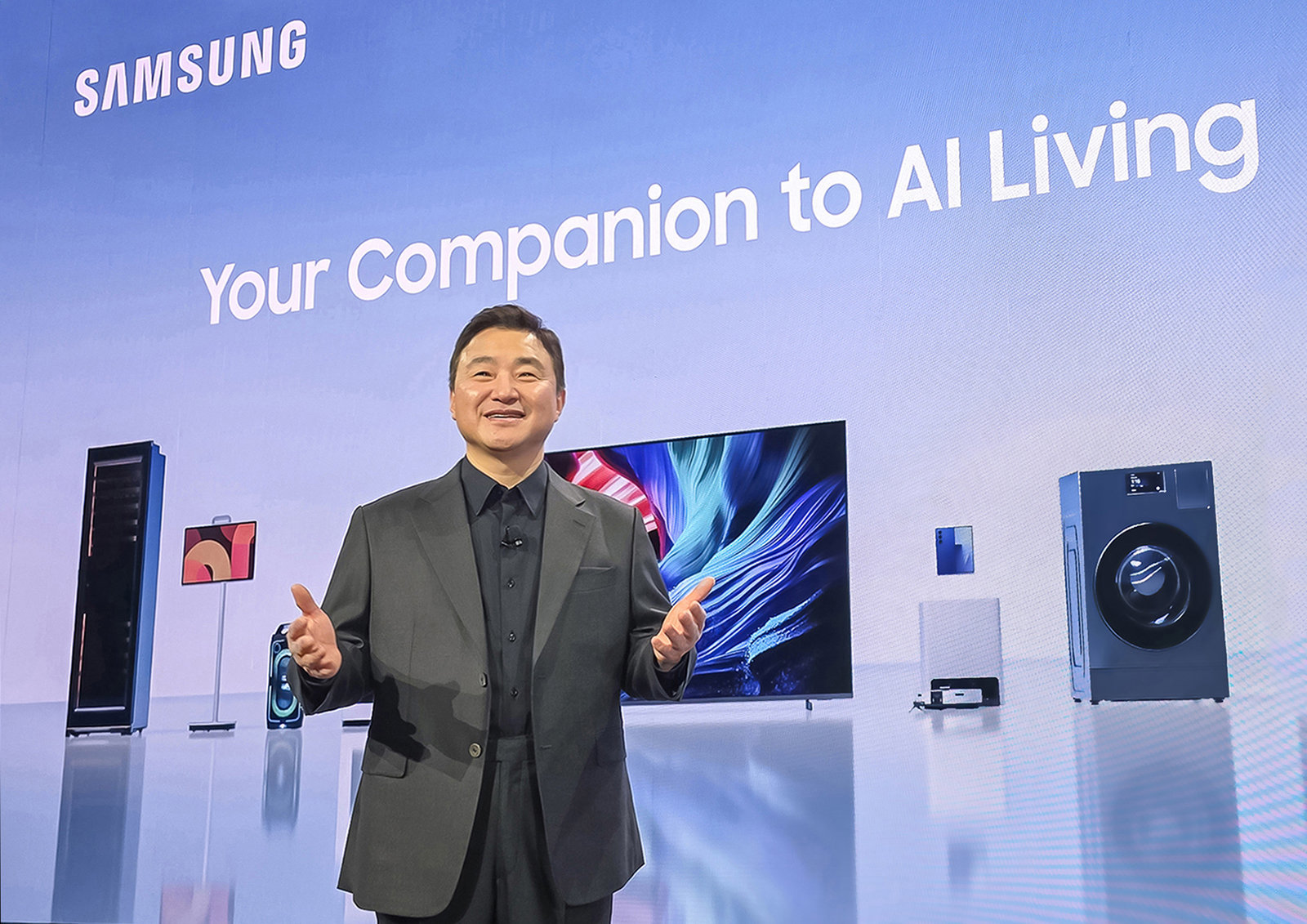
Home Appliances: LG Recovers 1 Trillion Won Profit While Samsung Posts Loss Amid Similar Industry Conditions; Both Eye Robotics for Future Growth
Translated from Korean, summarized and contextualized by DistantNews.
At a glance
News
Sources not specified
New plan
- Samsung Electronics reported record quarterly earnings driven by its semiconductor division, while LG Electronics also achieved its best second quarter ever, led by its home appliance and TV businesses.
- Despite similar revenue in their common business areas, Samsung's home appliance and TV divisions incurred a loss, while LG's divisions remained profitable, highlighting differences in their business structures.
- Both companies are focusing on robotics as a key future growth engine, establishing dedicated divisions and outlining plans for both industrial and consumer robots.
Samsung Electronics and LG Electronics have released their second-quarter earnings, revealing starkly different performances in their home appliance sectors. While Samsung Electronics announced record-breaking overall quarterly revenue of 171.5 trillion won and operating profit of 89.5 trillion won, largely propelled by its semiconductor division, LG Electronics also posted its highest-ever second-quarter revenue and operating profit, reaching 23.8 trillion won and 1.58 trillion won respectively.
The divergence becomes clear when examining their common business segments. Samsung's TV (VD) and home appliance (DA) divisions saw revenue increase slightly to 14.5 trillion won, but their operating profit plummeted from 200 billion won to a loss of 10 billion won. In contrast, LG Electronics' combined home appliance, TV, and air conditioning divisions generated 14.9 trillion won in revenue and a profit of 1.14 trillion won. This significant profit gap of over 1 trillion won in their shared business areas is attributed to differing business structures and strategies.
Industry observers point to LG Electronics' diversified revenue streams and focus on high-value products. The company has expanded its sales of premium home appliances and high-margin OLED and QNED TVs, alongside growth in its webOS platform business, B2B, subscription services, and HVAC operations. This multi-pronged approach, combined with cost optimization and supply chain management, has bolstered profitability. LG's success in home appliances, in particular, contrasts sharply with Samsung's struggles.
Samsung's home appliance and TV divisions appear to have been significantly impacted by rising raw material and energy costs, exacerbated by the Middle East conflict and surging memory chip prices for AI appliances. Although Samsung increased sales of premium and AI-driven products, it could not fully pass on increased costs, leading to a decline in profitability. The company is undergoing restructuring, including halting sales of low-margin products in China and reorganizing production bases, but these efforts have yet to yield substantial results.
Despite these contrasting results, both companies are aligning their future strategies around robotics. Samsung Electronics recently established a dedicated Robotics eXperience (RX) business unit, signaling its intent to leverage robotics to overcome the sluggishness in its existing product businesses. LG Electronics has also identified robotics as one of its four key future strategic businesses, aiming to become a major supplier in the global robot market by leveraging its extensive manufacturing infrastructure and developing core components like actuators.
DistantNews Editorial
Originally published by Dong-A Ilbo in Korean. Translated, summarized, and contextualized by our editorial team with added local perspective. Read our editorial standards.
More Stories


From Our Blog

What Gets Lost (and Found) When News Is Translated

The Critical Role of Diaspora Media in Global News

What Travellers Should Know About Countries with Restricted Press

A Digital Nomad's Guide to Following Local News

How the Same Story Looks Different in Different Countries
