


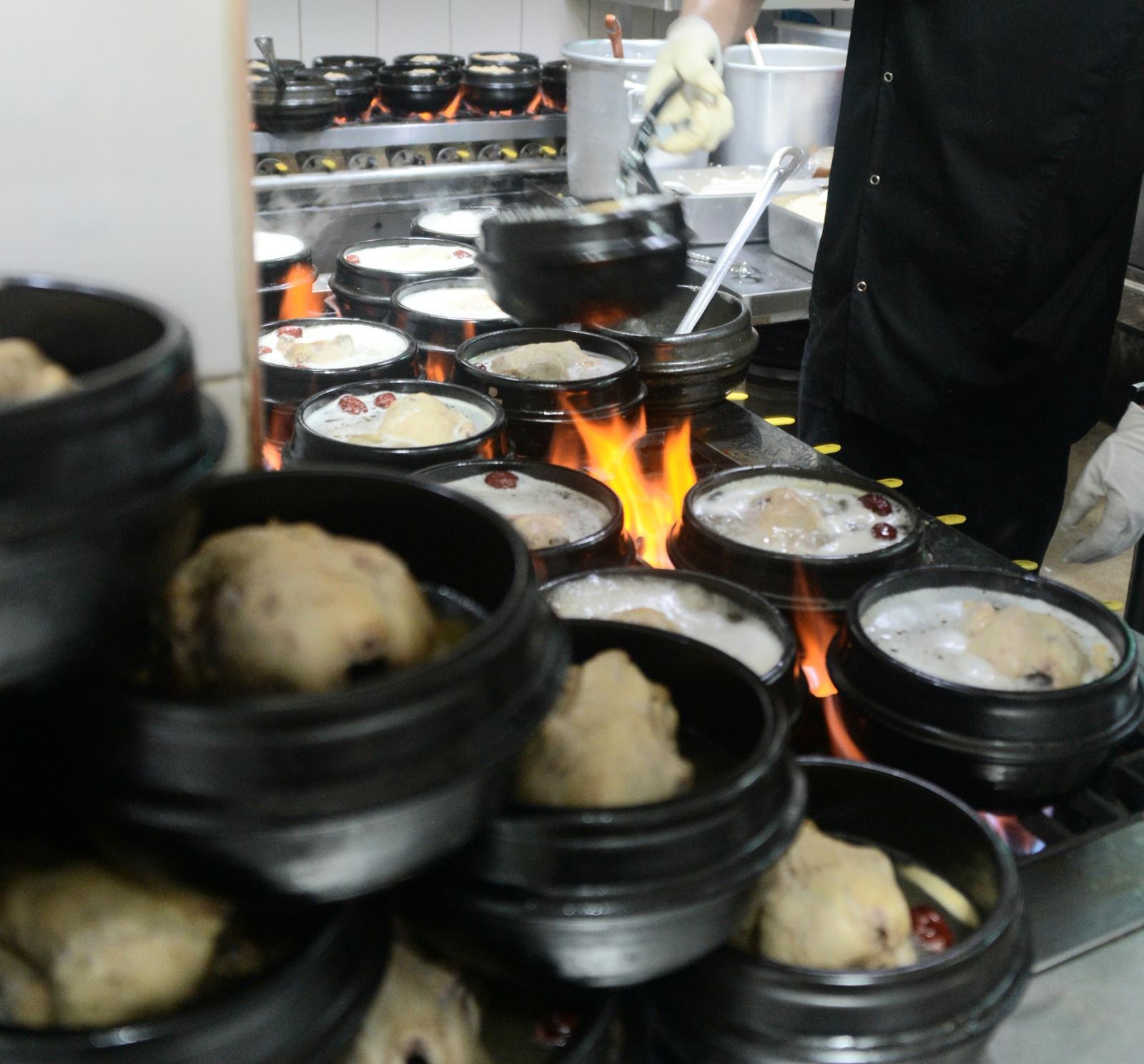
Homemade Samgyetang costs half the price of dining out
Translated from Korean, summarized and contextualized by DistantNews.
At a glance
News
Sources not specified
Context piece
- Making Samgyetang (ginseng chicken soup) at home using ingredients from traditional markets costs approximately 8,800 won per serving.
- This homemade cost is significantly cheaper than dining out, where Samgyetang typically exceeds 18,000 won per serving.
- While the cost of ingredients has risen 12.5% since 2022, it has slightly decreased from last year due to a drop in glutinous rice prices.
Preparing Samgyetang, a traditional Korean ginseng chicken soup, at home using ingredients purchased from local markets costs around 8,800 won per person. This homemade option offers a substantial saving compared to dining out, where the dish often exceeds 18,000 won.
A recent price survey conducted by the Korea Price Information agency ahead of the first of the three hottest days of summer (Chobok) found that the cost of ingredients for four servings of Samgyetang, including items like young chicken, ginseng, chestnuts, green onions, and medicinal herbs, totaled 35,260 won. This translates to approximately 8,800 won per serving.
This represents a 12.5% increase from 2022 when the cost was 31,340 won for four servings. However, the price has seen a slight decrease of 2.8% compared to last year's 36,260 won. This reduction is attributed to a significant drop in the price of glutinous rice, which fell by 23.3%. Prices for other key ingredients, such as young chicken, ginseng, chestnuts, green onions, and medicinal herbs, remained largely unchanged from the previous year, with garlic prices also staying similar.
Korea Price Information noted that the cost of chicken meat could potentially rise due to the late start of the monsoon season and the anticipated heatwave following it. Meanwhile, the cost of dining out for Samgyetang continues its upward trend. According to the Korea Consumer Agency's price information portal, the average price for a bowl of Samgyetang in Seoul as of May was 18,154 won, a 2.8% increase from the previous year.
Lee Dong-hoon, head of the planning and research team at Korea Price Information, suggested that convenient options like Samgyetang meal kits and home meal replacement (HMR) products are becoming increasingly popular. He added that these products offer an economical alternative for enjoying a nourishing meal compared to dining out.
DistantNews Editorial
Originally published by Dong-A Ilbo in Korean. Translated, summarized, and contextualized by our editorial team with added local perspective. Read our editorial standards.
More Stories

From Our Blog

What Gets Lost (and Found) When News Is Translated

The Critical Role of Diaspora Media in Global News

What Travellers Should Know About Countries with Restricted Press

A Digital Nomad's Guide to Following Local News

How the Same Story Looks Different in Different Countries
