

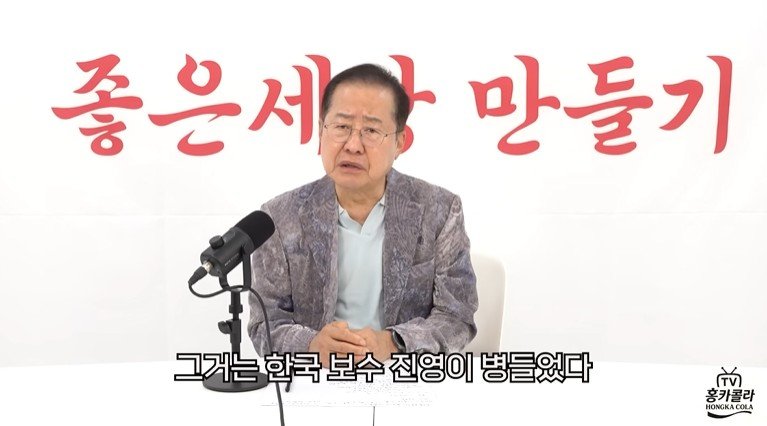
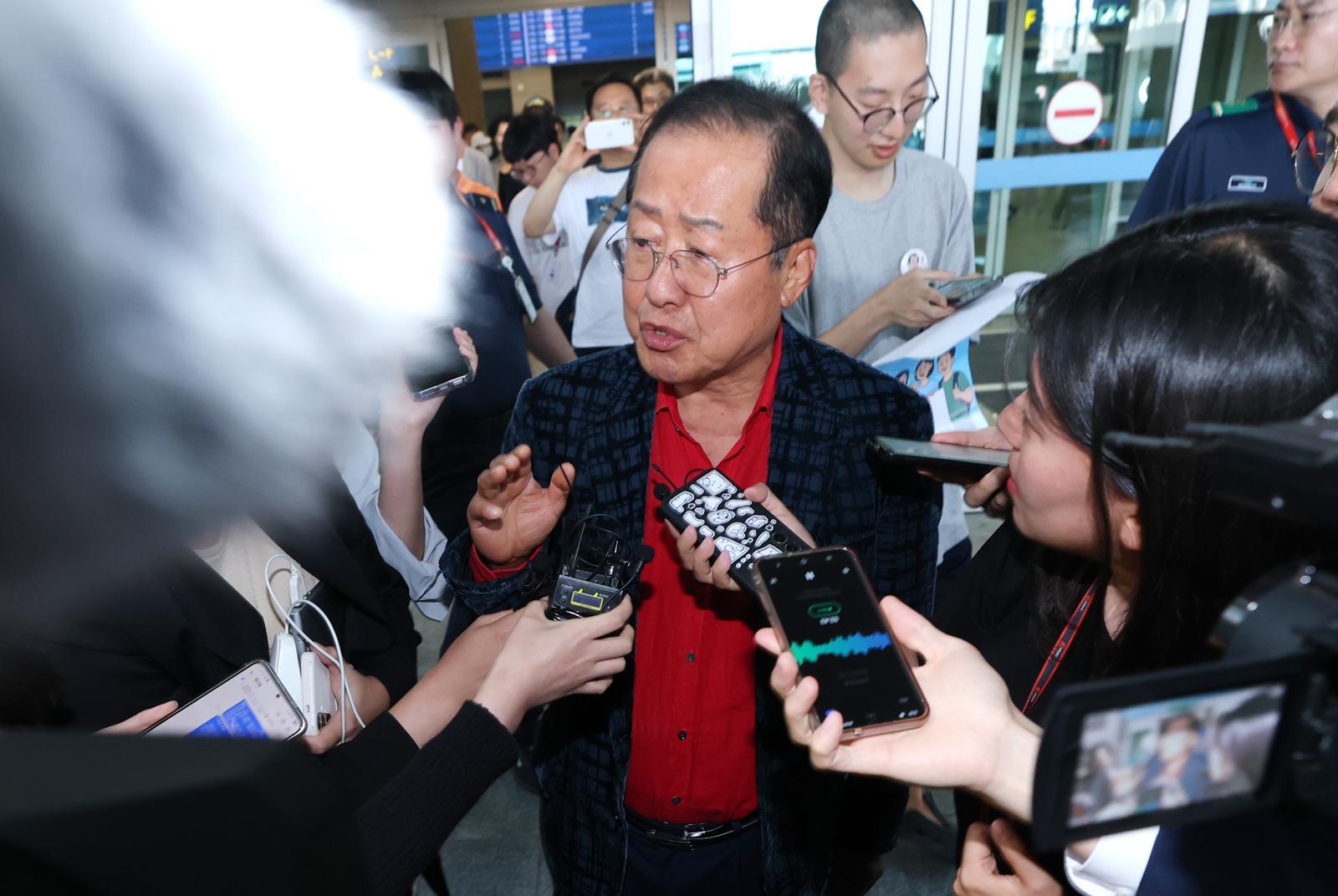
Hong Joon-pyo: "If Prosecutors' Supplementary Investigation Rights Are Abolished, Korea Will Become a Criminal's Paradise"
Translated from Korean, summarized and contextualized by DistantNews.
At a glance
News
Named sources
Context piece
- Former Daegu Mayor Hong Joon-pyo warns that abolishing prosecutors' supplementary investigation rights would turn South Korea into a "criminal's paradise."
- He expressed concern over the government's apparent decision to eliminate these rights as part of prosecutorial reforms, arguing that the proposed prosecution offices lack legal experts and the capacity to handle complex cases.
- Hong criticized the move as a "perversion" of reform, stating that it abandons the duty to protect citizens and would ultimately harm the public.
Former Daegu Mayor Hong Joon-pyo has issued a stark warning, asserting that the proposed abolition of prosecutors' supplementary investigation rights would transform South Korea into a haven for criminals. His comments come in response to the government's apparent decision to eliminate these rights, a key aspect of ongoing prosecutorial reforms.
If the prosecution's supplementary investigation rights are abolished, Korea will become a criminal's paradise.
Hong expressed significant concern regarding the practical implications of this change. He argued that the new prosecution offices, set to be established after the abolition of the Prosecutor's Office in October, would lack the necessary legal expertise. Furthermore, he pointed out their insufficient capacity to investigate large-scale and sophisticated crimes. Without the ability to conduct supplementary investigations, Hong believes prosecutors would be forced to release suspects without charges, leading to a surge in impunity.
A golden age for criminals will come. Even if the investigation and prosecution are separated as revenge against political prosecutors and the Prosecutor's Office is abolished, if the duty of those in power to protect the people from criminals is abandoned, it is not reform but a perversion.
"A golden age for criminals will come," Hong stated, criticizing the reform as a "perversion" rather than genuine improvement. He contended that even if the separation of investigation and prosecution is intended as a political reprisal, abandoning the fundamental duty to protect citizens from criminals constitutes a betrayal of public trust. He urged the current administration to retain at least the minimal measure of supplementary investigation rights for the sake of public safety.
The abolition of prosecutors' supplementary investigation rights has been finalized as the government's basic position.
The government's stance, as articulated by Prime Minister Kim Boo-kyum on June 25th, is that the abolition of prosecutors' supplementary investigation rights has been finalized as the government's basic position. This decision is interpreted by some as a response to pressure from pro-government factions and hardline supporters advocating for a complete elimination of these rights. Notably, former Democratic Party leader Chung Jin-suk immediately took to Facebook following the government announcement, emphasizing the urgency to pass the relevant legislation before Liberation Day on August 15th.
Let's finish it right now, before Liberation Day.
DistantNews Editorial
Originally published by Dong-A Ilbo in Korean. Translated, summarized, and contextualized by our editorial team with added local perspective. Read our editorial standards.
More Stories


From Our Blog

What Gets Lost (and Found) When News Is Translated

The Critical Role of Diaspora Media in Global News

What Travellers Should Know About Countries with Restricted Press

A Digital Nomad's Guide to Following Local News

How the Same Story Looks Different in Different Countries
