

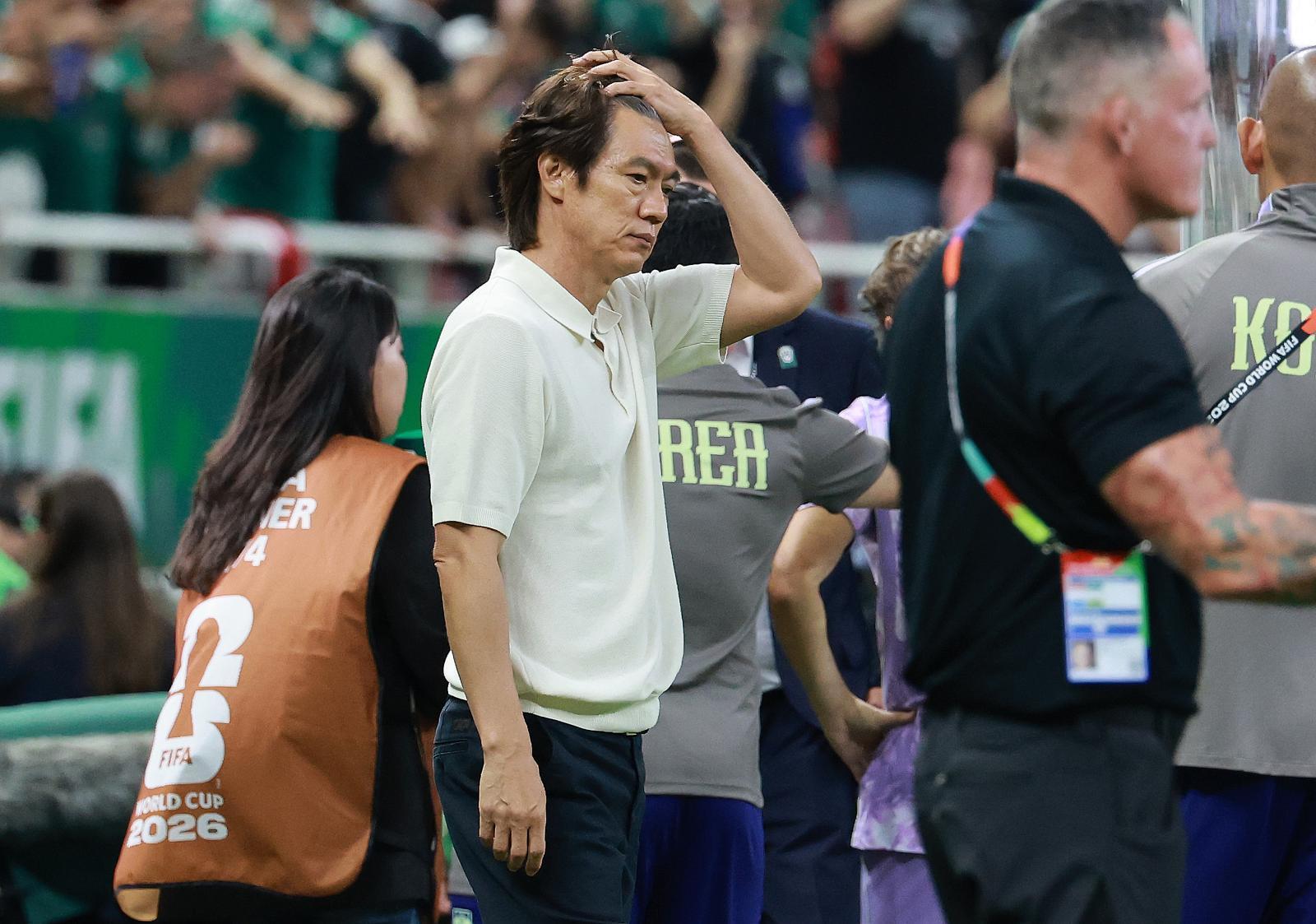
Hong Myung-bo, 'Korea's biggest enemy is the football association', Jin Jong-oh, 'Step down'
Translated from Korean, summarized and contextualized by DistantNews.
At a glance
News
Sources not specified
Context piece
- South Korean politicians are criticizing the national football association and head coach Hong Myung-bo following the team's elimination from the 2026 World Cup.
- Lawmakers from both ruling and opposition parties are calling for thorough reform of the football association.
- Specific criticisms include the opaque selection process for the head coach and the association's overall conduct.
Following South Korea's exit from the 2026 World Cup, political figures have joined the public outcry, directing sharp criticism at the Korean Football Association (KFA) and national team head coach Hong Myung-bo. The team's failure to advance to the round of 32 has intensified calls for a significant overhaul of the country's football governance.
The KFA's past actions warrant strong criticism
Lawmakers from the ruling People Power Party have been vocal in their dissatisfaction. Kim Seung-soo, deputy leader of the party's national policy committee, stated on Facebook that while the players deserve gratitude for their efforts, the KFA's past actions warrant strong criticism. He pledged to thoroughly examine the association's operations if he serves on the Culture, Sports, and Tourism Committee in the upcoming National Assembly.
Fellow party member Jin Jong-oh, an Olympic shooting gold medalist, urged Hong Myung-bo to step down, suggesting it was time for new leadership to guide South Korean football toward a new era. Jin emphasized the importance of supporting the players while critically evaluating the system, reflecting the sentiment of many fans who believe fundamental changes are needed.
Hong Myung-bo, thank you for your hard work. Now, please step down for the new leap forward of Korean football.
Opposition lawmakers have echoed these sentiments. Song Young-gil, a member of the Democratic Party, described the World Cup outcome as a disaster foreshadowed since the 2014 Brazil World Cup. He argued that the KFA, characterized by a lack of transparency, accountability, and self-reflection, makes it difficult to anticipate a positive future for South Korean football. Song specifically pointed to the questionable legitimacy of Hong's appointment as head coach.
The Korean Football Association, with its lack of procedure, responsibility, and reflection, makes it difficult to expect a future for Korean football.
Song further asserted that South Korea's biggest adversary is not opposing teams but rather internal issues within the KFA, such as "cartels, lack of principles, and irresponsibility." He stressed that merely accepting the resignation of KFA President Chung Mong-gyu or making minor regulatory changes would not suffice to address the deep-seated problems. Other Democratic Party members, including Park Beom-kye and Jo Gye-won, have also called for a "reconstruction" or "major surgery" of Korean football, underscoring the widespread demand for comprehensive reform.
South Korea's biggest enemy is not the opposing team. It is the cartels, lack of principles, and irresponsibility within the Korean Football Association.
DistantNews Editorial
Originally published by Dong-A Ilbo in Korean. Translated, summarized, and contextualized by our editorial team with added local perspective. Read our editorial standards.
More Stories

From Our Blog

What Gets Lost (and Found) When News Is Translated

The Critical Role of Diaspora Media in Global News

What Travellers Should Know About Countries with Restricted Press

A Digital Nomad's Guide to Following Local News

How the Same Story Looks Different in Different Countries
