

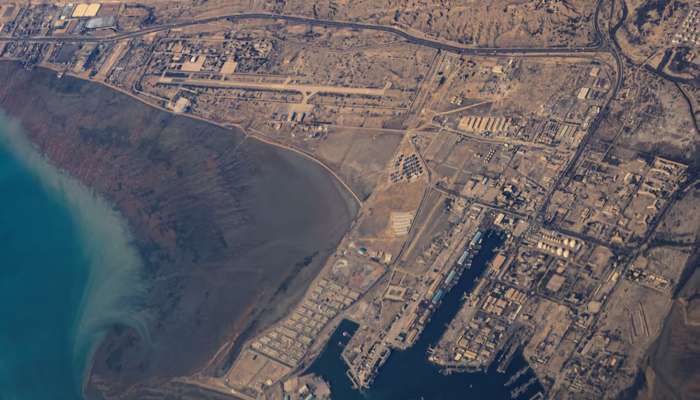

Hormuz open for ships not bound for Iran, US Navy ensuring transit: White House
Translated from English, summarized and contextualized by DistantNews.
At a glance
News
Official statement
New plan
- The White House confirmed the Strait of Hormuz remains open for commercial vessels not destined for Iranian ports.
- A US naval blockade is in place, targeting only ships entering or leaving Iranian ports due to Iran's non-compliance with agreements.
- The US Navy has deployed significant military assets to enforce the blockade and ensure maritime traffic flow.
The Strait of Hormuz remains accessible to commercial vessels not traveling to or from Iranian ports, the White House announced Thursday, as the U.S. Navy enforces a blockade targeting Iran.
We know that there is a blockade of ships directed by the President for ships entering and departing Iranian ports only. This has been fully implemented and is in full force. This blockade was reimposed due to Iran's inability to honor its agreement with the United States of America.
White House Press Secretary Karoline Leavitt clarified that the blockade, reimposed due to Iran's failure to honor agreements, specifically applies to vessels entering or departing Iranian ports. "This blockade was reimposed due to Iran's inability to honor its agreement with the United States of America," Leavitt stated.
More than 10,000 U.S. sailors, Marines, and airmen, along with two aircraft carriers and more than 20 warships and dozens of aircraft, are executing the blockade mission as we speak.
Leavitt detailed the substantial U.S. military presence in the region, comprising over 10,000 sailors, Marines, and airmen, two aircraft carriers, more than 20 warships, and numerous aircraft, all engaged in enforcing the blockade. During the initial 24 hours, U.S. Central Command (CENTCOM) redirected two compliant commercial vessels and disabled one that did not adhere to the blockade rules.
During the first 24 hours of the blockade, U.S. CENTCOM has redirected two compliant commercial vessels and disabled one non-compliant vessel.
"The strait is open for ships that are not travelling to and from Iranian ports specifically, and the U.S. Navy is there to ensure that can take place," Leavitt emphasized. CENTCOM had previously announced the resumption of naval operations targeting vessels connected to Iranian ports, citing ongoing efforts to curb Iranian capabilities used against commercial shipping in the Strait of Hormuz.
The strait is open for ships that are not travelling to and from Iranian ports specifically, and the U.S. Navy is there to ensure that can take place.
DistantNews Editorial
Originally published by Times of Oman in English. Translated, summarized, and contextualized by our editorial team with added local perspective. Read our editorial standards.
More Stories


From Our Blog

What Gets Lost (and Found) When News Is Translated

The Critical Role of Diaspora Media in Global News

What Travellers Should Know About Countries with Restricted Press

A Digital Nomad's Guide to Following Local News

How the Same Story Looks Different in Different Countries
