


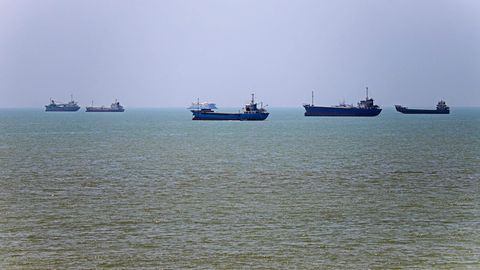
Hormuz Strait Shipping Traffic Hits Multi-Week High After U.S.-Iran Deal
Translated from Estonian, summarized and contextualized by DistantNews.
At a glance
News
Sources not specified
Context piece
- Shipping traffic in the Strait of Hormuz has increased to its highest level in several weeks following a deal between the U.S. and Iran.
- While tanker activity and Iranian oil exports show signs of recovery, traffic levels remain below pre-war figures.
- Uncertainty surrounds the future management of the strait and the costs associated with upcoming negotiations, despite a 60-day tax-free period.
Shipping activity in the Strait of Hormuz has reached its highest point in weeks after a deal was struck between the United States and Iran to reopen the vital energy corridor. The increased traffic signals a cautious recovery, with supertankers returning and Iranian oil exports showing gradual signs of revival, offering some breathing room to oil markets.
However, the current levels of activity remain significantly below those seen before the conflict. The recent agreement includes a 60-day tax-free period, but questions linger about who will manage the strategically crucial strait and under what terms future negotiations will proceed. The potential costs associated with these upcoming discussions are also a point of concern.
The situation highlights the delicate balance in the region, where increased maritime traffic coexists with ongoing geopolitical uncertainties. The reopening of the strait is a positive development for global energy flows, but the long-term stability and management of this critical chokepoint remain subjects of negotiation and potential future tension.
DistantNews Editorial
Originally published by Postimees in Estonian. Translated, summarized, and contextualized by our editorial team with added local perspective. Read our editorial standards.
More Stories
/nginx/o/2026/06/18/17725881t1hff32.jpg)

/nginx/o/2026/06/17/17725399t1hc8e0.jpg)
From Our Blog

What Gets Lost (and Found) When News Is Translated

The Critical Role of Diaspora Media in Global News

What Travellers Should Know About Countries with Restricted Press

A Digital Nomad's Guide to Following Local News

How the Same Story Looks Different in Different Countries
